

Safetline understands that worker safety does not have to come with discomfort. Comfortable safety footwear is possible and desirable—after all, a protected and comfortable employee is more productive and preserves foot health.
With over 50 years of tradition in PPE, Safetline invests in technology and ergonomics to deliver protection without sacrificing user well-being.
In this guide, we have gathered 6 practical tips for you to choose and wear your safety footwear with maximum comfort on a daily basis, avoiding pain, injuries, and unnecessary discomfort.
1. Choose the correct size and adjust the footwear properly
A fundamental step for comfort is wearing safety footwear in the proper size for your feet. Tight footwear causes pressure and pain, while loose footwear can cause friction and blisters. Persisting in wearing footwear that does not offer the correct fit and support, whether too tight or too loose, can lead to more serious chronic orthopedic problems, such as plantar fasciitis. To get the sizing right, measure your feet and consult the Safetline size guide, which guides you on how to get the exact measurement in centimeters (place your heel against the wall and use a tape measure from the heel to the tip of the big toe). Always measure your feet at the end of the day, when they are naturally swollen, to ensure that the chosen size does not feel tight at the start of the workday.
Remember that our feet can have different shapes—some are wider, others narrower, or with high/low arches—so also evaluate the internal shape of the footwear.
Tip: if one of your feet is slightly larger than the other (which is common), choose the size that comfortably fits the larger foot. In case of doubt between two sizes, the larger one will generally offer more comfort without losing safety, provided the fit on the instep and ankle is adequate. Regardless of the closure type—whether elastic, laces, or hook-and-loop (velcro)—the footwear must offer firmness, ensuring a good fit so that no part of the foot is pinched or has excessive space, avoiding pressure points that could cause discomfort throughout the workday.
2. Prioritize quality materials and ergonomic internal design
The materials and internal design of safety footwear make all the difference in comfort. Give preference to models manufactured with high-quality materials that are soft, flexible, and adaptable to the shape of the foot. For example, soft leather uppers tend to mold to the feet with use, avoiding hard areas that hurt.
Safetline uses premium water-resistant leathers and special microfibers to ensure resistance without sacrificing flexibility.
Internal components, such as seamless padded lining and anatomical insoles, make wearing the footwear much more pleasant. Check if the footwear has adequate padding on the tongue and collar (shaft), as these details minimize friction on the instep and ankles.
A concrete example is Safetline safety boots, which feature padded collars to support the ankle comfortably. This type of construction better distributes pressure and cushions impacts in the ankle area during walking.
In addition, observe the internal finish: embedded or seamless stitching, soft lining without burrs—all of this prevents friction points and blisters. The internal insole must also be considered; Safetline models come with hygienic, antibacterial, and removable insoles, which, in addition to hygiene, allow replacement with special comfort ones if necessary.
Therefore, an ergonomic design and well-chosen materials drastically reduce the risk of discomfort even after hours of continuous use.
3. Check the cushioning and the outsole of the footwear
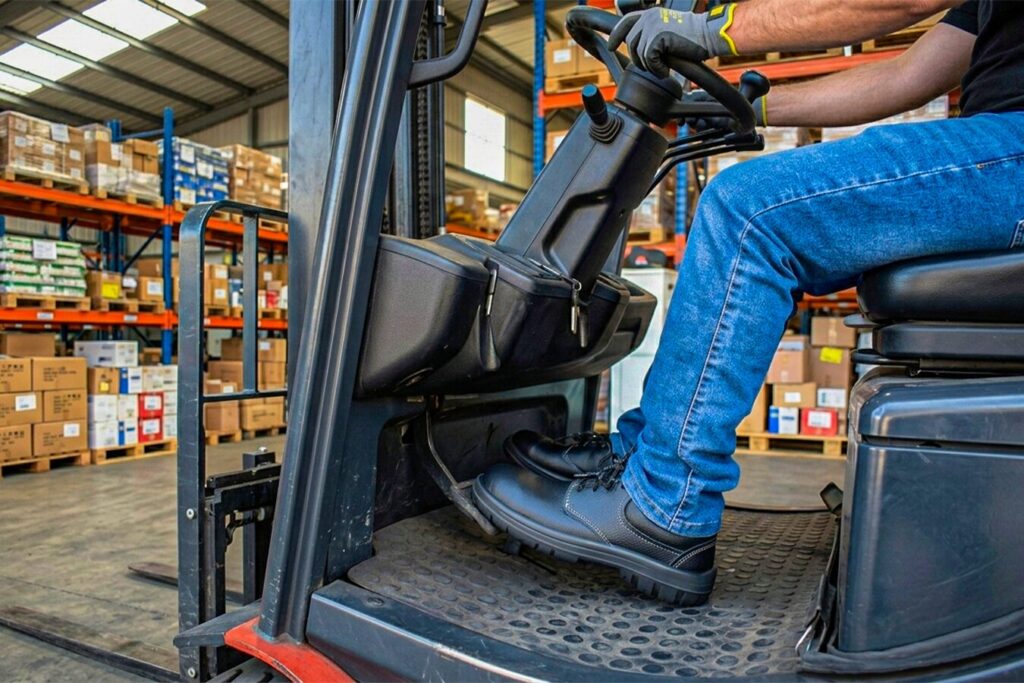
The sole and impact cushioning systems are responsible for a large part of the comfort in professional footwear. When walking or standing for long periods, our heels suffer repetitive impacts; therefore, choose safety footwear with an outsole, shock absorber, and stabilizer. The best models feature dual-density outsoles, combining a softer layer (midsole) that absorbs impacts with a harder, more resistant outer layer for durability (outsole).
In practice, this means that the footwear cushions the impact of the heel against the ground, reducing stress on the ankle, knee, and spine joints. All Safetline footwear features modern energy absorption systems in the heel region, exceeding the 'E' criterion for impact energy absorption in the heel, as stipulated in the technical standards applicable to safety footwear, which establishes a minimum of 20 Joules. This level of cushioning reduces foot fatigue and prevents pain at the end of the shift.
In addition to cushioning, it is important to observe whether the outsole offers stability and grip. A well-designed outsole has flex points in the forefoot, allowing it to bend easily with the feet when squatting or walking, and all Safetline models feature an anti-torsion bar in the midfoot to prevent unwanted twisting on uneven terrain. These features not only increase safety against accidents but also provide more stable and comfortable strides, requiring less effort from the foot muscles to balance.
Finally, a good PU or rubber outsole helps with thermal comfort, insulating the foot from very hot or cold surfaces. It is worth checking the technical specifications: outsoles like the Safetline dual-density PU Falcon or Andaluz were developed specifically to enhance comfort, combining lightness, high impact absorption, and excellent wear resistance. In summary, invest in footwear with proven cushioning and smart sole design, as they save your feet from overload and make every step smoother.
4. Attention to breathability and temperature control
Keeping feet dry and at a pleasant temperature is another key factor for comfort during prolonged use. Therefore, look for safety footwear with good breathability—that is, footwear that allows foot ventilation and sweat evaporation. Feet wet with sweat tend to get cold in cold weather and create friction and bad odor in hot weather, in addition to favoring the proliferation of fungi. To prevent this, Safetline incorporates technologies such as special linings that absorb and dissipate moisture (for example, SafetDry fabric, developed to keep the inside of the footwear dry and fresh). Lining materials with antibacterial functions also help with hygiene, preventing the proliferation of odor-causing bacteria.
Another important point is the material of the upper (the outer part of the footwear): natural leather models have good breathability, while microfibers and technological fabrics can offer more lightness.
However, ventilation must be balanced with protection against liquids in the work environment. A high-quality solution is the water-resistant leathers used by Safetline, which increase resistance to water penetration but maintain vapor permeability—in other words, they do not let water in from the outside, but allow sweat to escape. Thus, your feet are protected from external moisture without feeling "stuffy" inside.
Finally, also consider thermal insulation if you work in extreme cold or hot environments. There is safety footwear with thermal linings (such as the Thinsulate™ technology used in cold-storage boots) that keeps feet warm in the cold, and others with heat-dissipating properties so they do not overheat under strong sun. Evaluate the needs of your environment: comfortable feet are dry feet at the proper temperature.
In summary, breathable and thermally stable safety footwear will avoid that feeling of "cooking" feet or feet soaked in sweat, ensuring comfort even during the most intense workdays.
5. Take care of daily use: proper socks, rotation, and maintenance
Even the best footwear can become uncomfortable if not worn correctly or if poorly maintained. Therefore, our last tip involves good daily practices to maximize your feet's comfort. First, pay attention to socks: prefer cotton socks or technological materials that absorb sweat and allow the skin to breathe. Appropriate socks prevent direct friction of the foot against the shoe and help control moisture. There are even socks with antifungal properties and padding in the areas of greatest pressure (heel and toes), a great investment for those who spend the whole day in safety boots. Avoid wearing very thick socks thinking it will make the footwear softer; the ideal is a sock of moderate thickness, comfortable, that does not squeeze too much inside the footwear.
Another recommendation is to rotate footwear, if possible. Alternating between two pairs throughout the week gives "breathing" time for the footwear not in use; it can completely dry out accumulated moisture and return to its original shape, increasing its lifespan and maintaining comfort.
Many professionals report that wearing the same pair every single day ends up generating more odor and deformations that cause discomfort. With at least two quality pairs, you reduce this continuous wear and will always have dry, well-ventilated footwear to put on. Remember to, after the shift, clean and leave the footwear in a ventilated place to dry sweat before the next use. Removable insoles can be taken out for drying; this prevents fungi and keeps the cushioning in top shape.
Finally, observe the time to replace your safety footwear. Just as a running shoe loses its cushioning after heavy use, worn safety footwear can lose part of its comfort and protection. Heavily worn outsoles, torn linings, or deformed insoles are signs that the PPE no longer offers the same comfort (or safety) conditions.
Replace it at the interval recommended by the manufacturer or at the first sign of compromise. Remember: insisting on wearing already deformed footwear can cause foot pain and even accidents. Therefore, by taking good care of your footwear, using proper socks, rotating pairs, and performing maintenance and cleaning, you ensure consistent comfort every day and also prolong the performance of the PPE.
6. Importance of reputation in the choice
When choosing safety footwear, it is not enough to evaluate only technical aspects such as comfort, resistance, or grip. It is also essential to consider the reputation of the manufacturing brand. Companies recognized in the market invest in technology, strictly follow safety standards, and offer quality assurance, which conveys greater confidence to the user. Opting for a credible brand means reducing risks, ensuring durability, and having adequate support in case of need.
It is important to highlight that, in an effort to reduce costs, many manufacturers resort to second-rate materials in the production of safety footwear. This practice directly compromises essential aspects such as comfort, performance, and protection, putting the worker's health and safety at risk. Less resistant outsoles, low-quality linings, and inadequate insoles can lead to premature wear, discomfort during prolonged use, and even structural failures in critical situations.
Therefore, opting for brands that value material quality and strict compliance with technical standards is a decision that ensures not only greater durability but also confidence and safety in every workday.
Comfort and safety hand in hand with Safetline
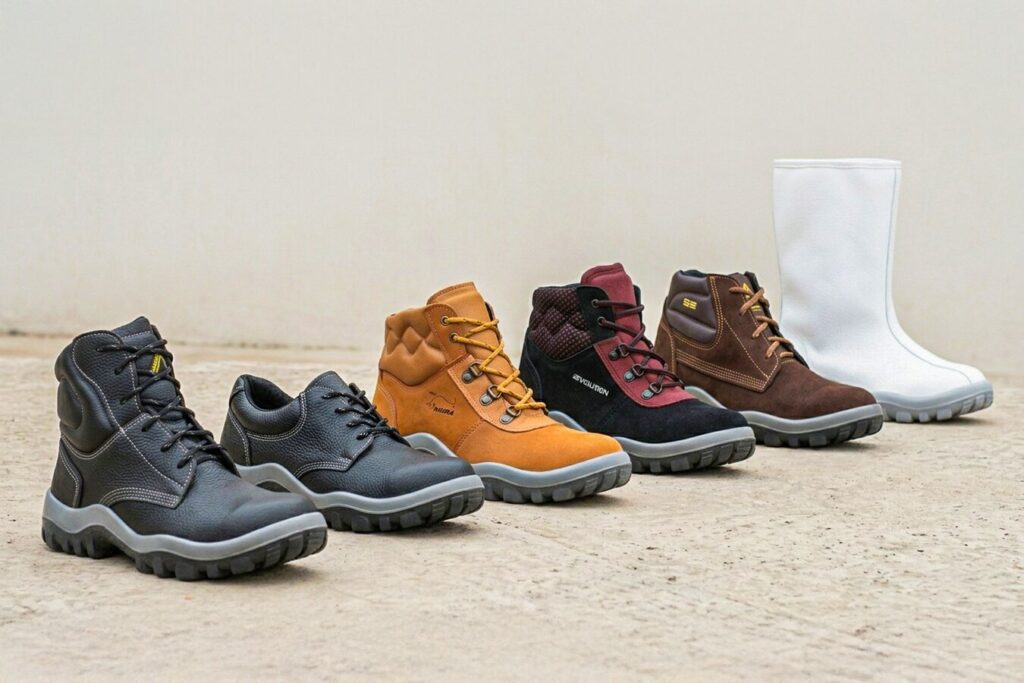
Comfortable safety footwear is not a luxury, it is a necessity. As we have seen, factors such as correct size, quality materials, effective cushioning, good ventilation, and healthy wearing habits are essential to combine protection and comfort. Safetline, throughout its history, has always put the user first, developing footwear that exceeds rigorous safety and comfort tests.
The result is safety footwear that protects against various risks while caring for the worker's feet, preventing pain, injuries from prolonged use, and excessive fatigue. Investing in comfortable PPE means investing in productivity, health, and well-being at work; an employee who feels well-equipped tends to use the PPE correctly and work with more motivation, benefiting themselves and the company.
If you seek this balance between safety and convenience, it is worth getting to know what Safetline offers. Protection with comfort is indeed possible! Safetline manufactures the most complete safety footwear line in Brazil, with advanced technologies focused on ergonomics.
From the classic Miura safety boot—a symbol of tradition and durability—to the most modern releases, all of our models undergo constant improvements to maximize lightness, softness, and stability. Browse the Safetline footwear line and be surprised by the comfort features built into each PPE. Your feet will thank you, and so will your safety! In case of questions or to receive specialized guidance in choosing the best footwear for your needs, contact Safetline; we will be happy to help you work protected with absolute comfort.