

Safetline, a specialist in safety footwear with over 50 years of experience, understands that many professionals are undecided between elastic-sided boots and lace-up boots.
Both types of safety boots effectively protect feet, but each model offers specific advantages in comfort and practicality. We will clarify the differences, advantages, and suitable applications for each type to help you choose the ideal option, always emphasizing the quality that Safetline offers in all its footwear.
Ease of donning: speed vs. personalized fit
When it comes to practicality, the elastic-sided boot takes the lead. Thanks to its side elastic panels, it allows for quick donning and doffing, saving time spent on laces. This is beneficial for those who need to remove and put on their footwear multiple times a day, such as during quick visits to production areas or offices. Furthermore, the absence of laces means less concern about untied knots or loose ends that could interfere with work.
On the other hand, the lace-up boot requires a few seconds to tie, but it compensates with a personalized fit. With laces, the user can adjust the ideal pressure across the instep and ankle, ensuring the footwear remains firm and well-positioned. This fine adjustment is important for those who require extra stability when walking or performing sudden movements.
Therefore, if the priority is quick donning and doffing (and there is a risk of laces getting caught in machinery), the elastic-sided boot offers unparalleled convenience. The lace-up version, however, is preferable for achieving a custom fit and greater security with each step.
Ankle support and stability
Ankle stability is a key point in this comparison. Lace-up boots provide greater support in the ankle area, as they allow for adjusting the laces according to the desired firmness. When tied properly, the footwear “hugs” the ankle, reducing looseness and providing more confidence when moving on uneven terrain or climbing stairs.
This additional firmness helps prevent sprains and twists, especially in activities that require quick changes of direction or constant balance. The elastic-sided boot, lacking laces, offers a more flexible and looser fit around the ankle.
The side elastic keeps the footwear on the foot but does not exert the same continuous pressure that a tied lace can offer. For many daily tasks, this is not an issue, and for some users, it may even provide a sense of freedom of movement. However, in work situations demanding maximum stability, such as operating heavy equipment, driving machinery, or walking all day on uneven ground, the extra support of the lace-up boot makes a difference. It is worth mentioning that Safetline incorporates technologies to improve stability in both models. For example, all Safetline footwear features an anti-torsion bar in the sole (an internal reinforcement that prevents foot twists) and a padded collar, features that enhance safety even in elastic-sided boots. Nevertheless, if your work involves a high risk of twisting your foot, the firm lacing of a lace-up boot remains an important ally in ankle protection.
All-day comfort
Regarding comfort, both elastic-sided and lace-up boots can perform well, provided they are of good quality and the correct size. Here, the individual's foot profile comes into play. The lace-up boot tends to offer a snugger fit, as the laces allow for adjusting the width and tightness according to the shape of the instep.
Laces, when they start to wear out or fray, can be easily replaced with new ones, maintaining the fit as new.
In turn, the side elastic ensures firmness without excessive tightness, adapting to the foot's shape and preventing pressure points. Additionally, the Safetline model features padding on the instep and the back of the collar, which provides greater softness and reduces friction during prolonged use. The absence of overlapping parts, such as a tongue and bellows, contributes to a cleaner and more functional design, facilitating donning and preventing the entry of dirt or liquids.
However, with low-quality boots, over time and intense use, the elastic may stretch and lose some of its tension, making the footwear looser than it should be.
In Safetline models, the elastic is covered in leather and features quadruple stitching, ensuring its durability and resistance.
In summary, both versions can be very comfortable: the elastic-sided offers a more “free” sensation around the ankle; the lace-up allows for a firm embrace of the foot, preventing uncomfortable looseness. Regardless of the type, Safetline designs its boots with a focus on ergonomic comfort, using breathable lining (SafetDry) and high-density foams at support points, so that the worker feels comfortable even after long shifts using the EPI.
However, regardless of the model, the footwear must not be loose, as this can cause friction and potential blisters from rubbing against the heel or sides.
Safety and recommended applications for each type
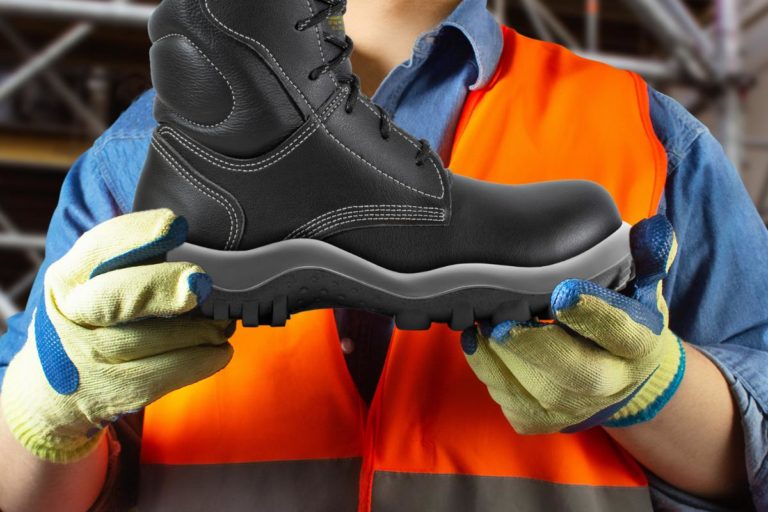
Both models are safety footwear with CA (Approval Certificate), meaning they meet the required protection standards and offer the level of safety according to other footwear requirements (e.g., toecap, insole, metatarsal protection, etc.). The difference lies more in their suitability for certain tasks and environments.
The elastic-sided boot is widely used in various areas due to its practicality and robustness. It is suitable for general work and moderate risk environments where there is no specific requirement for a rigid ankle fit. Examples include light civil construction, warehouses, building maintenance services, agricultural activities, and use in sectors where workers frequently alternate between indoor and outdoor environments.
The elastic-closure boot offers a series of advantages beyond comfort. The ability to quickly put on and take off the boot saves time for the worker without compromising protection. Another benefit is easy cleaning, as the model accumulates fewer debris, which is essential in activities where there is a risk of transferring residues that could compromise the footwear's durability or even contaminate the operation. Furthermore, in industrial environments with machinery and conveyor belts, the absence of laces eliminates the risk of a loose lace getting caught in moving parts and causing accidents. For this reason, some companies even prohibit the use of loose laces in certain areas, reinforcing the choice of elastic-sided boots as a practical, safe, and efficient solution for daily work. The lace-up boot, on the other hand, is typically recommended for more physically demanding activities or on uneven terrain. It is the preferred choice for many professionals who are constantly on the move, such as structural assemblers, field electricians, heavy machinery operators, and rural workers on irregular ground.
In these scenarios, the lace adjustment offers more stability, helps prevent twists, and increases safety during movements. Some activities or internal regulations may also require lace-up models for providing specific features for certain functions. Ultimately, the choice between elastic and lace-up depends on the type of task, the environment, and the level of protection your work demands.
Durability and maintenance of elastic and laces
When investing in quality safety footwear, we expect it to last and maintain its properties over time. In this regard, both elastic and laces require some care.
Laces are subject to abrasive wear (especially at the eyelets) and can fray or break after long periods, particularly in dirty or damp environments that can weaken the fibers. The good news is that laces are easy and inexpensive to replace; keeping an extra pair of laces in a bag or storeroom is sufficient to quickly resolve this issue.
The side elastic panels of boots, in turn, tend to loosen gradually with daily use. The repeated action of donning and doffing, and the continuous tension itself, diminish the original elasticity. A sign of wear is when you notice the boot starting to “slip off the foot” too easily or becoming too loose even when it is the correct size.
Unlike laces, which can be easily replaced if worn, the elastic is a structural part of the boot and cannot be replaced. Therefore, choosing a quality brand that uses premium materials ceases to be merely an aesthetic consideration and becomes a true investment. A well-designed elastic, manufactured with resistant raw material, ensures greater durability, maintains a firm fit to the foot, and preserves comfort over time. Furthermore, it prevents the footwear from losing its functionality prematurely, reducing replacement costs and ensuring the worker remains protected in demanding environments. In this sense, opting for a well-sourced elastic-sided boot is an investment in safety, practicality, and longevity in daily use. In terms of overall durability, neither closure system is inherently fragile: both withstand heavy work routines well, especially in quality Safetline products, which use premium materials. For example, Safetline elastic-sided boots utilize double-weave elastic covered with leather, increasing resistance to stretching and daily abrasion.
Similarly, the brand's lace-up boots come with high-tenacity polyester laces and robust eyelets that minimize wear.
To keep any model in good condition, clean the footwear after use, remove excess dirt, and allow it to air dry in a dry place. Apply appropriate leather grease to preserve softness and resistance. For elastic-sided boots, avoid pulling only by the elastic panels to prevent stressing the material. For lace-up boots, tie with moderate firmness to avoid marking the leather. With these simple care practices, the durability and performance of your boot, whether elastic-sided or lace-up, will be maintained for much longer.
Ventilation and protection against infiltration
Both the elastic-closure boot and the lace-up boot offer good ventilation and protection against infiltration under normal use conditions. However, it is important to highlight some differences: the model with side elastic may present points of vulnerability in environments with large volumes of water, as the elastic, being a flexible opening, allows for a greater possibility of infiltration. The lace-up boot, by featuring a bellows tongue, creates a more efficient barrier against the entry of debris, dust, and splashes, ensuring greater protection in situations where there is frequent contact with solid particles or liquids. Thus, both models are efficient, but each adapts better to specific work scenarios, and it is up to the user to evaluate which characteristic best meets their needs.
How to choose the ideal boot for your work
Given so many points to consider—practicality, fit, comfort, stability, and maintenance—it can seem challenging to decide between an elastic-sided boot and a lace-up boot. The best choice will depend on your use context and personal preference. To facilitate, evaluate the following questions about your professional daily routine:
- Frequency of donning/doffing: Do you need to remove your boots multiple times during your shift? If so, the practicality of elastic may be very advantageous. On the other hand, if you put on your boots in the morning and only remove them at the end of the shift, the time difference for laces will not have a significant impact.
- Activity level and terrain: Does your work involve rushing, squatting, climbing and descending stairs, or walking on uneven surfaces? Then prioritize stability and ankle support, characteristics where lace-up boots excel. However, if the activity is more static, on a smooth floor with few displacements, the elastic-sided boot will suffice comfortably and with more freedom of movement.
- Risk of laces getting caught: Check your environment: are there exposed machines, moving parts, or areas where a loose lace could be a hazard? In factories with conveyor belts or rotating equipment, for example, it is prudent to opt for laceless models to eliminate the risk of entanglement accidents. In construction offices, warehouses, or administrative areas, this is not a concern.
- Normative or company requirements: Some companies or sectors have specific rules regarding footwear type. Always consult your organization's Workplace Safety guidelines. The same applies when there is a requirement for a specific property (e.g., antistatic footwear, use of high-cut boots, etc.); first meet the technical requirements, then choose the closure type from the available certified options.
- Comfort preference: Finally, consider what you find most comfortable. Some users are loyal to elastic-sided boots precisely because of the feeling of freedom around the ankle and the ease of donning. Others feel “secure” only with the firm tightness of laces providing support. There is no right or wrong here; the best safety footwear is that which protects you and simultaneously allows you to work comfortably.
Remember that Safetline offers both types of boots, designed to meet the highest standards of safety and comfort. In other words, whatever your choice, you can count on the quality of materials, durability, and technological innovation that are Safetline's hallmarks. If you are still in doubt, it is worth trying both styles (when possible) to see which one best adapts to your foot and your tasks.
Choose your boot with Safetline confidence
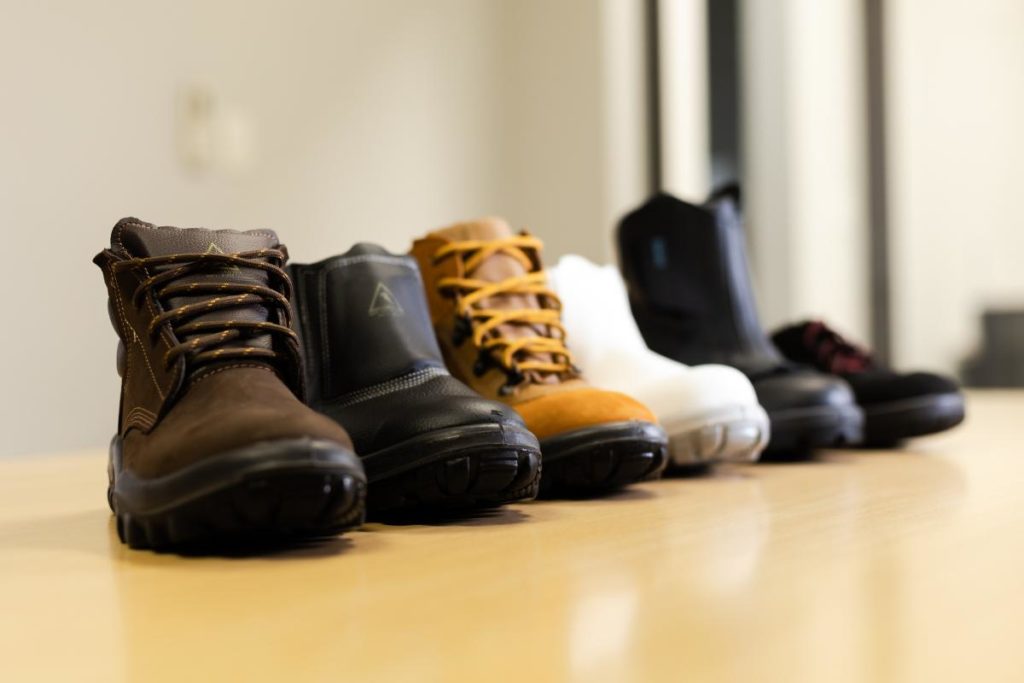
Elastic or laces? The truth is there is no absolute winner; the right choice depends on your daily routine and the demands of your work. The important thing is to use quality safety footwear, with the proper certification and suitable for the risks you face. Safetline prides itself on being synonymous with quality and technology in EPI, offering the most complete line of safety footwear in Brazil.
All our boots, whether elastic-sided or lace-up, undergo rigorous testing and feature innovations such as bi-density anti-slip soles, impact absorption systems, and ergonomic design. This provides you with the peace of mind of being protected and comfortable to dedicate yourself to your work.
Ready to choose your ideal boot? Visit Safetline's online store and explore our selection of elastic-sided and lace-up models, all with the Safetline quality you already know. If you prefer, contact the Safetline team to receive personalized guidance on the best safety footwear for your needs. Protect yourself with experts and walk with safety and confidence every day!