

In industrial environments with intense heat, footwear ceases to be “just” PPE and becomes a critical component for safety and thermal comfort. Operations near furnaces, boilers, heat treatment lines, steelmaking and metallurgy, boiler making, welding and scarfing, heavy maintenance, and even paving fronts expose workers to risks such as heated floors, hot splashes/particles, accelerated abrasion, and loss of grip due to residues (dust, slag, water, oil, and grease).
When searching for footwear for high temperatures, the buyer (SST, maintenance, industrial procurement, or production supervision) typically wants an objective answer to decide which boot or ankle boot to choose, understand what HRO and HI mean, validate standards and CA, and reduce specification errors that lead to premature replacement, discomfort, and low PPE adherence.
In this content, you will find a practical and technical guide to selecting the appropriate footwear for your risk, with examples of Safetline models (Vulcano line) and a checklist for standardization.
What are high-temperature footwear (PPE) and what risks should they cover
“High temperature” is a broad term. In practice, foot PPE may need to deal with three types of thermal exposure, in addition to mechanical and slip risks:
- Contact heat (hot floor): the sole directly touches a heated surface, which can deform, crack, or lose traction properties.
- Heat insulation (prolonged exposure): even without extreme contact, constant heat can raise the internal temperature of the footwear, increasing discomfort, sweating, and fatigue.
- Hot splashes and particles (welding, metallurgy, scarfing): the risk is not only in the sole; the upper, closure, tongue, and how the footwear “seals” against residues make a difference.
Furthermore, hot environments are rarely “clean”: slag, metallic dust, oil, process water, and detergents alter the floor's coefficient of friction and accelerate wear. Therefore, choosing the right model requires looking at the entire assembly: sole + sole/upper joint + upper material + CA requirements.
HRO and HI: understand the symbols most frequently encountered when purchasing high-temperature footwear
The acronyms HRO and HI are common in the specification of high-temperature footwear, but they represent different criteria. They can be complementary.
HRO (Heat Resistant Outsole): sole resistance to contact heat
HRO is a requirement related to the sole. In a standardized test, the sole comes into contact with a surface heated to 300 °C for 1 minute (with a tolerance of a few degrees) and is evaluated for visible damage. In terms of decision-making, HRO is what you prioritize when the main risk is walking on a hot floor.
When HRO is indispensable:
- heated platforms and floors in industrial areas;
- proximity to furnaces and hot lines;
- maintenance in areas with heated plates/structures;
- metallurgy and steelmaking where the floor retains heat.
- contact with asphalt mass
HI (Heat Insulation): heat insulation
HI is linked to the thermal insulation of the sole assembly. The objective is to limit the temperature rise inside the footwear during a prolonged heat test condition. In practice, HI becomes important when the worker remains in a hot area for long periods, and thermal discomfort tends to affect performance and PPE adherence.
When HI is most relevant:
- constant heat during the shift (continuous hot areas);
- operations with prolonged stay in the same temperature zone;
- scenarios where thermal comfort and fatigue are critical.
Quick comparison HRO x HI (for specification)
| Criterion | What it measures | Main use | Question it answers |
| HRO | sole resisting contact heat | hot floor | “Can the sole withstand contact with the heated floor?” |
| HI | thermal insulation of the sole assembly | prolonged heat | “How much heat passes into the footwear?” |
Important: symbology does not replace risk analysis and CA. The correct specification must reflect the actual risk (heat, residues, humidity, oil, impact, perforation, and internal requirements).
CA and standards: how the technical buyer avoids specification errors
For corporate procurement, “high-temperature resistant footwear” must comply with the documentation and risks involved. Before standardizing, validate:
- valid CA (Approval Certificate) for the footwear;
- symbols and requirements declared in the CA and technical data sheet;
- instructions for use, conservation, and limitations (service life depends on the workstation and care);
- The upper material must be temperature-resistant (flame-retardant split leather) and of good quality. And avoid synthetic materials that are often flammable.
In practice, the safest recommendation is: define the activity's risk → list minimum requirements → select models that meet the CA. This reduces returns due to “wrong purchase” and facilitates audits.
Why the sole is the most critical point in high temperatures
In hot environments, the sole is the first component exposed to contact heat and friction. But the upper is also exposed to the effects of high temperatures.
If the footwear loses stability, five problems quickly appear:
- loss of grip (slips increase);
- accelerated wear (more frequent replacements);
- integrity failure (deformation, cracks, or delamination under severe conditions).
- damaged upper (dried out and stiffened, in addition to signs of carbonization)
- discomfort and uselessness (internal temperature becomes unbearable for the user)
Another critical point is the sole/upper joint. Thermal cycles and abrasion require a construction system that minimizes detachment and maintains the performance of the assembly.
Vulcano Safetline Sole: dual-density nitrile rubber and injection onto the upper
In the Vulcano line, Safetline uses dual-density nitrile rubber (rubber/rubber) and the sole is directly injected onto the upper. This construction is especially relevant for high temperatures because it ensures the resistance and integrity of the materials (upper/sole joint) with a robust union, in addition to a design conceived for traction on industrial floors with residues.
In B2B purchases, this helps balance two objectives that usually conflict: thermal protection + durability (fewer replacements and better total cost).
Upper made of Flame-Retardant Split Leather and within the correct thickness.
The uppers of the Vulcano Safetline line are made of flame-retardant split leather, a material specially treated to resist the action of incandescent splashes and particles from processes such as welding. In addition to its fire resistance characteristic, the split leather used strictly meets the thickness required by technical standards, ensuring not only the necessary thermal and mechanical protection but also the structural durability of the footwear.
This combination ensures that the footwear offers greater robustness, wear resistance, and reliability in severe environments, aligning with internal Safety and Health at Work (SST) requirements and providing the user with a superior level of protection without compromising comfort and performance.
How to choose footwear for high temperatures (SST and buyer's checklist)
Use the checklist below to specify objectively. It works for both single purchases and team standardization.
1) Identify the dominant type of heat
- is it hot floor (contact)? Prioritize HRO.
- is it constant and prolonged heat? also evaluate HI.
- are there hot splashes/particles? validate upper and sealing against residues.
2) Map the “actual floor”
- dry, wet, with oil/grease?
- smooth, rough, inclined?
- with metallic dust, slag, or residues that “lubricate” the floor?
3) List secondary risks (which are often decisive)
- toe impact (toecap type according to CA);
- perforation by objects on the floor (appropriate insole according to CA);
- need for metatarsal protection (falling materials on the instep);
- abrasion and contact with hydrocarbons (compatible sole and materials).
4) Define the format: boot or ankle boot
- Boot: greater shaft coverage, robustness, and extended protection in severe scenarios.
- Ankle boot: more mobility and agility, protecting against the thermal and mechanical risks of the activity.
5) Confirm CA and documentation
- model + configuration (e.g., with metatarsal, type of closure) must be consistent with the CA;
- record the rationale for the choice (risk → requirement → model) for audits and traceability.
Safetline models recommended for high temperatures (Vulcano line)
Below are examples of models frequently used in scenarios of high contact temperature and severe operations. The final choice must be made according to the risk and the current CA of each model.
Scarfing Boot (Vulcano Sole)
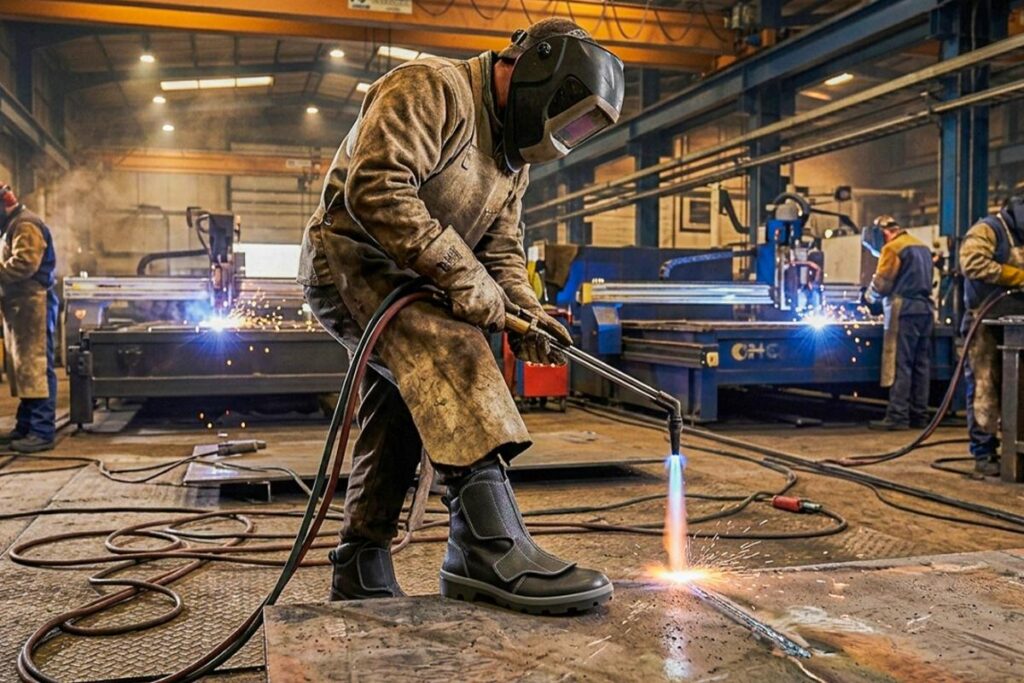
Recommended for heavy operations and scenarios associated with scarfing and metallurgical processes where there is intense heat and high wear. The focus is to offer robust construction and a sole prepared for contact with hot surfaces.
When it makes sense:
- metallurgy/steelmaking;
- areas with hot floors and abrasive residues;
- routine with high durability requirements.
See the model: Scarfing Boot from the Vulcano Safetline Line
Firefighter Boot (Vulcano Sole)
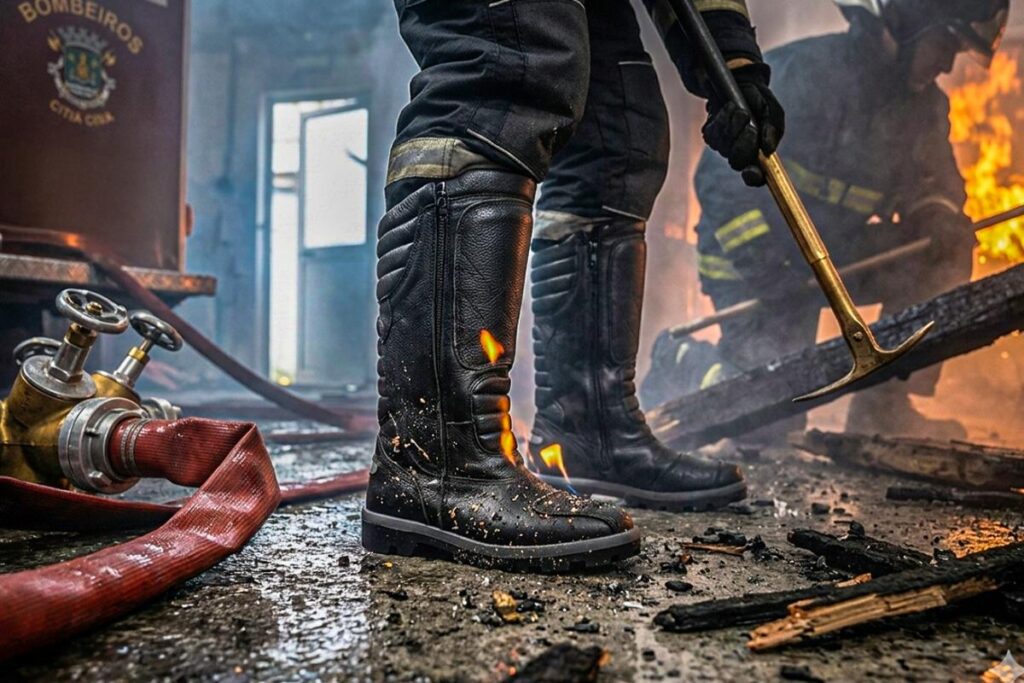
Model with a higher shaft, used when the operation requires extended protection and robustness. In emergency response environments and demanding routines, choosing a boot can help standardize protection and resistance.
When it makes sense:
- operations requiring a higher shaft;
- severe routines with high demands on the footwear assembly;
- teams that require robust standardization.
See the model: Firefighter Boot from the Vulcano Safetline Line
Anti-Torsion Lace-Up Ankle Boot (Vulcano Sole)
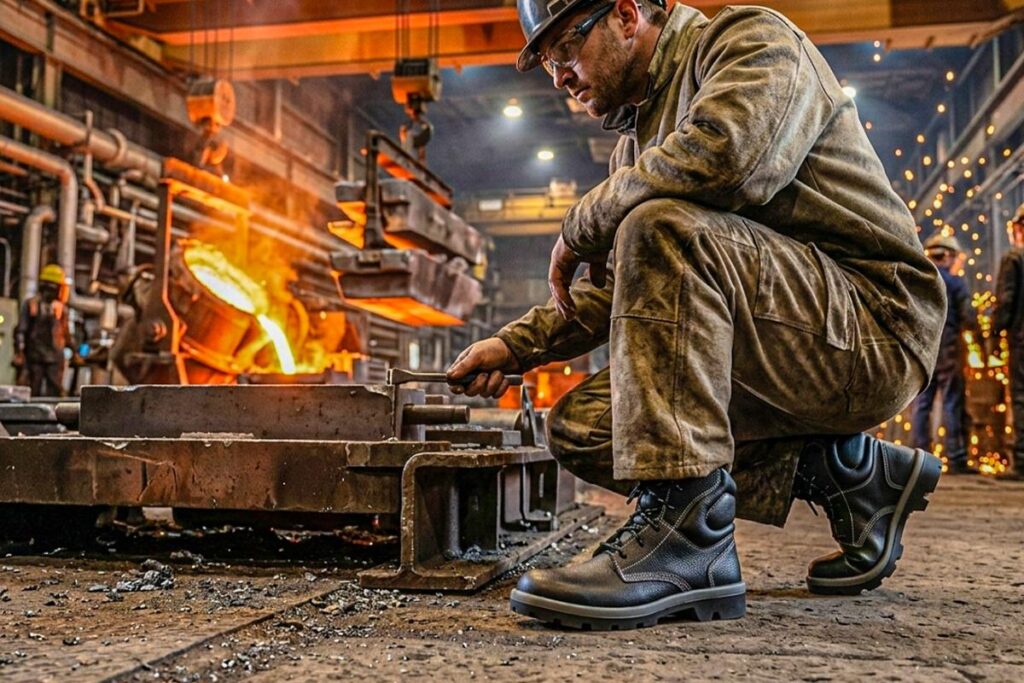
Ideal for those who need a firmer fit and work on uneven floors, with an increased risk of sprains/torsion. The lace-up closure helps secure the foot, and the sole meets the demands of heat and friction scenarios.
When it makes sense:
- industrial maintenance and outdoor areas;
- long displacements on uneven floors;
- scenarios where stability is a requirement.
See the model: https://safetline.com.br/produtos/calcados/vulcano/botina/cadarco/botina-de-amarrar-antitorcao-vulcano/
Elastic Ankle Boot with Full Vamp (Vulcano Sole)
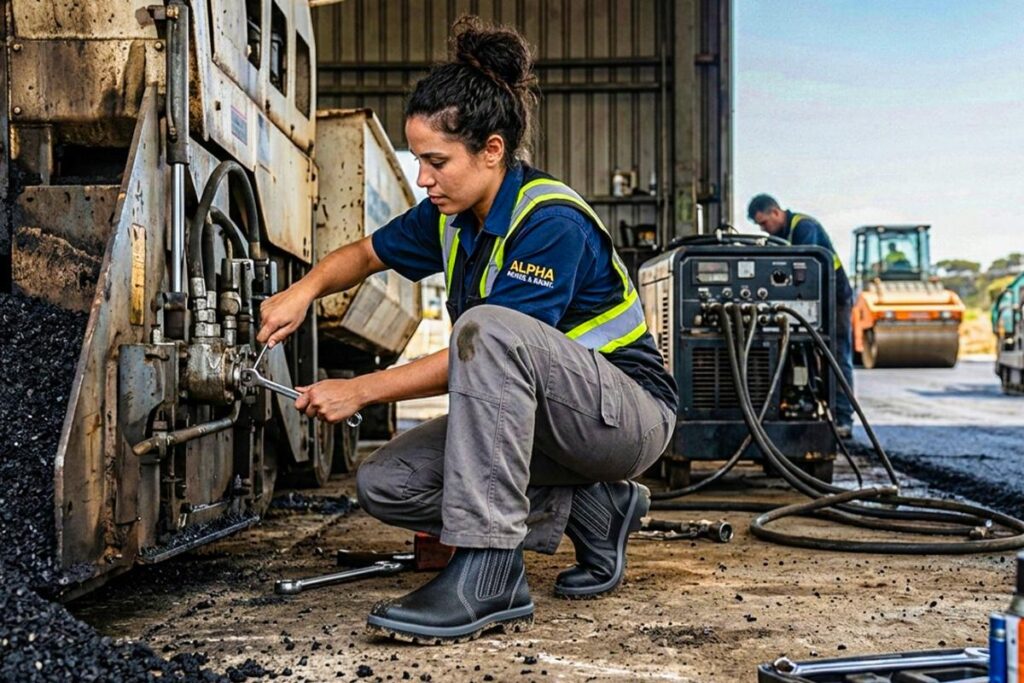
The full vamp can contribute to greater resistance and reduce entry points for residues, which is useful in operations with dust, particles, and splashes.
When it makes sense:
- boiler making and welding (with presence of residues);
- environments with abrasion and need for greater robustness in the upper;
- environments with splashes and light projections of materials (welding) that are not retained in the seams.
See the model: Elastic Ankle Boot with Full Vamp Vulcano
Elastic Ankle Boot with External Metatarsal (Vulcano Sole)
Indicated when there is a demand for additional protection in the metatarsal area (instep), without sacrificing sole resistance in hot operations.
When it makes sense:
- heavy maintenance with risk of falling materials;
- operations involving movement of parts and tools;
- sectors where metatarsal protection is a safety requirement.
See the model: Elastic Ankle Boot with External Metatarsal Protector Vulcano
Care and maintenance: how to extend service life in hot environments
Even the best footwear loses performance if used and maintained improperly. In hot areas, small practices make a big difference:
- Frequent external cleaning to remove slag, dust, and oil that reduce grip.
- Upper condition: Check if it is dry and stiff. In extreme situations, the leather may even suffer superficial carbonization.
- Rotation of pairs when possible, reducing internal humidity and improving comfort.
- Sole inspection: irregular wear, cracks, and deep cuts indicate the need for preventive replacement.
- Correct fit: appropriate sizing and lacing prevent excessive friction, blisters, and fatigue.
Signs of wear: when to replace footwear to maintain protection
In hot and abrasive operations, replace footwear if there is: smooth or cracked sole, detachment, deformation after hot floor exposure, abnormal slipping, tears in the upper with residue entry. If in doubt, request specialized technical evaluation.
FAQ: common questions about high-temperature footwear
What is the difference between HRO and HI?
HRO refers to the sole's resistance to contact heat (hot floor). HI refers to the heat insulation of the sole assembly, reducing thermal transmission to the inside of the footwear.
Does “HRO” mean the footwear can withstand any temperature?
No. HRO is a requirement based on a specific test. Actual temperature, contact time, and floor conditions vary from company to company. Therefore, the purchase must consider the activity's risk, documentation, and the model's CA.
Is a high-temperature boot better than an ankle boot?
It depends. A boot tends to offer greater coverage and robustness; an ankle boot offers more mobility. The correct choice is one that meets the activity's requirements with compatible CA and symbols.
Is high-temperature footwear suitable for welding?
Yes, but in the context of welding, risks go beyond sole grip and wear. There are incandescent splashes and particles that require additional protection. The HRO/HI sole ensures heat resistance and slip resistance, but the full vamp upper contributes to greater structural integrity and less vulnerability to perforations.
Furthermore, the inclusion of gaiters extends protection against splashes that reach the leg and ankle area, reducing direct worker exposure. Evaluate the scenario and internal SST requirements.
What to look for beyond HRO/HI?
Grip (floor with oil/water/residues), toecap type, upper material, anti-perforation insole, and metatarsal protection (when applicable) are common criteria in hot environments.
How to choose the right model for my operation?
Describe the activity, heat exposure time, floor type, and presence of residues/oil. With this information, it is possible to indicate the most suitable model and reduce purchasing errors.
Speak with a Safetline specialist
Are you equipping a team for intense heat or standardizing PPE for a hot area? Speak with Safetline and receive a recommendation for the ideal footwear according to your risk (HRO/HI, Vulcano nitrile sole, and appropriate configuration). Click here to request guidance and a quote for the most suitable footwear for your operation.