

In cold storage facilities, cold rooms, and processing lines with wet floors, footwear for cold storage needs to deliver more than basic protection. They must help maintain stability on slippery surfaces, thermal comfort in low temperatures, moisture resistance, and ease of sanitization throughout the entire shift. When this choice does not align with the reality of the environment, the impact is evident in daily use, worker adaptation, and operational efficiency.
Therefore, discussing footwear for cold storage requires a more technical and practical analysis. It's not enough to just observe the model's shape or external material. It is necessary to consider the level of cold exposure, the constant presence of water, the type of flooring, the need for frequent cleaning, and comfort during long periods of standing. In food operations, every detail of the footwear directly influences the routine, from safety during movement to ease of daily maintenance.
Safetline addresses this topic with the experience of over 50 years in developing safety footwear and maintains a product line dedicated to environments that demand high standards of cleanliness, resistance, and performance. Throughout this content, the brand demonstrates what truly needs to be evaluated when choosing the ideal footwear for cold storage, when to opt for a boot, ankle boot, or white shoe, and how to align protection, comfort, and practicality according to the demands of each sector.
What is the best footwear for cold storage?
The best footwear for cold storage is the model specified according to the actual risk of the operation. Generally, the cold storage boot tends to be the most suitable choice for more intense cold, greater contact with moisture, and the need for an extra barrier in the ankle and calf area. The white ankle boot usually balances protection and agility in areas with constant movement. The white shoe, on the other hand, makes more sense in sectors with hygiene requirements and intense movement routines.
This answer matters because it's not enough to simply ask for “footwear for cold storage.” What defines the correct choice is the combination of temperature, flooring, level of water exposure, ease of cleaning, type of activity, and time spent in cold areas.
What footwear for cold storage needs to deliver in practice
In a cold storage environment, the correct specification of PPE begins with risk assessment. NR-36 exists precisely to address safety and health at work in cold storage facilities, and the Ministry of Labor and Employment emphasizes that equipment without a Certificate of Approval issued by the agency cannot be classified as PPE. In practice, this means that procurement must consider not only comfort and finish, but also suitability for the environment, documentation, and actual operational use.
Protection against cold and moisture
Constant cold and moisture completely alter the expected performance of footwear. When the foot loses thermal comfort, the shift feels heavier, mobility decreases, and the team feels the impact on operations. Therefore, the upper material, the type of lining, and the ability to resist water penetration must be central to the decision.
Grip on wet floors
Cold storage is not an environment for common outsoles. Water, residues, and smooth surfaces demand consistent traction. Grip, stability, and torsion control help reduce slips and maintain safety during short, quick, and repetitive movements.
Simple sanitization
In food operations, the design of the footwear also matters. Models with fewer cuts, fewer points for residue retention, and simpler cleaning materials facilitate the routine and help maintain the expected visual and sanitary standard.
Comfort for long shifts
Those who work in cold storage, slaughterhouses, fish processing, dairies, or industrial cleaning do not just need “resistant” footwear. They need a model that supports hours of standing, frequent movement, and alternation between colder areas and support sectors without causing unnecessary fatigue.
Cold storage boot, white ankle boot, or white shoe: when to use each
When the cold storage boot is the best choice
The cold storage boot makes more sense when cold exposure is more severe and the operation requires greater leg coverage, dedicated thermal protection, and good water resistance. At Safetline, the microfiber cold storage boot was developed for environments that demand easy sanitization and resistance to water penetration. The model features a specific insole for cold environments, can be manufactured with steel, PVC, or composite toecaps, and is lined with Thinsulate, a thermal regulator that allows work in temperatures from -32 °C to +50 °C.
To delve deeper into the benefits of this model in cold operations and environments with high cleaning demands, it is also worth exploring the content on why use the cold storage boot.
When the white ankle boot makes more sense
The ankle boot makes more sense in areas that require a hygienic environment and moisture protection, but do not have constant exposure to water or severe cold. Examples include food processing sectors, butcher shops, fish markets, or the role of a stocker who is in contact with wet floors. It is the ideal choice when the priority is to balance the necessary protection for the food sector with greater agility in donning, mobility, and fit.
When is the boot with Velcro closure the ideal choice?
Safetline offers the white cold storage boot with Velcro closure, made of high-resistance white water-repellent microfiber, which is suitable for work in environments requiring easy sanitization and resistance to water penetration. Additionally, the model can be manufactured with plastic, steel, or composite toecaps, allowing the specification to be adjusted according to the activity's risk. This is an interesting option for teams that need to maintain thermal protection and a good operational routine without switching to a higher shaft.
Where the white shoe fits into the operation
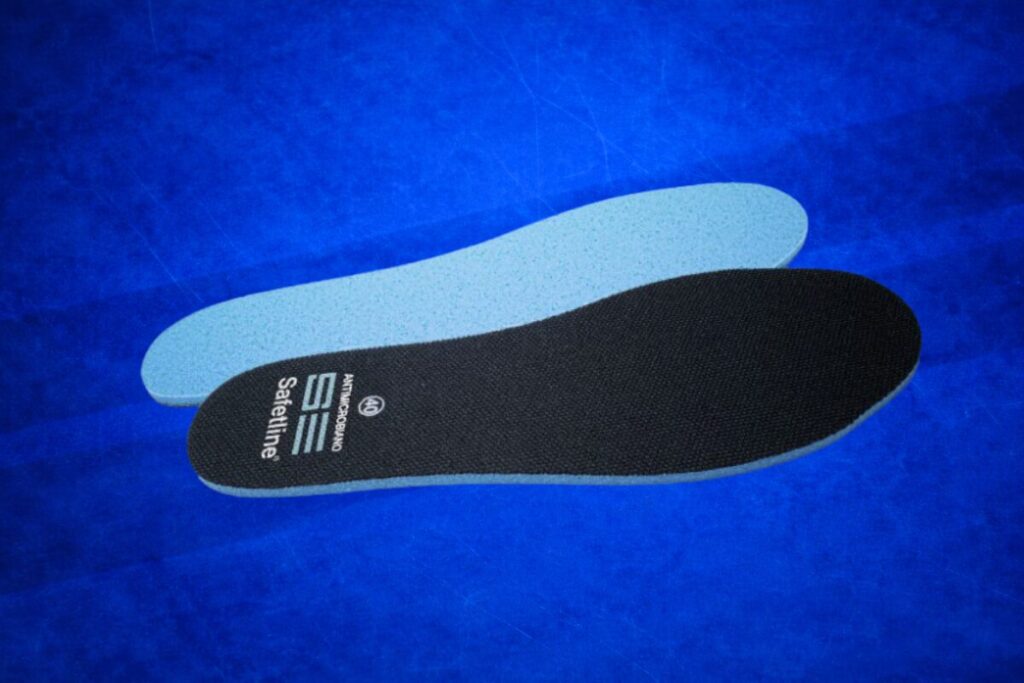
The white shoe is best suited for sectors where the priority is comfort, lightness, and practical cleaning. In the white padded elastic shoe, the design without loose parts or external protrusions helps reduce residue retention and contributes to water penetration resistance. The model also uses SafetDry lining and a removable cushioned insole.
To reinforce the theme of internal comfort during long shifts, it is worth connecting this point to the Palmilha Premium. Additionally, Safetline offers the model with plastic, steel, or composite toecaps. In other words, it does not replace a cold storage model when thermal exposure is more aggressive, but it can very well serve support areas, circulation, and food processing without thermal load.
How Safetline addresses this routine
Safetline addresses these needs within its Linha Branca safety footwear proposal, with a family that includes white elastic ankle boots, white lace-up shoes, microfiber cold storage boots, white cold storage boots with Velcro closure, and white elastic shoes. This composition is important because it allows for standardizing operations by sector, without forcing a single solution for different environments and temperatures.
In addition to the variety of models, Safetline's Linha Branca features attributes that make sense in real-world use: water-repellent microfiber, resistance to water penetration, reduced residue retention, lining focused on thermal comfort, removable antibacterial insole, and Falcon outsole in bidensity PU or PU/TPU, with features such as impact absorption, adherent channels, anti-torsion bar, and more natural walking flexion. It is this combination that makes the choice more technical and less generic.
What to review before standardizing procurement
Before finalizing a corporate purchase, Safetline recommends validating five points: cold intensity, presence of water and residues, sanitization requirements, need for a safety toecap, and model documentation. The toecap, for example, should align with the activity's risk, not just purchasing habits. The CA must be valid and compatible with the intended use. For this documentation step, it is worth consulting the content on how to consult PPE CA, which helps transform verification into a safer technical decision.
It is also important to review sizing, time spent in cold areas, frequency of sanitization, and replacement routine. In cold storage, footwear needs to perform well on the first day and continue to provide grip, comfort, and structural integrity throughout its use. Correct specification reduces rework, improves PPE acceptance, and helps protect team productivity.
Frequently Asked Questions
Is white footwear suitable for cold rooms?
It is suitable in certain contexts, but should not be treated as an automatic choice for every cold operation. When the routine involves prolonged exposure to low temperatures, frequent contact with moisture, and the demand for more dedicated thermal protection, it is best to evaluate a model specifically developed for that environment. Therefore, the decision must consider the sector, the duration of cold exposure, and the activity's risk level.
Does every cold storage operation require a steel toecap?
No. The type of toecap should align with the actual risk of each workstation. In some functions, the priority is protection against impact and compression. In others, the need may be more related to lightness, comfort during long periods of standing, or even a preference for non-metallic components, depending on the application.
When the choice is made based solely on purchasing habits, the operation risks specifying footwear that does not provide the best balance between protection and daily use. The correct choice comes from a technical analysis of the environment and the activity.
What most impacts footwear durability?
The durability of footwear in cold storage depends on a combination of factors. The upper material, outsole quality, moisture resistance, cleaning routine, and drying method directly influence performance over time.
Furthermore, the intensity of use and the type of flooring accelerate or reduce wear. In cold and humid environments, improper maintenance compromises the footwear's structure, grip, and comfort more quickly. Therefore, choosing the right model from the outset makes a difference not only in protection but also in the PPE's lifespan.
Choose footwear for cold storage with greater precision
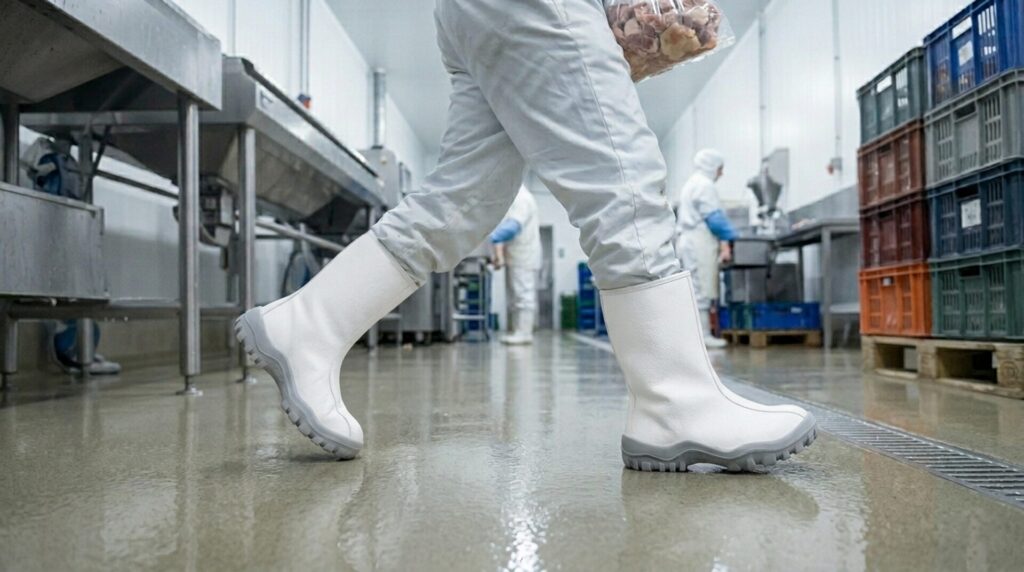
When operations involve cold, wet floors, frequent sanitization, and intense shifts, correctly specifying footwear ceases to be a detail and becomes part of team performance. Safetline develops solutions for this scenario with a focus on protection, comfort, and practical use, bringing together models designed for different levels of exposure within the industrial routine.
To understand which configuration makes the most sense for each sector, it is important to consider the specific requirements of each environment, especially in operations with high hygiene and performance standards. If the need is already more directed towards cold areas, with dedicated thermal protection and moisture resistance, the next step is to learn about the Safetline Microfiber Cold Storage Boot and request a quote according to the operational reality.
The right choice reduces specification errors, improves worker adaptation to PPE, and strengthens daily safety. When the goal is to purchase with more criteria and confidence, Safetline offers a product line developed to meet this challenge with technical consistency and practical use insight.