

Knowing how to consult an EPI's CA is a basic compliance step, but it is also an important filter to avoid inadequate purchases, rework, and unnecessary exposure in daily operations. In Safetline's view, the consultation should not only serve to confirm a number. It needs to help the buyer, safety technician, and manager validate whether the correct equipment is being acquired for the correct risk.
In summary, the official path is this: access the CAEPI system of the Ministry of Labor and Employment, enter the CA number (Certificado de Aprovação), click Consult, open the corresponding record, and check the status, manufacturer, equipment description, and technical information of the certificate. This process provides security for approving a purchase with more criteria.
What is an EPI's CA and Why This Consultation Matters
The Certificado de Aprovação is the official reference that confirms that personal protective equipment has been evaluated for use as EPI. In practice, organizations must only acquire approved EPI (Personal Protective Equipment), and the equipment must be sold with a valid CA. Therefore, consulting the certificate before purchase is not bureaucracy. It is quality control, traceability, and non-conformity prevention.
For those working with foot protection, this check is even more important. An isolated CA number is not enough when the goal is to standardize a model for the entire team. It is necessary to ensure that the consulted record corresponds exactly to the type of footwear, the manufacturer, and the protection required by the activity. Those who wish to delve deeper into this rationale can refer to the content on safety footwear as EPI, which helps connect the documentary requirement with the actual application in the workplace.
How to Consult EPI CA on the Official MTE Website
Access CAEPI and Search by Certificate Number
The most direct way to perform the consultation is by the CA number itself. On the official CAEPI portal, the “CA No.” field appears right in the initial search area. Simply enter the certificate number and click “Consult” for the system to display the corresponding equipment record.
After the search, the portal will display the data linked to that certificate, such as manufacturer, equipment type, and CA status. The guidance is to click on the form icon next to the company name to access the complete record sheet. On this page, it is possible to verify the EPI's technical information and confirm if the certificate corresponds exactly to the equipment being evaluated for purchase or use.
If there is a need to maintain an internal record of the verification, the system itself also allows viewing and saving the CA document in PDF format, which facilitates the organization of evidence in audits, purchasing processes, or internal controls of protective equipment.
When You Don't Have the CA Number
Although the equipment type search system in CAEPI is an available alternative, this consultation is not practical for daily use. The list of results is often extensive and not very objective, which complicates initial analysis.
The most efficient approach is to establish direct contact with recognized and reliable manufacturers and importers. This way, it is possible to align activity risks, discuss the EPI's technical specifications, and receive the Certificado de Aprovação (CA) number corresponding to the indicated product from the supplier.
With this information in hand, it is up to the SST team to evaluate the CA's compliance and validate whether the EPI meets legal requirements and the actual protection needs of workers.
What Should Be Checked Within the Record
Here is where many processes fail. It is not enough to read “valid” and move on. The consultation needs to confirm whether the description of the consulted EPI corresponds exactly to the item being quoted or acquired. It is also important to verify if the manufacturer presented in the record is the same as informed in the commercial proposal and if the certificate truly covers the expected application for that activity.
When opening the CA details in the system, it is ideal to carefully analyze the available technical information, such as the equipment description, the type of protection for which it was approved, and any observations regarding use or limitations. This data helps ensure that the EPI not only has certification but is also suitable for the specific purpose within the operation.
In safety footwear purchases, this review needs to consider the product type, the declared purpose, and the usage limitations indicated in the record. When this verification is superficial, the CA number may even be correct, but associated with a different model or an application that does not correspond to the reality of the work. This type of error generates inconsistencies in the purchasing process and can compromise the standardization of EPIs used by the team.
How to Know if the CA is Suitable for Purchase
The correct interpretation of the consultation begins with a simple question: does this certificate exactly describe the EPI that will be delivered to the worker? If the answer is not clearly positive, the purchase should not yet be approved. In practice, Safetline recommends cross-referencing four points before approval: manufacturer identification, equipment description, consistency with activity risk, and certificate status in the official system.
Another important consideration is to separate the CA's validity from the equipment's service life. The government makes it clear that EPI must be sold with a valid CA and that, after acquisition, the purchasing company needs to observe storage conditions and the expiration date informed by the manufacturer or importer. In other words, CA consultation is indispensable upon product entry, but it does not replace the analysis of conservation, wear, and suitability for use over time.
What to Evaluate When the EPI is Safety Footwear

For safety footwear, the CA consultation must be accompanied by a technical reading of the usage context. The buyer needs to confirm if they are validating a boot, a high-top boot, or another type of footwear consistent with the team's exposure. They also need to verify if the certificate's description aligns with the job requirements, because the most common error is not the absence of the CA, but rather the choice of a model with specifications incompatible with the actual risk.
It is precisely at this point that the manufacturer's experience makes a difference. Safetline presents itself as a specialist in safety footwear, offering one of the most complete lines in Brazil and boasting over 50 years of experience in the segment.
Furthermore, the product page shows a wide range, with boots, shoes, sneakers, high-top boots, and combat boots for different usage contexts. If the next step is to compare options, it is worth browsing Safetline's product page before finalizing the specification.
Common Errors When Consulting EPI CA
A recurring error is to rely solely on commercial material, screenshots, or verbal information from the supplier. The verification source must be the official system. Another frequent error is to consult the number but not open the record details. Without this care, the team fails to validate essential fields for purchase approval.
It is also common to treat the consultation as a purely documentary task, when it should function as a step in the technical specification. This is even more critical for safety footwear, because comfort, shape, application, and adherence to risk need to go hand in hand with CA regularity. When the purchasing process performs this complete review, the chance of rework significantly decreases.
Frequently Asked Questions
Can I consult an EPI's CA without requesting an authenticated copy from the supplier?
Yes. The government itself states that there is no legal obligation to demand an authenticated copy of the document when acquiring equipment. The information available in the CAEPI system can be used as a basis for selecting and supplying appropriate EPI.
Is it possible to print the certificate after consultation?
Yes. After opening the correct record in the official consultation, the system offers the “View CA” option, which generates the document in PDF for printing or internal archiving.
Can I search without the CA number?
Yes. However, searching by equipment type does return an extensive list of manufacturers and importers with valid CAs, but this can make the search impractical when you need something more specific.
Does a valid CA alone resolve the specification?
No. The certificate is indispensable, but it needs to be aligned with the risk, the type of equipment, and the actual application. For safety footwear, approving the purchase requires looking at the certificate and the model's adherence to the team's routine.
Choose Safety Footwear with Valid CA and Correct Specification
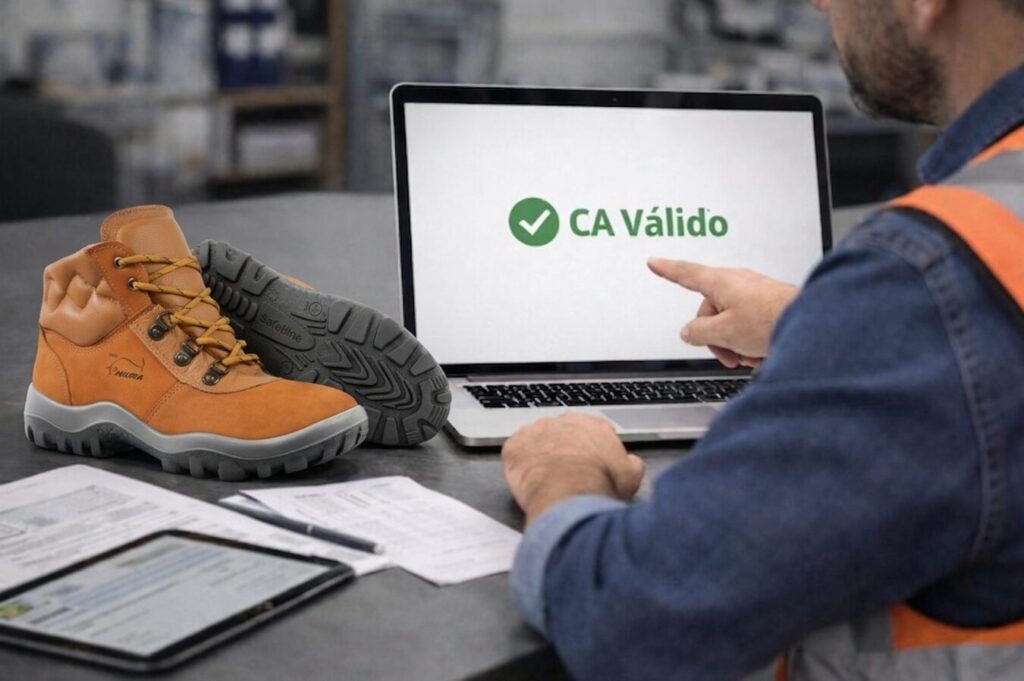
Consulting an EPI's CA correctly is simple, but it makes a direct difference in compliance and purchase quality. The official path goes through CAEPI, and correct analysis requires more than just locating a number. It is necessary to confirm the status, manufacturer, description, and compatibility with the activity's risk.
When operations need to standardize safety footwear with greater technical assurance, Safetline helps transform this verification into a practical decision. To proceed, the reader can speak with the Safetline team and align the correct specification for their operation.