

The sanitization of safety footwear is the set of cleaning, internal disinfection, and drying procedures that preserves the integrity of the material, the outsole, and the protective components. Done correctly, it maintains the sanitary conditions of the footwear, protects the certification (CA), and prolongs the service life of the PPE. Each material (leather, nubuck, or microfiber) requires specific techniques and products.
The preservation of footwear depends on the frequency of cleaning, the appropriate choice of products, and the correct drying method, as each material reacts differently in the upper and the outsole, potentially contributing to either preservation or degradation.
In the next sections, you will find sanitization guidelines separated by material and a preservation routine ready to be integrated into your PPE program.
Why does correct sanitization prolong the life of safety footwear?
Sanitizing safety footwear is not a matter of appearance. It is the technical maintenance that preserves the integrity of the upper and outsole materials over time.
Poorly maintained PPE loses protective properties ahead of schedule and forces frequent replacements. For the OHS manager, this means recurring costs and the risk of the footwear not performing the function for which it was certified.
Sweat, moisture, and the silent degradation of the material
Sweat concentrates salts and acids that attack the leather from the inside, drying out the fibers and stiffening the upper. In humid environments, retained water accelerates this process.
Without periodic sanitization, this degradation progresses without visible signs, and by the time the manager notices, the material has already lost flexibility and resistance. Regular cleaning removes these residues before they compromise the structure.
The impact of improper cleaning on outsole durability
Proper sanitization contributes to the preservation of the safety boot and helps preserve the characteristics of the materials throughout their service life. In the case of the outsole, materials such as polyurethane (PU) exhibit good resistance, including contact with various agents present in work environments.
For cleaning, the ideal method is to use warm water, mild soap, and a cloth, carefully removing accumulated dirt and residues. It is not necessary to use aggressive products or perform intense washing processes to achieve efficient cleaning.
Another important point is to avoid exposing the footwear to high temperatures, both during sanitization and drying. After cleaning, let the safety boot dry naturally in a well-ventilated area away from direct heat sources.
Hygiene as a factor in comfort and occupational health
Damp and poorly sanitized safety footwear becomes an ideal environment for fungi and bacteria, causing odor, dermatosis, and discomfort.
An employee who experiences discomfort tends to avoid using the PPE. Keeping the antibacterial insole clean and dry preserves comfort and reinforces the culture of correct usage within the team.
Signs that safety footwear needs immediate sanitization
- Persistent odor after the shift.
- Internal moisture that does not dry between shifts.
- Visible accumulation of dust, mud, oil, or chemical residues on the upper.
- Whitish stains (sweat salts) on the inside.
- Sudden stiffness of the leather after contact with water or products.
Each sign points to a material in the process of degradation. Acting early prolongs the service life and maintains the integrity of the PPE.
How to sanitize safety footwear by material type
The first step before any cleaning is to identify the material of the upper. Leather, nubuck, and microfiber react differently to the same products.
Applying the wrong technique accelerates wear instead of preserving the footwear.
This applies to most materials: warm water, a soft cloth, and mild soap. From there, each type requires specific care.
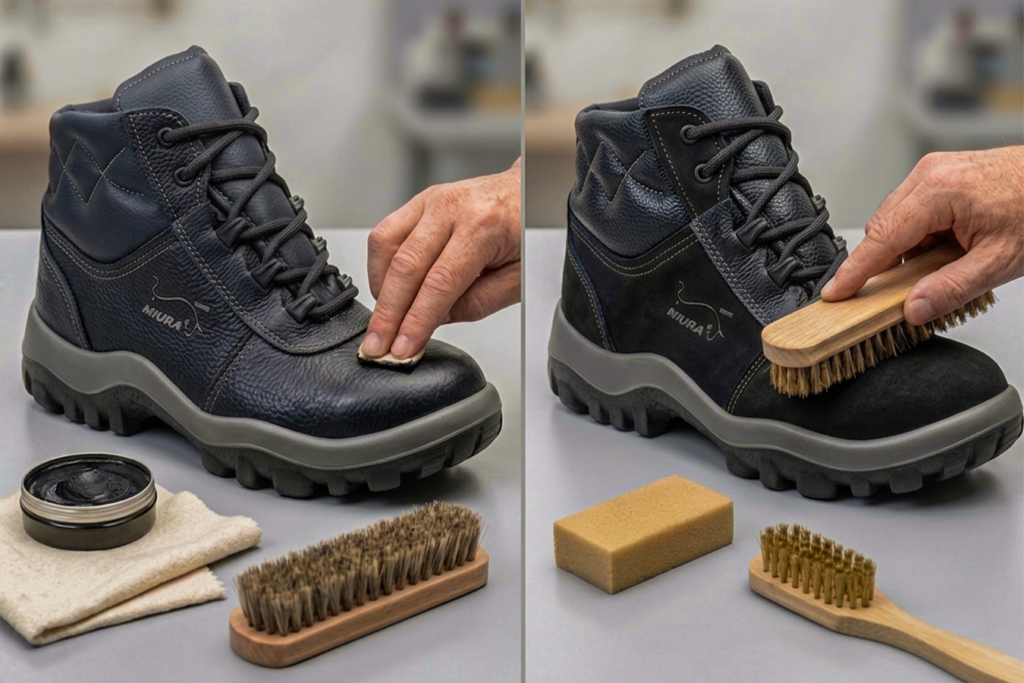
Relax full-grain leather: cleaning, conditioning, and what to avoid
Remove excess dirt with a soft-bristled brush. Wipe with a slightly damp cloth and mild soap, without soaking. Dry with a dry cloth and apply a leather conditioner every 30 days.
Leather loses flexibility when it dries out and cracks when exposed to solvents. Avoid alcohol, kerosene, and abrasive products.
Synthetic and dual-density materials: simplified routine
Synthetic and microfiber uppers can be cleaned with a damp cloth and mild soap without much difficulty. On the other hand, the dual-density outsole deserves attention in the grooves, where debris accumulates and reduces grip on slippery floors.
Use a brush to remove trapped material between the treads. This preserves the slip-resistant performance of the outsole.
Textile upper and internal components
For textile uppers, cleaning should be done with mild soap diluted in water, always avoiding completely submerging the footwear, as immersion can compromise the structure and reduce durability.
Removable insoles should be taken out for separate cleaning. Sanitize the antibacterial insole with mild soap and let it dry completely in the shade before putting it back.
The interior of the footwear requires periodic disinfection with a specific product for odor control, without soaking the structure.
Common mistakes that permanently damage the material
Some habits compromise safety footwear irreversibly. Note the main ones:
- Hot water attacks the seams and compromises the bond between the upper and the outsole.
- Bleach and chlorine dry out and weaken the upper, attack the seams, and corrode the outsole materials.
- Using a washing machine deforms the structure of the footwear and causes a loss of ergonomics.
- Solvents and thinners degrade the leather, weaken the seams, and corrode the outsole materials.
Each of these items attacks precisely the components that guarantee the protection certified by the CA. When you preserve the material, you also maintain the safety it offers.
Preservation and drying routine for work teams
Individual care is insufficient to optimize the replacement cost of an entire fleet of PPE. Durability at scale depends on implementing rigorous protocols that include a defined cleaning frequency, standardized drying methods, and objective criteria for replacement.
Understand, below, how to preserve safety footwear effectively, ensuring the durability and protection of your PPE.
Ideal sanitization frequency by risk environment
The routine varies according to the severity of the environment. Dry environments tolerate longer intervals; wet environments or those with contaminants require daily care.
| Environment | External cleaning | Internal disinfection |
| Dry industry / assembly | Weekly | Biweekly |
| Wet environments / washing | Daily | Weekly |
| Agroindustry / organic matter | Daily | Weekly |
Correct drying: why direct heat ruins footwear?
Direct sunlight, dryers, and ovens are the greatest enemies of service life. Heat dries out the leather, deforms the upper, and degrades the outsole.
Always dry in the shade, in a ventilated area, with the footwear open. Absorbent paper inside accelerates the process without damaging the material.
Odor control and fungal proliferation
Odor is a sign of retained moisture and microbial proliferation, not apparent dirt. Antibacterial insoles help, but they do not replace drying.
Instruct the team to remove the insole at the end of the shift to air it out. A baking soda solution or a disinfectant specific for footwear controls fungi without attacking the internal material.
Storage between shifts and pair rotation
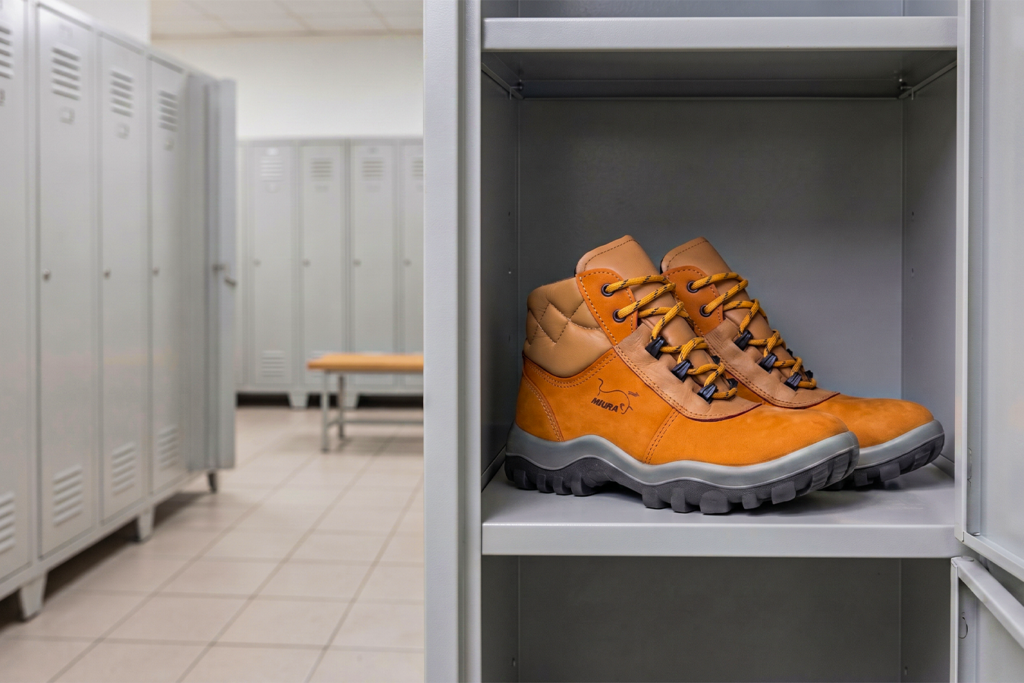
Storing a damp safety boot in a closed locker accelerates degradation. The ideal is ventilated storage, away from cold floors and direct contact between pairs.
For intense operations, rotating two pairs per worker allows for a complete 24-hour drying period between uses, practically doubling the replacement interval.
When sanitization is not enough and it is time to replace
Cleaning has its limits. Replace the footwear when the following appears:
- Outsole worn down by friction with the ground and pressure exerted by the body, with signs of cracks, compaction, and deformations.
- Safety toe cap exposed or deformed after impact.
- Torn upper or broken seams.
What to put into practice this very week?
The safety footwear that lasts the longest is not the one that works the least, but the one that receives correct technical maintenance.
When replacement becomes a routine, the cause is almost never the footwear itself, but the preservation that was never performed.
Three principles to carry forward:
- Material defines the method: Leather, nubuck, and microfiber do not accept the same product. Solvents, bleach, and hot water degrade the upper and the outsole, even when they clean the surface.
- Drying and storage matter as much as cleaning: Direct sunlight and heat sources damage the dual-density outsole and dry out the upper. Shade, ventilation, and a dry place preserve the structure.
- Sanitizing does not replace replacing: Cracks in the outsole, an exposed safety toe cap, or a compromised upper are signs for replacement, not cleaning.
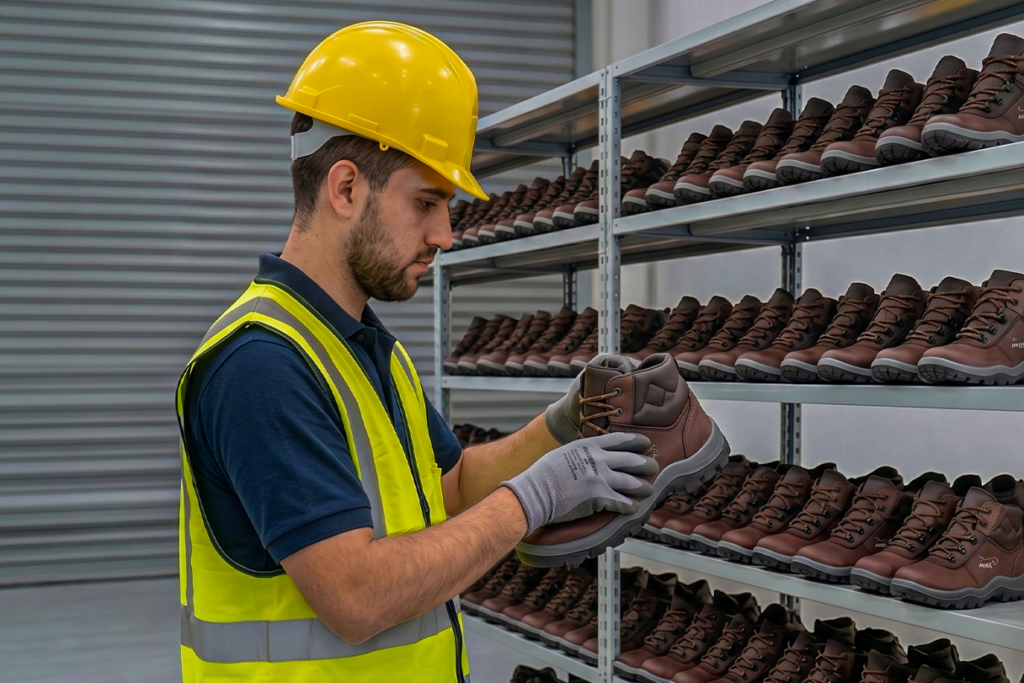
Set up a sanitization checklist with frequency by environment, approved products, and disposal criteria, and insert this document into your PPE program.
Start with the right footwear: discover Safetline's safety boot and evaluate the durability that supports your annual PPE budget.
Frequently asked questions
Can you wash a safety boot in the washing machine?
No. The machine subjects the upper to water, agitation, and spinning that break seams, deform the upper, and compromise the outsole. The correct method is manual cleaning with a soft cloth, warm water, and mild soap, respecting the material from which the footwear was manufactured.
How to remove the odor from inside safety footwear?
The odor comes from accumulated moisture and bacteria. Remove the insole after use and let it dry separately, in the shade and ventilated. Avoid talcum powders, which harden when mixed with sweat.
What product should be used to clean nubuck or suede leather footwear?
Nubuck does not tolerate excess water or regular soap; a slightly damp cloth with mild soap must be used. Use a soft-bristled brush specific for nubuck, in the direction of the grain, to remove dry dirt. Never apply grease, oil, or scouring powder.
Can I dry safety footwear in the sun or near a heater?
No. Direct exposure to the sun and heat sources dries out the leather, making the upper stiff and brittle. Correct drying is in the shade, in a ventilated area, with absorbent paper inside.
Can sanitizing safety footwear incorrectly invalidate the PPE?
Yes. Solvents, bleach, and hot water degrade materials and components that support the certified properties of the footwear. Any alteration not approved by the manufacturer invalidates the warranty and compromises the functionality of the PPE, risking both safety and regulatory compliance.
How do I know if safety footwear needs to be replaced, not just cleaned?
Some signs indicate the end of service life: an outsole with cracks or detachment, a torn or dried-out upper, or an exposed or dented safety toe cap. In these cases, cleaning does not restore protection.
Does mild soap work for all types of uppers?
It serves as a general rule for leather, nubuck, and microfiber, always diluted in water and applied with a soft cloth.