

Antistatic footwear are protective equipment designed to dissipate static electricity from the user's body in a controlled manner. In other words, this type of safety footwear prevents the accumulation of electrostatic charge and sudden discharges (sparks) that can cause fires, explosions, or damage sensitive electronic equipment.
Safetline emphasizes the importance of this footwear: in addition to protecting workers and industrial environments against static risks, they bring direct benefits in productivity and loss reduction. Below, understand in detail what antistatic footwear are, their applications, advantages, and how Safetline ensures the quality of these fundamental EPIs.
What is antistatic footwear and what is its purpose?
Antistatic footwear, also called dissipative footwear, is designed to neutralize static electricity accumulated in the body. Unlike common footwear, its sole is produced with special additives that allow for the controlled dissipation of this energy. This mechanism works in conjunction with the antistatic insole, an indispensable component to ensure that the discharge occurs gradually and safely.
This composition allows static charges to be continuously dissipated to the ground at a safe rate, preventing accumulation. Thus, the user is protected against electrostatic shocks when touching metallic objects or equipment, and the generation of ignition sparks in flammable environments is prevented. In summary, antistatic footwear reduces or eliminates body static electricity, ensuring greater safety.
It is worth noting that, in international standards, this type of EPI is identified by the symbol “A” (for anti-static). To comply with the standard, the footwear must present a specific electrical resistance range (generally between 0.1 megaohm and 1000 megaohms). This controlled resistance ensures that static discharge occurs slowly and safely, fast enough to prevent dangerous accumulation.
Important: antistatic footwear is not designed for electrical insulation (as we will see later); its purpose is exclusively to dissipate charges and protect against the effects of static electricity, and not against electric shocks from active circuits.
What is the difference between antistatic footwear and insulating footwear?
Many people confuse antistatic footwear with electrical insulating footwear (also called electrician's footwear). It is important to highlight that each type has specific and distinct functions.
Antistatic footwear, as we have seen, is designed to continuously dissipate electrostatic charges to the ground, preventing energy accumulation in the body. Electrical insulating footwear, on the other hand, is designed to completely isolate the user from electrical currents, serving as a barrier against electric shocks.
In practice, this means that antistatic footwear has controlled conductivity and must allow charges to escape; while electrician's footwear is non-conductive, meaning it is insulating and cannot contain any metallic parts.
For example, dielectric footwear used by electricians follows the ABNT NBR 16603 standard and supports up to 500V in dry environments, offering protection during the execution of activities on energized components.
Antistatic footwear, however, does not protect against electric shock; if a worker wearing antistatic footwear touches an energized wire, the current could pass to the ground, causing a potentially fatal shock.
Therefore, never substitute one EPI for another: in activities with risk of electrocution (electrical maintenance, energized lines), use appropriate electrical insulating footwear (Safetline offers options of this type in its line, see under electrical insulating footwear). On the other hand, in contexts where the danger is accumulated static electricity (and not an electric shock), antistatic footwear is the right choice.
Where is antistatic footwear used?
Antistatic footwear is mandatory or highly recommended in various sectors and work environments. Generally, they are used in activities where a simple spark could be catastrophic or where static electricity can damage products. Check out some examples of applications:
Flammable and Explosive Environments
Petrochemical industries, refineries, munitions factories (ammunition, explosives), and environments with flammable gases or vapors require antistatic footwear. In these areas, the accumulation of charge on the worker's body could generate a spark and initiate an explosion. Antistatic EPIs prevent this risk by continuously discharging energy to the ground, maintaining a safe environment.
Fuel Stations and Transport of Flammable Liquids
At gas stations, tanker truck fueling locations, and fuel loading operations, the use of antistatic footwear is essential. The objective is the same: to prevent sparks near fuels. Truck drivers transporting flammable liquids and workers handling solvents or alcohol in tanks also benefit from this EPI, preventing accidental fires.
Electronics Industry and Cleanroom
Electronics, computing, telecommunications, and semiconductor companies adopt antistatic footwear (often called ESD shoes) to protect sensitive components. Microchips, circuit boards, and devices can be ruined by minimal, and sometimes imperceptible, static discharges.
In these factories and laboratories, all employees wear dissipative clothing and footwear to avoid damaging products during assembly. After all, a discharge of just 30 volts is enough to damage ultra-sensitive electronic components (a value much lower than what humans can feel).
Chemical, Pharmaceutical, and Textile Industry
Environments for processing flammable chemicals or combustible powders (such as in pharmaceuticals) also present a risk of ignition due to static. In the textile sector, although the danger of explosion is lower, accumulated static can attract undesirable dust and lint or cause small shocks to operators, impacting work quality. Antistatic footwear helps minimize these occurrences, improving safety and comfort.
Paint Booths and Environments with Explosive Dusts
In automotive paint booths (electrostatic painting) and in the handling of grains or sugar (where combustible dust is suspended), static electricity must be rigidly controlled. In these scenarios, in addition to grounding systems and controlled humidity, workers use antistatic footwear to prevent sparks that could ignite the air-particle mixture.
Therefore, whenever there is a potentially explosive atmosphere, flammable materials, or sensitive electronic equipment, antistatic footwear becomes an indispensable EPI. Responsible companies map these risks and require the use of appropriate footwear to protect both people and production processes.
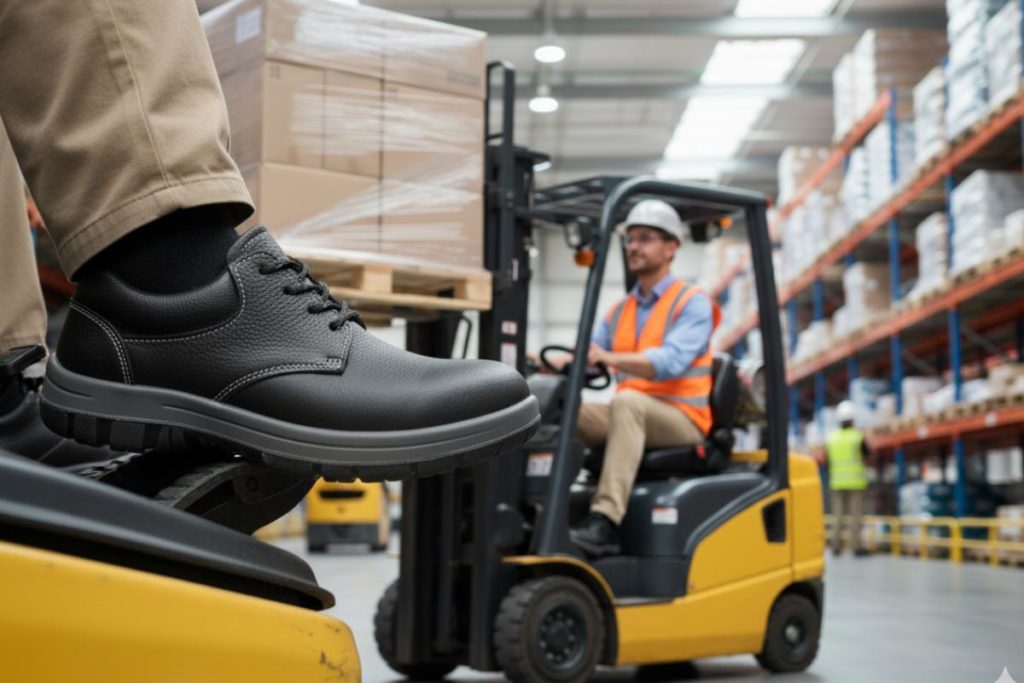
Benefits of Antistatic Footwear for Safety and Productivity
Antistatic footwear increases safety and improves operational results by controlling static electricity.
- Accident Prevention: In areas with flammable gases, vapors, or dusts, static can generate sparks. The use of antistatic footwear reduces the chance of ignition and complements machine grounding and other safety controls.
- Equipment Protection: Electrostatic discharges can damage boards, sensors, and automation systems. Industry estimates indicate that up to 30% of electronic failures are related to static. By dissipating the charge, the footwear reduces malfunctions, reboots, and data loss, leading to fewer unplanned downtimes and lower maintenance costs.
- Proven Savings: Consistent static control programs, which include antistatic footwear, can generate an ROI of up to 1000% annually, due to reduced rework and scrap. There are practical cases, such as AT&T units, with a reduction of over 50% in rework after implementing the measures.
- Real Case Study: To illustrate, two units of the telecommunications giant AT&T implemented the use of antistatic footwear and other measures in their production lines. As a result, they achieved a reduction of over 50% in rework costs for defective parts. In other words, more than half of the resources previously consumed to redo boards and components damaged by ESD were saved. The savings could have been even greater if non-static-related reworks were excluded from the calculation, yet the positive impact was proven. This case demonstrates how investing in antistatic footwear and ESD measures directly reflects in process improvement and waste reduction.
- Productivity and Quality: With fewer defects and interruptions, lines flow better. The team works with more confidence, final quality increases, and customer delivery becomes more predictable.
More than just complying with standards, antistatic footwear protects people and processes, reduces costs, and sustains productivity. Safetline offers certified models for different environments, aligning safety and performance.
Standards and Certifications for Antistatic Footwear
As an EPI, antistatic footwear must have a valid CA according to NR 6 and comply with ABNT NBR ISO 20345, ABNT NBR ISO 20346, and ABNT NBR ISO 20347, which identifies the attribute with the symbol “A” and defines dissipation tests and electrical resistance range. Only approved models can bear this marking.
The product must bear the symbol “A” and the CA number on the label or insole for easy verification. To maintain effectiveness, use antistatic insoles and accessories of the same brand as the footwear, avoid socks that block energy dissipation, and perform proper cleaning and drying.
Safetline manufactures antistatic models with valid CA and “A” marking, ensuring compliance and performance. The footwear identification also includes a pictogram engraving, which allows for quick visual confirmation.
Safetline Antistatic Footwear: Certified Quality and Technology
Safetline has been a benchmark in safety footwear for over 50 years and offers certified antistatic models. All comply with ABNT NBR ISO 20345, ABNT NBR ISO 20346, and ABNT NBR ISO 20347 and have a valid CA from the Ministry of Labor, which ensures performance and reliability.

The models feature an average electrical resistance of approximately 50 MΩ, an ideal range for controlled static electricity dissipation. Each batch is tested in our own laboratory before reaching the market.
The construction combines a dual-density PU sole with high grip, conventional insoles, and toecap options in steel, plastic, or composite.
In summary, by choosing Safetline, the user acquires reliable, durable, and comfortable antistatic footwear, supported by continuous investment in research and development.
Protect Your Team with Safetline Antistatic Footwear
Antistatic footwear plays a crucial role in workplace safety across various sectors. They protect against an invisible enemy – static electricity – which can cause everything from minor inconveniences to very serious accidents.
In this article, we have seen what this footwear is, where it should be used, and the clear benefits it provides for both workers and companies. Adopting the correct use of this EPI means preventing fires and explosions, safeguarding expensive equipment, improving productivity, and even saving money in the long run.
Safetline, a specialist in safety footwear, emphasizes that prevention always pays off. If your company deals with flammable environments or sensitive technology, or if you are a professional who values safety, consider incorporating antistatic footwear into your routine now.
Contact our consultants or learn about Safetline Antistatic Footwear on our website.
Protect yourself now with the expertise of a decades-long benchmark; Safetline is ready to walk alongside you towards a safer, static-risk-free workplace!