

Safetline, a benchmark in safety footwear for over 50 years, clarifies a common question: after all, how long does safety footwear last and when should it be replaced? In other words, what is the validity of safety footwear in use. In this context, "validity" means understanding the footwear's service life, how long it effectively protects without losing its safety characteristics. Knowing this timeframe is crucial to maintaining foot protection and avoiding unnecessary risks.
Below, understand the average service life of safety footwear (and why it doesn't last forever), what factors influence its durability, and the main signs that it's time to replace it with a new pair. All with a focus on what Safetline offers in quality and safety to the worker.
What is the validity of safety footwear?
In PPE (Personal Protective Equipment), the term validity can cause confusion. Just like with food, safety footwear also has an expiration date defined by the manufacturer. For this product, the validity is 2 years from the manufacturing date, information found on the packaging.
This period indicates the timeframe during which the PPE maintains its original performance and protection characteristics when stored properly. After this period, even without use, the materials may degrade, compromising user safety. In addition to the indicated validity, factors such as storage conditions, frequency of use, and maintenance also directly influence the footwear's service life.
It is important not to confuse the footwear's service life with other related concepts, such as product quality warranty or validity of the approval certificate. For example, all professional safety footwear must have a valid Approval Certificate (CA), issued by the Ministry of Labor, which attests to its compliance with technical standards and authorizes its commercialization. The CA has a validity period defined by the competent body, after which it must be renewed for continued commercialization (for safety footwear, this is usually 5 years). But beware: this 5-year CA period does not mean that the footwear can be used for 5 years.
In practice, the safe usage time is much shorter, as we will see below. Furthermore, the manufacturer's warranty (against manufacturing defects) is usually a few months up to 1 year, depending on the brand and model, which also differs from the service life itself.
In summary, the validity of safety footwear refers to the durability of the PPE in use, not to the certification paper or document. In fact, according to official guidelines, PPE with an expired CA can continue to be used by the worker if it was acquired within the validity period and is in good condition, as the CA expiration only impacts new purchases and sales of the product. On the other hand, using footwear beyond its recommended service life is risky, as after a certain time or level of wear, it may no longer offer adequate protection. Therefore, we must pay attention to the next topic: how long, after all, does safety footwear usually last in use?
How long does safety footwear last, on average?
As indicated on all packaging and advertising materials, Safetline footwear has a validity of two years.
This recommendation refers to footwear in use, but each company must conduct its own assessment regarding the validity period of its PPE, considering the usage conditions and the activity performed.
In lighter activities, the footwear may remain in good condition for longer, while in more intense activities, sole wear, midsole compression, and leather stretching may require replacement in a shorter period.
Thus, Safetline, as a manufacturer serving various segments, recommends a two-year period as a reference, but emphasizes that it is up to each company to stipulate the validity of its equipment based on actual usage conditions. In the next topic, we list what can make safety footwear last longer or shorter.
Factors influencing the service life of safety footwear
Several factors can directly impact the durability of safety footwear. Knowing them helps both to establish the PPE's validity and to take measures to prolong it (when possible). Among the main factors are:
Frequency and intensity of use
The more hours per day and days per week the footwear is used, the faster wear will occur. A worker who uses the footwear every day for a full shift will require replacement in less time than one who uses it occasionally. Furthermore, very intense activities (such as long walks, frequent stair climbing, constant friction with abrasive surfaces) accelerate the deterioration of the PPE. For example, footwear used 5 or 6 days a week in heavy construction will have a much shorter service life than that used twice a week in a warehouse.
Work environment
Site conditions greatly influence. Humid environments, with the presence of chemicals, oil, grease, or extreme temperatures, can degrade materials more quickly. Very rough or uneven floors cause greater abrasion to the sole; while rough floors with corrosive substances can "eat away" at the sole and upper in a few months. On the other hand, work in indoor, clean, and dry environments tends to cause slower wear. In summary, the severity of the work environment directly affects the footwear's deterioration period.
Footwear quality and material
The manufacturing quality and the materials used make a difference in longevity. PPE produced with resistant raw materials and good technology usually withstands wear for longer, while lower quality products may tear, crack, or detach in a short time of use.
Safetline, for example, invests in noble leathers, high-performance soles, and advanced manufacturing processes to deliver safety footwear of excellent durability. This means that Safetline safety footwear performs consistently throughout its service life, although, like any PPE, it must be replaced when it reaches its safe usage limit.
Maintenance and care
User care habits also weigh in the equation. Regularly cleaning the footwear, allowing it to dry properly when wet, and storing it in an appropriate place prolong its service life. In contrast, lack of cleaning, storing dirty PPE in humid places, or exposing it to unnecessary conditions (for example, wearing the boot outside of work for other activities) can shorten its service time. Small conservation practices, which we will detail later, make a difference in the footwear's validity.
Fit and proper use
Using the correct size footwear and for the appropriate purpose also influences. Footwear that is too tight can tear or unstitch more quickly at stress points; while footwear that is too loose can suffer excessive creasing, deforming the structure. Furthermore, using the appropriate footwear for each function is essential to ensure both safety and work efficiency.
When light occupational shoes are used in heavy construction activity, they deteriorate quickly because they were not designed to withstand that level of effort, which can compromise worker protection and generate extra replacement costs.
Furthermore, each work environment presents specific risks, and the footwear needs to meet the safety requirements foreseen for that activity, such as impact resistance, puncture protection, anti-slip sole, or resistance to chemical agents.
The correct choice not only preserves the worker's health, preventing fatigue and injuries, but also ensures compliance with regulatory standards and contributes to accident prevention and the durability of the PPE.
All these combined factors determine the service life of the PPE on the worker's feet. Therefore, the validity of safety footwear cannot be defined solely by the manufacturer's recommendation, but rather by the context in which it will be used. In more aggressive sectors, such as heavy construction, mining, or the metallurgical industry, wear occurs faster due to constant exposure to impacts, abrasion, and severe conditions, requiring replacements at shorter intervals.
In lighter environments, such as offices, administrative areas, or sectors with lower physical risk, the same footwear can have a prolonged service life, maintaining its effectiveness for longer. This assessment must be carried out by the company and is essential to ensure that the worker is always protected, avoiding both the use of already compromised footwear and the waste of resources with unnecessary replacements. Safetline guides its customers to choose the appropriate model for each risk and offers guidance on care, ensuring that you get maximum durability with safety from your products. But regardless of the care, an inevitable moment arrives: identifying that the footwear "has run its course" and needs to be replaced. See below the warning signs to replace the PPE.
Signs that it's time to replace safety footwear
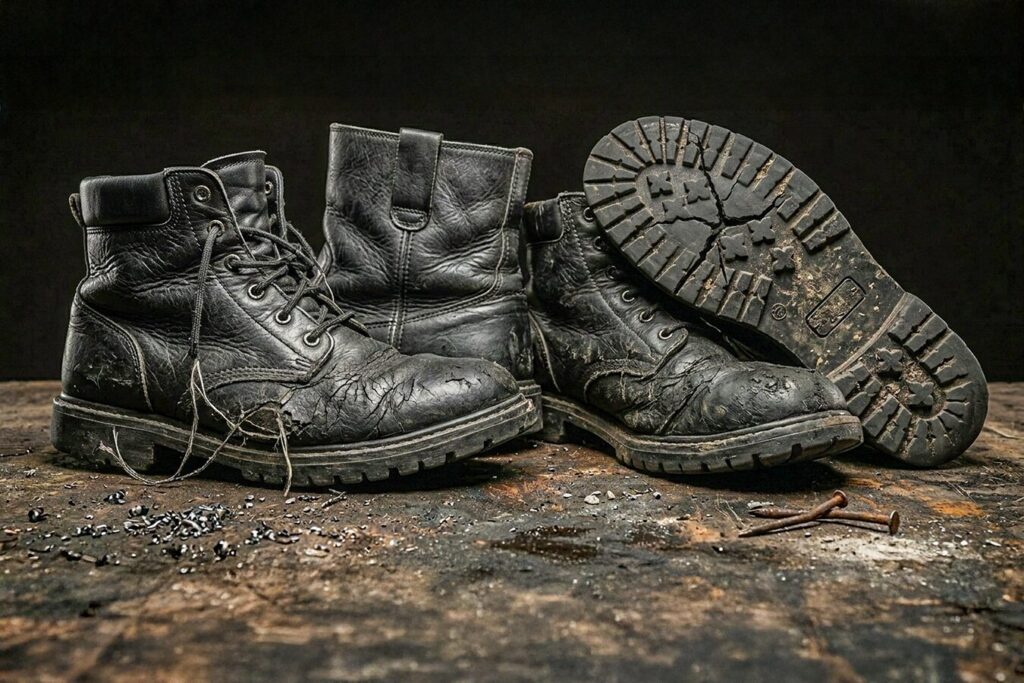
Knowing how to identify wear and damage in PPE is fundamental to avoid extending its use beyond its validity. Some clear signs indicate that the safety footwear no longer offers adequate protection and should be replaced as soon as possible:
Visible damage to the upper
Tears, holes, damaged leather or footwear material parts, broken seams, or detached components are obvious indications that the footwear is compromised. Any broken integrity in the upper (top part) weakens protection and can expose the user to risks.
Excessive sole wear
Check the sole frequently. If the anti-slip grooves are shallow or non-existent ("bald"/smooth sole), or if the midsole appears, effectiveness against slips and infiltrations is gone. Worn sole means less grip and less impact absorption, a danger for accidents.
Looseness or loss of fit
Over time, the footwear can stretch (widen) too much or deform, causing the foot to slide around inside it. If you notice that you need to excessively tighten the laces or that the footwear has become too loose even when wearing normal socks, it's a sign of structural wear. "Loose" PPE on the feet compromises stability and protection.
Immediate replacement of safety footwear after accidents
If safety footwear is involved in any type of accident, such as an object falling and denting the toecap or a cut in the sole caused by a sharp object, it must be immediately replaced. This is because, after suffering this type of damage, the footwear loses its original protective capacity and no longer offers the necessary resistance to ensure the worker's physical integrity. Continuing to use compromised footwear significantly increases the risk of new accidents, as the damaged structure can no longer absorb impacts or prevent object penetration.
Immediate replacement is, therefore, an essential measure to preserve user safety and maintain compliance with the protection standards required for the activity.
Discomfort or pain when wearing
Old safety footwear can lose its cushioning and ergonomic properties. If you start to feel pain in your feet, heels, and knees while wearing the same footwear that was previously comfortable, pay attention. Constant discomfort, blister formation, or pressure points may indicate that the internal structure (insole, midsole) is already deformed or compacted beyond its limit, reducing comfort and protection. In this case, it's not worth "suffering until it's completely worn out"; the ideal is to replace it with a new one that offers adequate support again.
Expired CA or unmet standards
As mentioned, an expired CA alone does not immediately render the footwear unusable. However, if the model's Approval Certificate has already expired and has not been renewed, it may be good practice to replace the PPE in the next batch purchase, both to have a product within the current certification and because this generally indicates that the model has been on the market for many years. Furthermore, if for some reason the footwear no longer meets applicable safety standards (for example, a change in NR or technical specification that rendered it obsolete), it must be discontinued. In general, manufacturers like Safetline update their products according to new standards, but it is important to be aware of this aspect in specific contexts.
If one or more of these signs are present, do not hesitate to provide new safety footwear. Insisting on using worn PPE greatly increases the risk of accidents and injuries; for example, a smooth sole is a frequent cause of slips and falls at work. It can also lead to health problems, such as chronic foot and back pain, due to lack of cushioning and support.
Remember that safety must come first: use each pair of footwear within its service life and, upon identifying the signs above, arrange for immediate replacement. This way, you ensure continuous protection and also compliance with regulatory standards (avoiding fines or penalties for using inadequate PPE).
Tips to prolong the service life of safety footwear
Although all PPE has an inevitable end, some simple daily care practices can increase the service life of safety footwear. Safetline recommends the following practices to better preserve your footwear:
Regular cleaning
Keep the footwear clean, according to the manufacturer's instructions. After use, remove dirt (dust, mud, grease) with a brush or clean cloth. Do not store dirty footwear for long periods, as chemical residues or particles can degrade the materials over time.
Proper drying
If the footwear becomes damp or wet (from sweat, rain, washing), let it air dry in the shade in a well-ventilated area, naturally. Avoid intense heat sources directly on the PPE, such as forced drying near fire, in an oven, or under strong sunlight, as excessive heat can dry out the leather and deform the footwear.
Correct storage
Store safety footwear in a dry and ventilated place, away from humidity and chemicals. Do not leave footwear inside wet lockers or in car trunks under scorching sun for days. A clean environment, without weight on top of the footwear and with good ventilation, prevents mold and maintains the integrity of the materials for longer.
Use the correct size
It seems obvious, but it's important to reinforce: always use the correct size footwear for your foot. Tight footwear experiences excessive tension and can tear; loose footwear "slides around" and can deform more quickly due to lack of adequate support. Choosing the right size increases both comfort and the durability of the PPE.
Use appropriate socks
Always wear PPE with clean and appropriate socks (preferably cotton or sweat-absorbing fabric). Socks reduce direct friction between the foot and the inside of the footwear and absorb some of the sweat moisture, helping to preserve the internal lining and prevent odor. Additionally, socks prevent dirt particles from coming into direct contact with the skin, which also protects the internal integrity of the footwear.
Use the footwear as indicated
Finally, respect the footwear's purpose. Use it only in the environments and for the tasks for which it was designed. Avoid using your safety footwear outside of work, in recreational activities, or exposing it to unforeseen situations (for example, wearing the same safety footwear to ride a motorcycle outside of working hours; this can cause different wear, in addition to not being ideal in terms of vehicular safety).
Each Safetline model is developed for specific risks; following these guidelines ensures that the footwear is not subjected to stresses beyond what was planned, increasing its service life.
By following these tips, you will be able to extract the maximum safe usage time from your safety footwear. Small conservation actions make a big difference in the long run. However, even with all precautions, no PPE lasts forever. It is crucial to maintain a routine of periodic inspection; daily, before putting on the footwear, take a quick look at its condition.
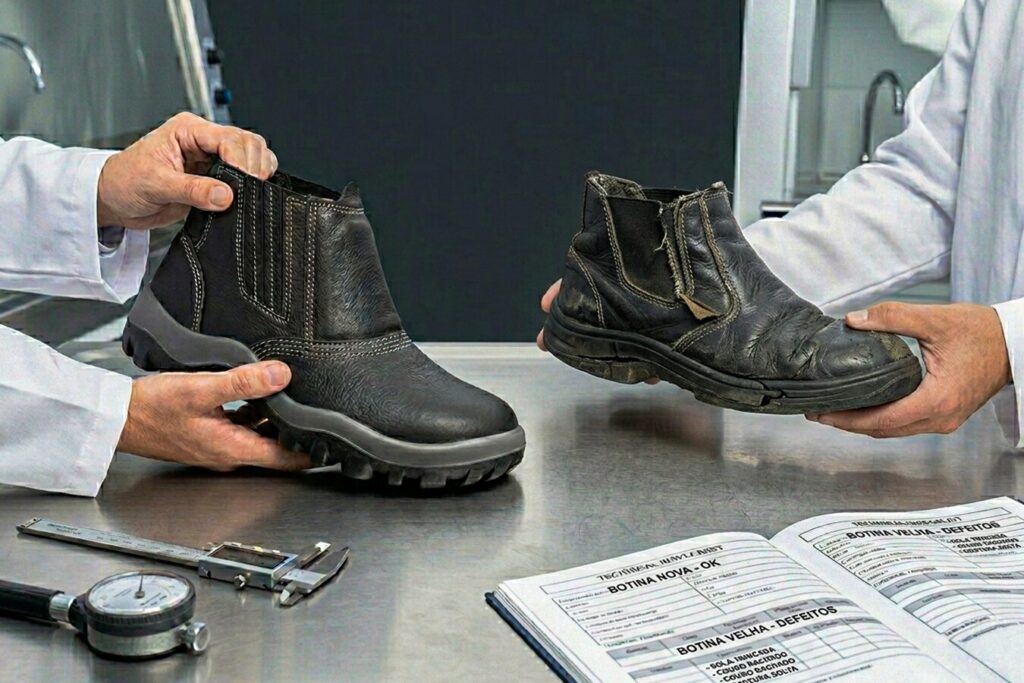
At the slightest sign of the wear we listed in the previous topic, make the correct decision to replace the equipment. After all, investing in a new pair of safety footwear at the right time is much cheaper than bearing the costs of an accident or a worker's health problem.
Prioritize safety and count on Safetline
The validity of safety footwear is not a mere detail – it is an essential factor to ensure continuous worker protection. Knowing the service life, observing signs of wear, and following good conservation practices are measures that ensure feet are always well protected.
Remember that expired safety footwear (in the sense of worn out or beyond its service life) may not protect precisely when it is most needed. Therefore, plan for periodic replacement of PPE according to the reality of your work environment and do not compromise safety by trying to "stretch" the use of already compromised equipment.
Safetline, as the manufacturer of the most complete line of safety footwear in Brazil, values user safety and comfort at every stage. Its products are designed with high-quality materials, technology, and compliance with standards, factors that contribute to excellent durability.
Even so, Safetline advises: using PPE within the appropriate period is as important as acquiring a product of good origin. Therefore, always pay attention to the validity of your safety footwear, and when you need a new pair to maintain ideal protection, count on Safetline. The company offers a complete line of safety footwear for the most diverse activities, all with a valid Approval Certificate and the quality you already know. Do not compromise the safety of your feet, contact Safetline and ensure modern, effective safety footwear with the resistance your work demands!