

Slip-resistant safety footwear is occupational footwear whose outsole is engineered to maintain grip on wet, oily, or contaminated floors, reducing the risk of same-level falls. This property depends on the outsole material, the geometry of the cleats, and the liquid dispersion channels, and is verified through slip tests that measure the coefficient of friction between the outsole and the surface.
Same-level falls are among the most frequently recorded incidents in Brazilian industry, and a large portion of them happen to workers wearing PPE well within its service life.
The underlying reason is usually the same: an outsole specified without considering the actual floor of the workstation, or one worn beyond its grip limit.
This guide explains how to evaluate outsole material, tread pattern, and wear condition to specify the correct footwear before requesting a quotation.
What defines slip-resistant safety footwear
The slip-resistant property is the result of engineering design: outsole material, cleat geometry, and laboratory testing that proves its performance. No footwear "looks" slip-resistant to the naked eye.
What separates subjective perception from proven performance is the coefficient of friction, measured in slip testing and documented in the product's technical records. For the HSE manager specifying PPE, this is the data point that validates the purchase.
How the coefficient of friction is measured
Slip resistance testing is conducted under two distinct conditions: ceramic tile surface with water and detergent (SRA) and steel floor with glycerin, simulating the presence of oil (SRB). When the footwear passes both tests, it receives the SRC classification, attesting to its slip-resistant performance under both test conditions.
The higher the coefficient obtained, the greater the slip resistance. An outsole may perform well on a wet floor but offer inferior performance on an oily floor, which is why the test condition matters just as much as the result.
What the CA certificate reveals about the outsole
The Approval Certificate (CA) records the tests to which the footwear was subjected and the compliance standards met. Before finalizing the specification, it is crucial to consult the CA and verify that slip resistance is listed among them (SRA, SRB, or SRC).
Knowing how to identify authentic safety footwear through official documentation prevents relying solely on commercial labeling. Equipped with this technical vocabulary, managers can demand solid technical evidence from suppliers instead of catalog promises.
Outsole materials and tread designs: what each one solves
Slip-resistant performance originates from the combination of rubber/polyurethane compound, geometry, and hardness. Modifying any of these three factors changes the footwear's behavior on the floor.

Dual-density polyurethane
The dual-density polyurethane outsole combines two layers: the soft midsole absorbs impact, while the denser outer layer resists abrasion and keeps the cleats intact for longer.
This is the most common construction in Safetline's industrial safety boots, delivering strong performance on dry, damp, and lightly oil-contaminated floors.
Rubber, temperature, and oil resistance
Rubber in safety footwear is primarily engineered to withstand high temperatures. It only possesses resistance to oils and greases when formulated with special additives for that specific purpose. As it is a heavier and more costly material, rubber outsoles are typically used in environments where polyurethane (PU) cannot meet requirements satisfactorily, such as maintenance areas, foundries, and steel mills.
Tread design, dispersion channels, and contact area
Outsole performance is directly tied to the compound used, cleat geometry, and drainage channels, being validated through slip testing that measures the coefficient of friction between the outsole and the surface.
Altering cleat geometry is a design strategy used to optimize grip and stability according to the intended application. Taller, wider-spaced cleats promote traction on soft terrain and increase mud or water evacuation capacity, while smaller, closely spaced cleats provide greater stability on smooth surfaces.
Cleat orientation also impacts performance: angled or chevron-shaped patterns assist in propulsion and braking, whereas multidirectional layouts enhance safety during lateral movements. Properly positioned and sized drainage channels ensure efficient liquid dispersion and reduce aquaplaning risks without compromising outsole flexibility.
Cleat layout must balance continuous contact areas for stability with peripheral high-traction zones, adapting to the footwear model and work environment. A poorly designed outsole or one with worn cleats loses this functionality, even if the rest of the boot appears well-preserved.
In practical terms, the development process demands prototyping different tread patterns and conducting comparative testing under varied conditions, correlating each geometry with the resulting coefficient of friction to tailor the design for specific applications like running, trekking, or safety footwear.
Those specifying purchases must evaluate geometry and compound together, as detailed in our guide on how to choose industrial safety footwear.
How to choose the right outsole for each floor type
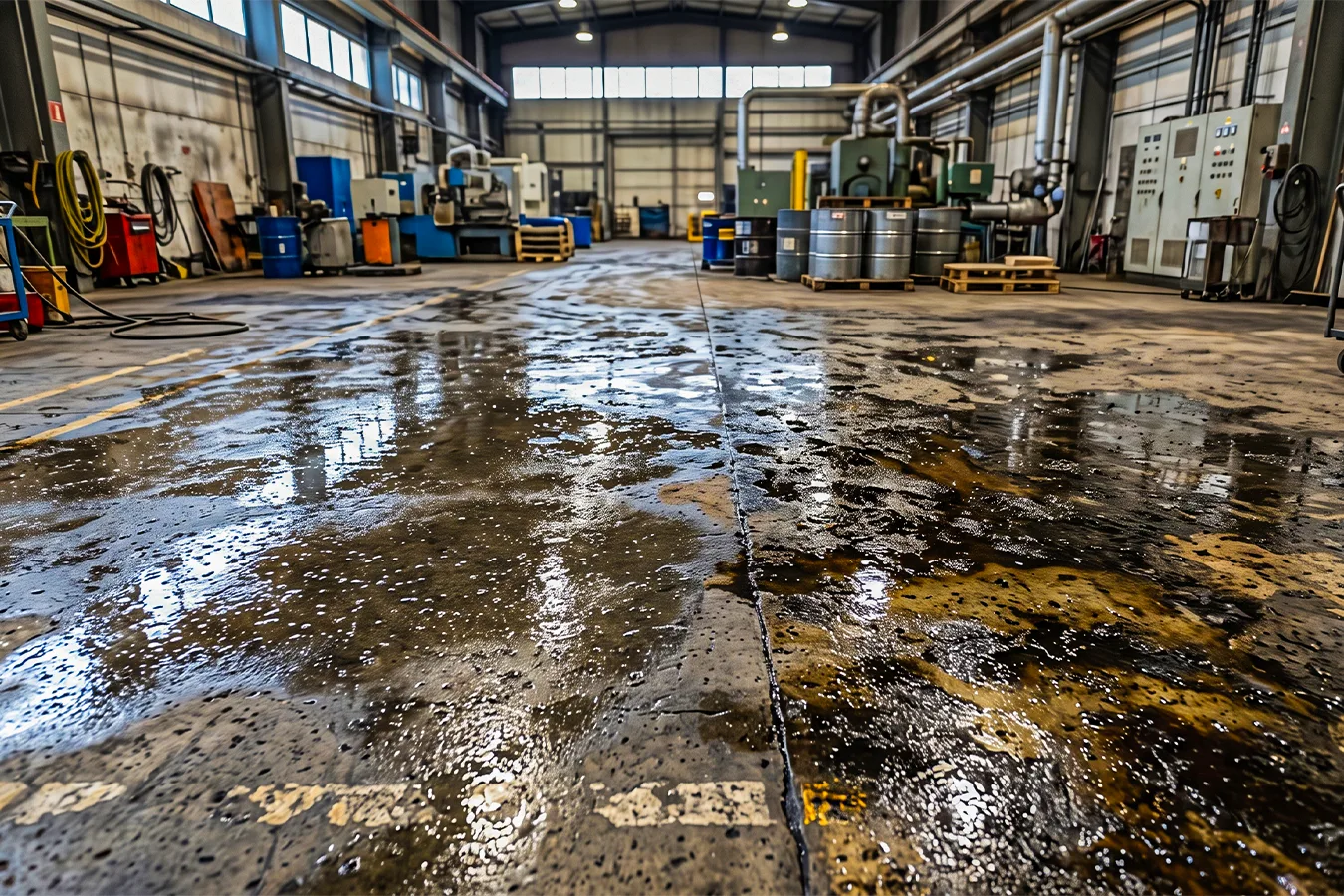
Specification starts with the floor surface, not the footwear. A manager who accurately identifies the workstation's floor material and primary contaminant will eliminate most unsuitable options before requesting quotes.
On wet ceramic floors, such as those in meatpacking plants and commercial kitchens, the main criteria are ensuring high grip in the presence of water and selecting channels that promote liquid and grease evacuation, preventing buildup and loss of traction. Polyurethane is widely used in these settings as it offers satisfactory performance in moist conditions alongside lightweight comfort for the user.
In industrial environments exposed to high temperatures, especially above 70 °C (158 °F)—such as foundries and intense heat operations—rubber outsoles are recommended, providing the necessary thermal resistance for the application.
In warehouses with polished concrete, logistics safety footwear requires dual-density polyurethane with shallow cleats and a broader contact surface. On construction sites with mud and uneven terrain, the logic reverses: deep, wide-spaced cleats that release accumulated debris with every step.
| Environment | Floor & Contaminant | Recommended Outsole |
| Meatpacking & Kitchens | Ceramic with water and grease | High-grip compound, liquid dispersion channels |
| Maintenance & Machining | Steel or concrete with oil present | Polyurethane (PU) with slip resistance and compatibility with present contaminants |
| Foundry & Steel Mills | Surfaces exposed to intense heat | Nitrile rubber with contact heat resistance matching application requirements |
| Logistics & Warehouse | Dry polished concrete | Dual-density, shallow cleats, wide contact area |
| Construction Sites | Uneven terrain, mud | PU with deep cleats |
Maintenance, replacement, and errors that ruin slip resistance
Laboratory-proven grip applies only to an intact outsole. With regular wear, slip resistance degrades silently, even when the upper still looks brand new.
Wear indicators signaling replacement
HSE managers must include outsoles in routine PPE inspections, checking for:
Cleats with reduced depth or rounded edges, particularly in the heel and ball-of-foot areas.
Smooth or polished patches at major pressure points, indicating the contact surface has lost its tread texture.
Cracks, layer delamination, or permanent deformation of the compound.
Any of these signs justifies immediate replacement. Improvised repairs using glue or unauthorized resoling void performance guarantees and invalidate official CA compliance.
Cleaning and storage practices that preserve the outsole
Grease residues or caked mud inside the drainage channels act as a lubricating film between the outsole and the floor. Knowing how to clean safety footwear correctly preserves original cleat geometry.
Harsh chemical solvents dry out the compound and accelerate cracking. Footwear should be stored in a dry location away from direct heat sources, which harden the material and reduce grip.

Where to start auditing your footwear outsoles this week
Same-level falls remain among the most frequent workplace accidents in industry because outsoles are rarely specified with the same rigor as safety toe caps or uppers. Now you know that grip is the engineered outcome of compound choice, geometry, and testing—not a marketing claim.
Three core principles guide this process:
Specification starts with the floor material and contaminant, never with a catalog picture.
The certified coefficient of friction on the CA applies to intact outsoles; proper inspection and cleaning are integral to worker safety.
Outsole material and cleat design must match real workstation hazards: water, grease, oil, or abrasion each require different solutions.
The practical first step easily fits into tomorrow's schedule: walk through the work areas with the highest history of slip incidents, document the floor surface and dominant contaminant in each, and check whether the CA of the footwear currently in use certifies performance compatible with those conditions.
Where discrepancies exist, update the item in your next purchasing review using documented technical criteria.
This audit changes supplier negotiations: instead of asking for generic slip-resistant boots, managers can request outsoles engineered specifically for the floors their team walks on every day.
With your workplace floor map in hand, contact Safetline's technical team to define, line by line, the exact right outsole for every area of your facility.
Those who specify outsoles by floor type buy genuine safety; those who specify by catalog labels buy only the expectation of it.
It is worth emphasizing that the primary action to prevent accidents in industrial and food processing facilities is always eliminating slip hazards through proper housekeeping, keeping floors clean and free of standing water, oil, or grease.
When ideal floor conditions cannot be maintained, these contaminants must be minimized to allow safety footwear to perform its intended function of delivering traction and stability.
Safety footwear should not be blamed for accidents occurring in severely neglected or hazardous environments. Its function is to complement facility hygiene and safety practices, not to replace basic accident prevention measures.
Frequently Asked Questions
How do I know if safety footwear is truly slip-resistant?
By reviewing technical documentation, not just visual design. A shoe's slip resistance is verified through standardized laboratory testing measuring the outsole's coefficient of friction on surfaces like ceramic tile with water and detergent (SRA) and steel floor with glycerin (SRB). The corresponding rating must appear on the CA documentation as SRA, SRB, or SRC—SRC being the most comprehensive rating, indicating success in both test environments.
HSE managers should inspect the official CA certificate and the manufacturer's laboratory test reports. An aggressive-looking tread pattern without certified testing provides no guarantee of performance on real workplace floors.
What is the best outsole for wet, greasy floors?
For environments like meatpacking plants and industrial kitchens, the key criteria are a compound offering high adhesion on wet surfaces, resistance to animal and vegetable fats, and liquid dispersion channels that channel fluids away from the contact patch.
Dual-density polyurethane in white safety lines performs exceptionally well in these applications.
What is the difference between polyurethane and nitrile rubber outsoles?
Dual-density polyurethane combines a soft, shock-absorbing midsole with a dense, abrasion-resistant outer layer. It is a versatile choice for logistics, general manufacturing, and construction.
Nitrile rubber provides excellent grip on rough, irregular terrain and offers superior thermal resistance. However, for continuous resistance to oils and greases, polyurethane (PU) outperforms standard rubber, whereas rubber is primarily chosen for high heat applications in foundries and steel mills.
Can brand-new slip-resistant footwear still slip?
Yes, if the outsole selection is mismatched to the floor material and surface contaminants of the workstation. While high-quality outsoles provide excellent friction coefficients, no shoe can prevent slipping on an extremely slick, untreated surface. True safety relies on selecting the right combination of floor care and outsole design.
Specification must begin by evaluating the surface type and present agents (water, grease, oil, dust, mud) before selecting the compound material and cleat geometry.
When should safety footwear be replaced due to lost traction?
Footwear must be replaced when cleats exhibit reduced depth, rounded edges, or smooth wear spots on the heel or ball of the foot, even if the upper material remains intact.
Outsole wear is the most common silent cause of slip accidents among workers wearing approved PPE. Periodic inspections must evaluate tread wear, and shoes should be replaced before total cleat loss occurs, not after the first fall.
Can improper cleaning damage slip-resistant outsoles?
Yes. Harsh solvents, aggressive chemicals, and hot water can dry out or degrade the outsole compound, deteriorating grip prematurely before natural mechanical wear occurs.
Proper cleaning requires warm water, mild soap, and a soft brush to remove trapped debris from the tread channels, as built-up grease and dirt create a slippery lubricating film between the outsole and floor surface.
Does a CA certificate guarantee that footwear will never slip?
A CA certificate confirms that the footwear model was tested and approved according to current technical standards, including slip resistance testing where applicable.
While mandatory, a CA does not replace on-site hazard analysis: managers must verify that the laboratory test conditions (SRA, SRB, SRC) match the actual floor surfaces and contaminants present in their facility daily.