

Linha Branca safety footwear is the right choice for operations that require protection, easy sanitization, and a visual presentation compatible with more rigorous control environments. In Safetline's view, it should not be chosen merely for its color. What truly matters is the combination of material, sole, shape, comfort, and the actual application in the routine.
With over 50 years of experience and a complete line of safety footwear, Safetline develops white models for contexts where water, humidity, cold, slippery floors, and frequent cleaning are part of the daily routine. Therefore, understanding the differences between a boot, shoe, and cold storage boot is the safest way to specify well and purchase better.
What is Linha Branca safety footwear
When an operation seeks Linha Branca safety footwear, it typically looks for a model designed for environments where visual hygiene, recurrent cleaning, and resistance to intense use must go hand in hand. In many cases, this involves cold storage facilities, cold rooms, processing areas, food handling, and sectors with constant contact with water and smooth floors.
In practice, the Linha Branca brings together professional footwear developed to provide protection and comfort without hindering the sanitization routine. The white color aids in visual cleanliness control, but the product's performance primarily depends on the upper, the sole type, the grip level, and the model's construction. Therefore, before finalizing the specification, it is worth understanding how to consult CA for EPI and validate before purchase.
Where the Linha Branca makes more sense in operation
The Linha Branca tends to perform better in environments where footwear must withstand humidity, frequent cleaning, and long shifts without losing comfort. That is why it is often a strategic choice in food sectors, cold areas, and operations that require a cleaner visual standard and easy inspection.
In refrigerated environments, for example, the requirement is not limited to sanitization. The footwear also needs to contribute to thermal comfort, good foot fixation, and walking stability. In general-use sectors with water and light residues, the focus may be on practicality, easy cleaning, and resistance to liquid penetration. In other words, the question is not just “does it need to be white?”, but rather “what does this footwear need to withstand during the shift?”.
What to evaluate before choosing the model
The first criterion is the upper material. At Safetline, the Linha Branca can be made from water-repellent and rubberized leather or water-repellent microfiber, materials suitable for routines where contact with humidity requires greater resistance and simplified cleaning. Microfiber, in particular, stands out for its lightness, flexibility, and comfort, as well as being a very efficient solution for operations that value sanitization and a stable appearance throughout use.
The second point is the sole. In areas with wet or slippery floors, grip ceases to be a detail and becomes a central safety factor. Therefore, Safetline works with solutions such as the Falcon bi-density sole, developed to enhance impact absorption, abrasion resistance, balance, and comfort. In addition, understanding the importance of slip resistance helps avoid a specification based solely on appearance.
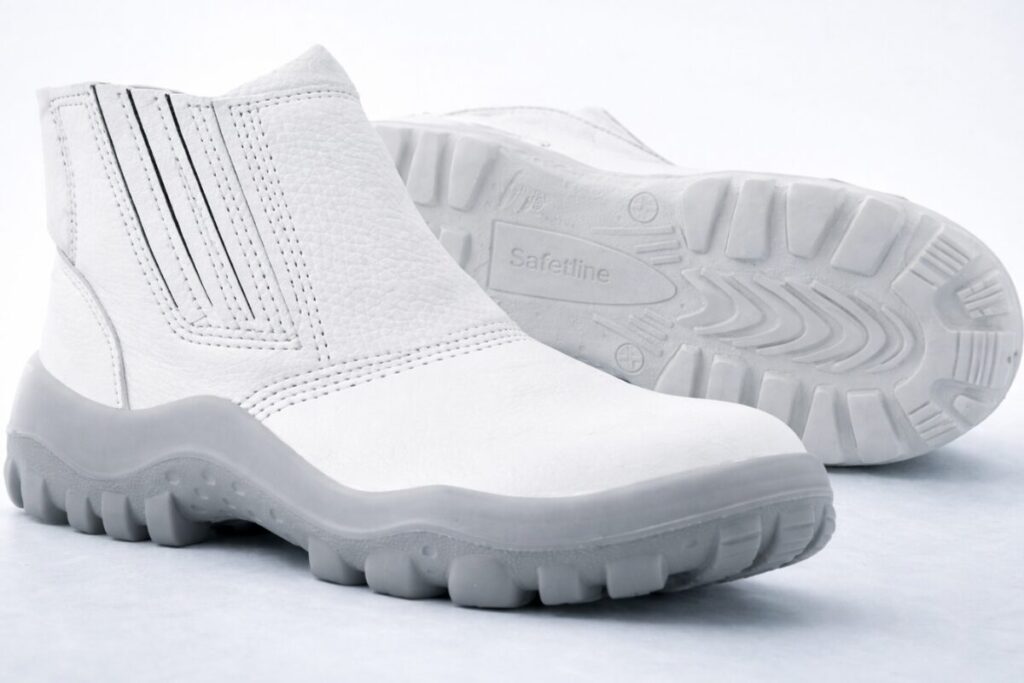
It is also important to evaluate the footwear's shape. In some routines, elastic closure speeds up donning and improves practicality. In others, lace-up adjustment offers a more precise fit. In cold environments, models with a higher shaft or Velcro closure can favor sealing, protection, and agility in use. Finally, the choice of toe cap must match the actual risk of the activity and the level of protection required by the function.
Which Linha Branca model makes more sense for each routine
The white elastic-sided boot is a versatile option for general applications. It combines comfort, ease of donning, and materials suitable for routines with moderate humidity, frequent sanitization, and prolonged standing. It is an efficient choice when the operation seeks standardization without sacrificing daily comfort.
The white full-vamp boot is recommended when the operation values a seamless front construction, with less water penetration in the area and good resistance in contexts of continuous use. This design favors cleaning and improves performance in activities that require robustness in the front part of the footwear.
The white lace-up shoe and the white elastic-sided shoe serve teams well that require mobility, comfort, and a lower profile on the foot. The lace-up model allows for a more precise fit. The elastic-sided model, on the other hand, provides more agility in daily use, in addition to being easy to clean and very practical for dynamic operations.
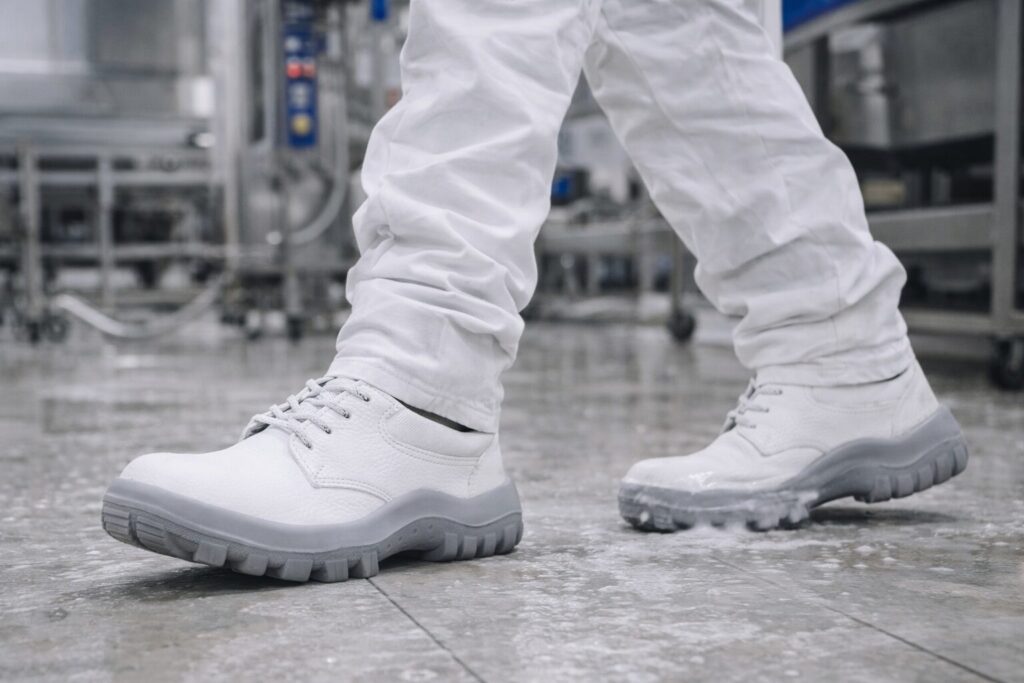
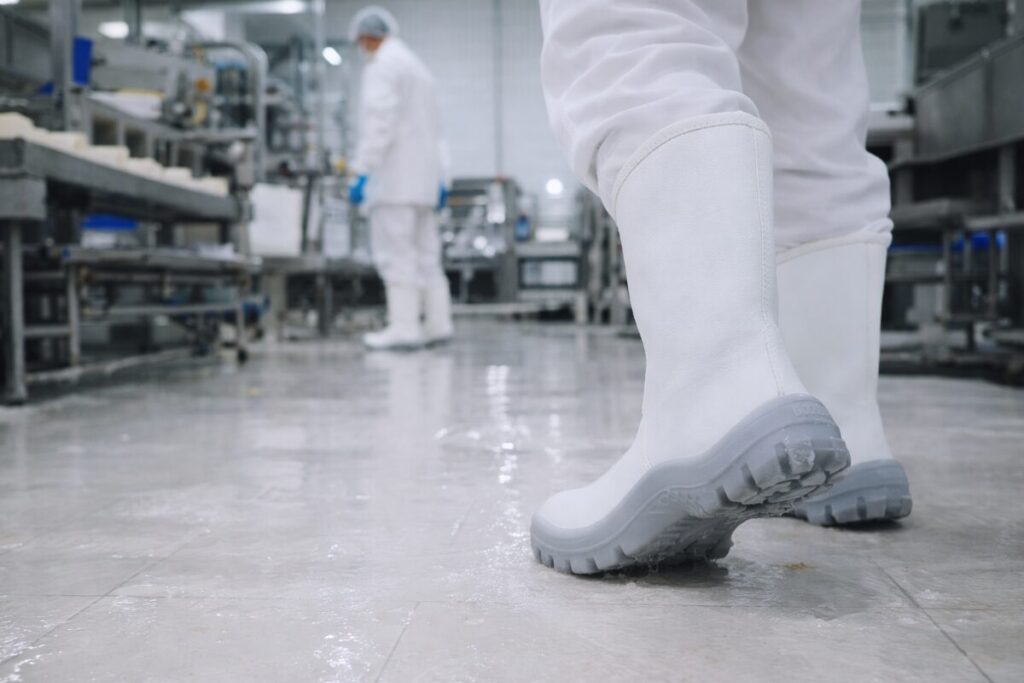
When the environment involves intense cold, cold rooms, or the need for greater coverage, the choice tends to shift to the Microfiber Cold Storage Boot or the White Cold Storage Boot with Velcro Closure. These models were developed for operations that require easy sanitization, water penetration resistance, and greater thermal comfort when working in cold and humid conditions.
Why material, construction, and comfort change daily results
In a real operation, the best Linha Branca safety footwear is one that sustains performance throughout the shift. This means keeping the foot protected, reducing fatigue, facilitating cleaning, and responding well to the environment in which it will be used. When the footwear fails in one of these aspects, the operation feels it in use, in team adherence, and in the need for replacement.
In Safetline's Linha Branca, this result comes from the combination of water-resistant uppers, construction designed for comfort, toe cap options according to need, and soles focused on grip and impact absorption. In the case of the microfiber cold storage boot, the model was developed for environments that require easy sanitization and water penetration resistance, with an interior lined with Thinsulate to improve thermal comfort and sweat absorption. In other words, it is not just a white shoe, but a technical solution for a specific scenario.
Another relevant point is visual durability. Safetline's white footwear was developed with high resistance to water penetration and yellowing, which helps preserve the product's appearance for longer even in demanding routines. For operations that rely on visual standardization, this detail makes a difference in the perception of care and the overall appearance of the team.
How to avoid errors in specification
The most common mistake when purchasing Linha Branca safety footwear is to decide solely based on shape or appearance. A white shoe can be excellent for one routine and unsuitable for another. The same applies to a boot or a cold storage boot. Correct specification must consider the type of floor, presence of water, need for sanitization, thermal requirements, impact risk, and usage time per shift.
Before standardizing the purchase, Safetline recommends validating four points: the actual use environment, the most suitable material, the most functional closure type, and the level of protection required in the operation. When these factors are analyzed together, the chance of rework decreases, and the purchase delivers more long-term results.
For teams working in intense cold, it is worth delving into the content about cold storage boots. For those who want to compare different categories before requesting service, the best way is to browse Safetline's products page.
Frequently asked questions about Linha Branca safety footwear
Is Linha Branca safety footwear only for cold storage facilities?
No. Although it is strongly associated with cold storage facilities and cold rooms, Linha Branca safety footwear also serves other operations that require a high standard of sanitization, frequent contact with humidity, and recurrent cleaning. It makes sense in different areas of the food industry, in processing sectors, and in environments where the visual presentation of the footwear and ease of cleaning are important. The central point is not just the segment, but rather the model's compatibility with the use routine, the type of floor, and the operation's requirements.
What is the difference between a white boot, white shoe, and cold storage boot?
The main difference lies in the footwear's construction and intended use. The white boot typically offers more structure and support, being a very efficient alternative for operations that require daily stability and protection. The white shoe, in turn, tends to favor mobility, practicality, and comfort in dynamic activities. The cold storage boot, on the other hand, was developed for cold environments or those with greater humidity, providing more coverage, more protection, and better conditions for use in more severe routines. Therefore, the choice must consider the environment, the level of exposure, and the work shift.
Water-repellent microfiber or water-repellent and rubberized leather: which to choose?
Both options can offer excellent performance, provided the choice is aligned with the operation's actual needs. Water-repellent microfiber stands out for being lightweight, flexible, comfortable, and easy to sanitize, in addition to contributing to maintaining the footwear's appearance throughout use.
Rubberized leather also offers good resistance and can be an excellent choice for certain professional applications. Instead of generically considering one material as better, the ideal is to evaluate which one responds best to the level of humidity, cleaning frequency, and expected comfort for the team.
How to know if the right model has the necessary protection?
Choosing the correct model must start with a technical analysis of the activity. This includes observing the type of floor, the presence of water, the need for sanitization, the risk of impact, the usage time per shift, and the environment in which the worker operates. Furthermore, it is essential to validate the Certificate of Approval and check if the model meets the intended application. When this analysis is done judiciously, the company reduces the risk of inadequate specification and increases the chance of success in terms of protection, comfort, and footwear durability.
How to preserve white footwear for longer?
Preservation begins with simple, yet consistent, care in the daily routine. Cleaning after the shift, correct residue removal, and proper drying help preserve both the appearance and performance of the footwear. It is also important to avoid storage in humid or unventilated places, as this can compromise the material over time. When the operation adopts an adequate preservation process, the footwear better maintains its characteristics of hygiene, comfort, and lifespan, in addition to sustaining a more standardized presentation in the work environment.
Choose the Linha Branca with more criteria and better results
The choice of Linha Branca safety footwear must stem from the actual operational routine, and not just the product's appearance. When material, sole, shape, comfort, and protection level are defined judiciously, the company gains more safety in use, more standardization, easier sanitization, and better performance throughout the shift.
In practice, this decision impacts the team's daily routine, the footwear's durability, and the operation's efficiency. Therefore, Safetline guides each choice based on the application, environment, and needs of each sector, helping to avoid misaligned purchases and generic specifications.
With manufacturing experience, a complete line, and technical knowledge, Safetline supports companies that need to choose with greater precision and standardize with more confidence. To proceed safely with this decision, access the complete product line, compare the Linha Branca models, and identify the most suitable solution for cold storage facilities, food areas, humid environments, and operations that require frequent sanitization.
If your company needs support to define the ideal model, standardize teams, or understand which footwear delivers the best performance in daily use, contact the Safetline team and request commercial guidance. Thus, the operation progresses with greater safety, more criteria, and a technical choice that generates results from specification to daily use.