

Safety footwear are essential Personal Protective Equipment (PPE) to protect workers' feet in hazardous activities. These shoes act as a “shield” in the event of workplace accidents, preventing or reducing potentially serious injuries to the lower limbs. In addition to being mandatory in many professions and sectors, safety footwear promotes a culture of preventive safety, preserving the health and productivity of employees.
According to Social Security data, approximately 39,000 workplace accidents per year involve foot injuries among Brazilian workers, making lower limbs the second most affected body part in these cases. This accounts for approximately 11% to 15% of all workplace accidents in the country, highlighting the importance of using safety footwear as an effective preventive measure. For this reason, Labor Safety and Health legislation requires employers to provide appropriate safety footwear whenever there are risks of accidents that could affect workers' feet. In construction sites, factories, laboratories, and various other professional environments, the use of this PPE is not just a recommendation, but a legal obligation and an essential measure to minimize damage in risky situations. Although they do not prevent accidents from happening, safety footwear plays a crucial role in protection against impacts, punctures, chemical agents, and electric shocks, directly contributing to the preservation of employees' health and physical integrity.
Main risks and protections offered by safety footwear
In various segments, from service provision to the chemical industry, from mining to healthcare, workers' feet are exposed to a series of occupational risks. Safety footwear was developed precisely to mitigate these risks, incorporating specific protective features for each work environment.
Below we list some of the main risks and the protections that safety footwear offers, and how to choose:
- Impact from heavy objects: Toe caps (usually steel or composite) protect against impacts from falling objects on the toes at an energy level of at least 200 J.
- Puncture : Steel or aramid insoles prevent nails, metal scraps, or sharp objects from penetrating the sole and reaching the feet.
- Slips and falls: Anti-slip outsoles provide grip on smooth, wet, or oily surfaces, significantly reducing the risk of slipping and falling.
- Electric shock: Dielectric (insulating) models protect against electrical hazards, essential for electricians and professionals working near energized circuits.
- Thermal agents: Footwear with thermal insulation protects feet from extreme temperatures, whether intense heat, in activities such as steelmaking and welding, or cold in cold storage chambers.
Chemical and wet substances: Special materials (water-repellent leathers, nitrile rubber outsole, and microfiber) provide resistance to oils, fuels, solvents, and prevent water penetration, keeping feet dry and safe.
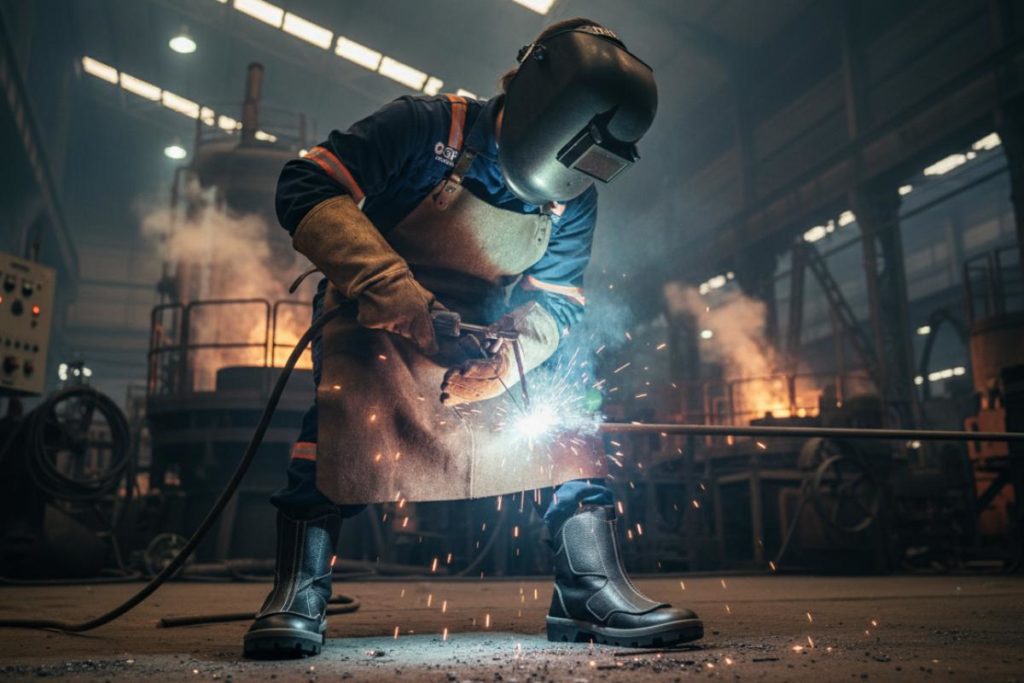
As we can see, each work environment demands a type of safety footwear appropriate to the risks present. For example, an electrician needs insulating footwear against electric shock, while a railway operations worker needs footwear with a resistant toe cap and anti-puncture sole. In food industries or chemical laboratories, footwear must be water-repellent and made of materials that resist chemical agents.
Correctly identifying occupational risks is the first step to choosing the appropriate PPE for the feet. Regulatory Standard No. 6 (NR-6) itself classifies safety footwear according to the types of protection they offer for each specific risk.
The use of incorrect safety footwear can compromise worker protection and, in some cases, increase the risk of accidents. An inadequate model for the type of activity – whether due to lack of resistance, absence of specific properties such as anti-slip or electrical insulation, or even discomfort – can lead to dangerous situations, such as slips, falls, muscle fatigue, or even failures in protection against punctures and impacts. Therefore, it is fundamental that employers and professionals conduct a careful analysis of working conditions and choose footwear that offers adequate protection for the demands of each function. Safety cannot be improvised, and the right PPE makes all the difference.
Therefore, investing in quality footwear is investing in the peace of mind that the worker will be protected in all relevant aspects of that job. If you want to know more about how to select the ideal PPE for feet in each situation, check out our tips guide in the article How to choose the best safety footwear, which delves into this topic with detailed recommendations.
Comfort and technology in modern safety footwear
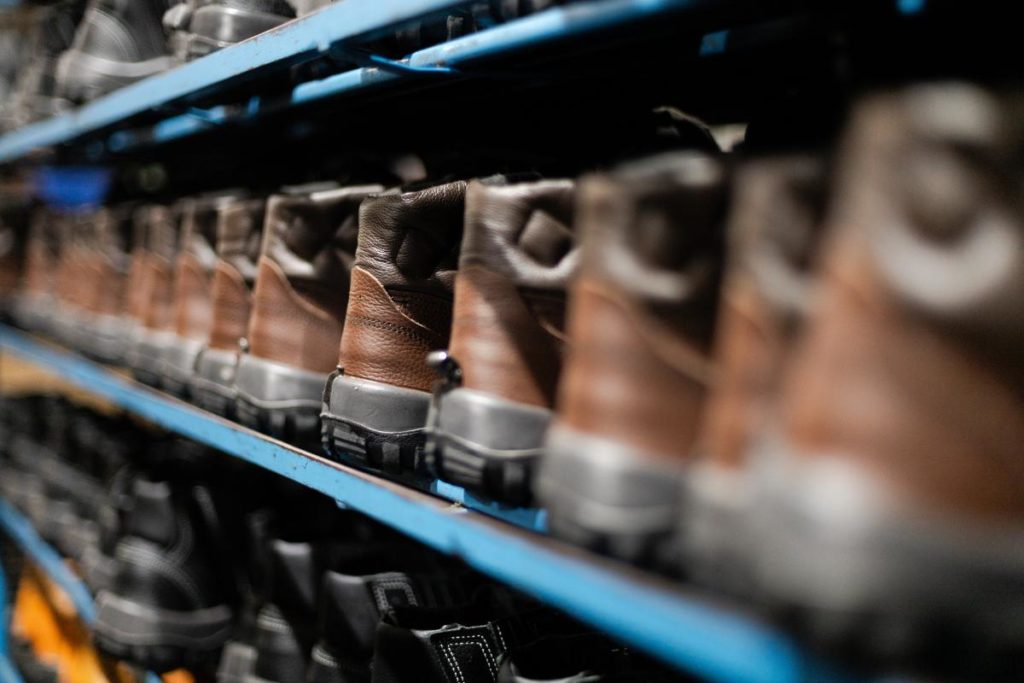
In the first models of safety footwear, the absolute priority was protection, often at the expense of comfort. Fortunately, this has been changing over the years: safety footwear has evolved significantly in technology, quality, comfort, and design. Today, it is possible to find safety footwear that not only protects the feet but is also comfortable to wear during long work shifts.
Several technological advancements have contributed to this leap in comfort. One example is the introduction of composite toe caps, a lighter material than steel, which offers impact protection with reduced weight on the feet. Similarly, dual-density PU or dual-density rubber outsoles ensure resistance and durability without sacrificing flexibility and lightness. Internal insoles with impact absorption properties (cushioning) help reduce pressure on joints, and padded linings keep feet protected against friction and blisters.
Another essential factor is the proper fit and ergonomics of the footwear. Currently, Safetline has been investing heavily in research on foot anatomy, highlighting the advantage of lace-up models. These models offer a more personalized fit, preventing discomfort caused by excessively tight or loose footwear. Items such as lightness, impact absorption, correct size, and flexibility are evaluated to ensure that the safety footwear is as comfortable as possible. After all, there is no point in PPE protecting against risks if it causes extreme discomfort to the worker.
An employee with inadequate PPE may experience a drop in productivity and even develop injuries from prolonged use of uncomfortable footwear. Therefore, comfort has become a watchword in the design of modern safety footwear, to the extent that there are standardized tests in Brazil to measure comfort criteria in different models.
Thus, Safetline, as an example in the safety footwear industry, is moving towards uniting the best of both worlds: robust protection and daily comfort. Today, it is already possible for workers to wear a safety boot or tactical boot and feel almost as if they were wearing regular footwear, but with the peace of mind of knowing they are protected. This evolution contributes to greater adherence to PPE use (since comfortable equipment is used more spontaneously) and to employee satisfaction in carrying out their activities.
Safetline: synonym for quality and innovation in safety footwear
When it comes to safety footwear, Safetline stands out as one of the main references in the Brazilian market. A synonym for quality and technology, Safetline is the manufacturer of the most complete line of safety footwear in Brazil, valuing worker protection for over 50 years. Throughout its trajectory, the company has built a solid reputation for innovating and delivering high-performance products, always with a total focus on user safety and comfort.
Safetline boasts state-of-the-art infrastructure and continuous investment in development, both in new technologies and in team training. Its employees are dedicated to producing extremely modern and effective safety footwear, with a high standard of quality in every detail. Every component of a Safetline shoe, from the sole to the toe cap, is carefully designed and tested to comply with technical standards and exceed expectations in real use. The company spares no effort in research and process improvement, employing advanced machinery, software, and materials to ensure that its products are always at the forefront of the sector. This constant commitment to excellence has earned Safetline important recognitions, such as the Top of Mind award from Revista Proteção, in which the brand was among the most remembered in the country for safety footwear.
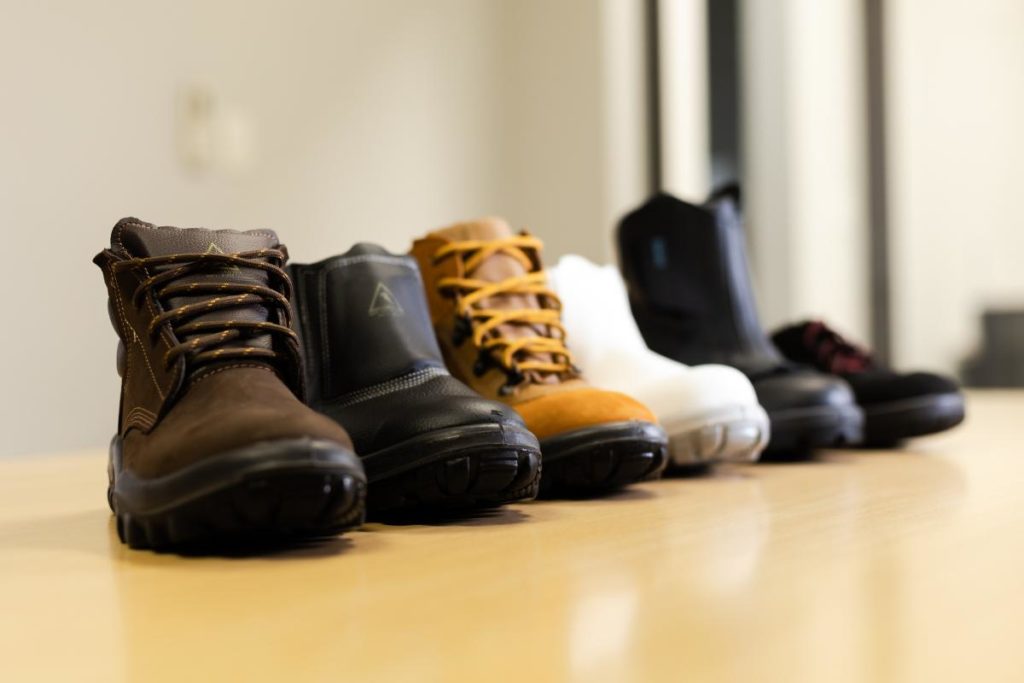
One of Safetline's great differentiators is the wide range of models it offers. Its portfolio includes elastic-sided and lace-up boots, shoes, safety boots and tactical boots, and even safety sneakers, all with a Certificate of Approval (CA) and in compliance with current standards. Safetline has developed specific lines for specific demands: for example, the Linha Vulcano, aimed at high-temperature work (with boots resistant to intense heat), and the line of white cold storage footwear, designed for extreme cold environments, such as cold chambers. There are also models with reinforced metatarsal protection for additional safety, tactical boots, water-repellent boots for agricultural areas, among others, meaning Safetline covers all foot protection needs at work, combining durability, comfort, and safety.
It is worth noting that all Safetline products undergo rigorous quality and safety tests before reaching the market. This ensures that every boot or shoe delivered to the customer performs reliably in the situations for which it was designed. The company also values end-user satisfaction: when developing a new model, the Safetline team considers feedback from workers and partners, seeking continuous improvements. It is no coincidence that the brand has become synonymous with trust for many of the largest industries, major retail and wholesale companies, and production facilities in the country, who have been outfitting their teams with Safetline for decades, knowing they will be well protected.
Safety footwear that makes a difference
Safety footwear is, without a doubt, indispensable PPE to ensure worker protection against the multiple risks present in professional environments. From the field to the laboratory, adopting the proper use of safety footwear drastically reduces the occurrence of accidents and promotes a safer and more productive workplace. In addition to being legally mandatory in various activities, these shoes represent care and respect for employee well-being.
However, it is not enough to wear just any footwear: it is fundamental to choose products of proven quality that truly offer the necessary protection and provide comfort for prolonged use.
In this context, relying on experienced and committed suppliers makes all the difference. Safetline, with its long history of dedication to worker safety and its complete line of solutions, stands out as an excellent option for those seeking the best safety footwear on the market.
Investing in Safetline is investing in the peace of mind of knowing that every step a worker takes will be protected, and this is an investment that reflects in increased productivity and preserved lives. Thus, quality safety footwear, like Safetline's, is synonymous with protection, comfort, and confidence in daily work.
Invest in confidence, invest in Safetline
Safety footwear is indispensable for preserving worker integrity and ensuring a safer and more productive work environment. At Safetline, we develop solutions that combine technology, comfort, and durability, always focusing on those on the front lines.
Discover now Safetline's complete line of safety footwear and find the ideal model for your team. Protection, innovation, and trust: this is the Safetline commitment. Contact us.
