

The chainsaw safety boot is occupational safety footwear developed to protect workers exposed to cuts from chainsaw chains, meeting the requirements of the ABNT NBR ISO 17249 standard and NR 6.
Its construction integrates layers of high-tenacity fibers in the instep and side, an impact-resistant safety toe cap, an anti-puncture aramid insole, and a slip-resistant outsole. The correct choice considers the protection class, type of forestry activity, compliance with the Certificado de Aprovação (CA), and ergonomic suitability for the operator.
In a forest management front, three seconds separate accidental contact of the chain with the leg from a disabling injury. When reviewing your operation's risk matrix, you realize that the team's standard footwear was not approved for the cut class appropriate to the actual rotation of the chainsaws in the field. The consequence: residual exposure outside of what the technical report predicted.
This content presents the objective path to correct this gap. We will cover the technical criteria that differentiate a chainsaw safety boot from ordinary occupational footwear, the regulatory parameters that must appear on the technical data sheet before purchase, and the inspection, use, and disposal protocol that extends the equipment's lifespan without compromising protection.
In the end, the manager will have a replicable roadmap to specify, purchase, and maintain the right footwear for each risk level, aligning the forestry operation with labor inspection requirements and best practices in Personal Protective Equipment management.
The Crucial Importance of Chainsaw Safety Boots in Occupational Safety
Chainsaw operation is classified among the highest-risk activities in the forestry and green area maintenance sectors. The chainsaw safety boot acts as a physical barrier between the moving chain and the operator's lower limb, drastically reducing the severity of injuries in the event of accidental contact.
Its correct specification is not a recommendation; it is a technical and legal requirement, backed by Brazilian and international standards that standardize minimum cut resistance performance.
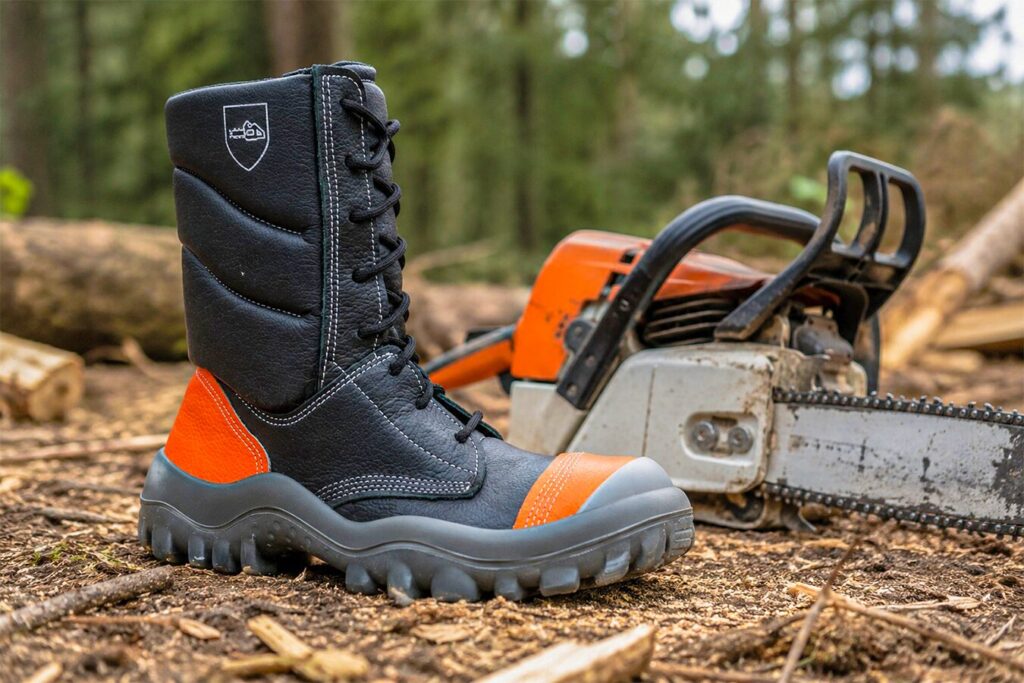
Risks associated with chainsaw use and the need for protection
A chainsaw chain reaches speeds exceeding 20 meters per second. In fractions of a second, the blade can penetrate soft tissues, reaching tendons, vessels, and bone structures.
The lower limbs, especially the ankle region and the instep, are among the most exposed areas during log cutting on the ground, on sloped terrain, or in kickback situations. Falls, punctures from branches, and impacts from falling objects make up the cumulative risk profile.
Applicable Legislation and Regulatory Standards
NR-6 establishes the guidelines for the supply, use, and inspection of Personal Protective Equipment in Brazil, requiring a Certificado de Aprovação (CA) issued by the Ministry of Labor.
Meanwhile, NR-12, in its specific annex on chainsaws, mandates the use of safety footwear with cut protection.
The reference technical standard is ISO 17249, which defines chain cut resistance classes (classes 1 to 3, corresponding to speeds of 20, 24, and 28 m/s). To validate the compliance of the chosen model, it is worth consulting the PPE's CA directly in the official database.
O papel do EPI na prevenção de acidentes graves
Chainsaw protective footwear incorporates layers of high-tenacity synthetic fibers, usually aramid or ultra-high-molecular-weight polyethylene. Upon contact with the chain, these fibers loosen, are pulled into the machine's sprocket, and cause the mechanism to lock up in milliseconds.
This operating principle differs from conventional footwear, as it requires a specific construction and cannot be replaced by common models, even those equipped with a steel or composite safety toe cap.
Consequences of inadequate or damaged footwear
Using safety boots out of specification — with detached outsoles, broken laces, or protective fibers compromised by prior contact with the chainsaw — voids the technical function of the PPE.
The results are partial amputations, prolonged leaves of absence, social security costs, and company liability in INSS recovery lawsuits. Daily visual inspection and preventive replacement are just as important as the initial purchase, a point that will be detailed in the final section of this guide.
Essential Technical Features of a High-Performance Chainsaw Safety Boot
A conscious choice of a chainsaw safety boot requires an understanding of the construction elements that differentiate ordinary footwear from equipment certified for chainsaw operation.
Each layer, seam, and component plays a specific role in the protection chain.
Cut protection: layers that stop the chain
The core of the protection lies in the high-tenacity synthetic fibers arranged in multiple internal layers, usually between the upper and the lining. Upon contact with the moving chain, these fibers loosen and are pulled into the sprocket, locking the motor in a fraction of a second. The ISO 17249 standard classifies footwear into four levels according to the supported chain speed: class 1 (20 m/s), 2 (24 m/s), 3 (28 m/s), and 4 (32 m/s).
Safety toe cap and anti-puncture insole
Protective footwear for chainsaw operators is manufactured exclusively with a steel safety toe cap. This is because a composite safety toe cap does not offer adequate resistance to direct contact with the chainsaw chain, compromising user safety.
The metallic structure ensures the integrity of the Personal Protective Equipment (PPE) under extreme conditions of use, whereas alternative materials do not withstand the impact and abrasion generated by the machine.
Additionally, the footwear features an anti-puncture aramid insole, a high-resistance component that protects the user's sole against punctures caused by branches, thorns, or any sharp object on the ground.
This additional layer of safety ensures greater protection and comfort during work in forestry and high-risk environments.
Outsole with grip and chemical resistance
The dual-density polyurethane outsole offers traction on rugged terrain, mud, and sloped surfaces. It must feature resistance to chain oils, fuels, and abrasion, as well as resistance to water penetration and absorption.
Upper, lining, and breathability
The water-repellent leather upper blocks external moisture, while the internal lining made of breathable material wicks sweat away, reducing skin maceration during long shifts.
To learn the details of the labeling that proves these characteristics, it is worth consulting the material on how to identify safety footwear.
Closure, fit, and ergonomics
The lacing system allows for a firm ankle fit, an essential factor for stability on irregular terrain.
The high shaft protects the tibial region against branches and splashes. Finally, the outsole ergonomics, balanced weight, and collar padding reduce muscle fatigue, preventing sprains and repetitive strain injuries throughout the shift.
Practical Guide: How to choose and maintain the ideal Chainsaw Safety Boot
Selecting the appropriate footwear goes beyond isolated technical analysis. It involves a structured process that considers the operational context, legal compliance, and maintenance routine.
Below is the recommended step-by-step guide for safety managers who need to ensure effective protection and investment durability.
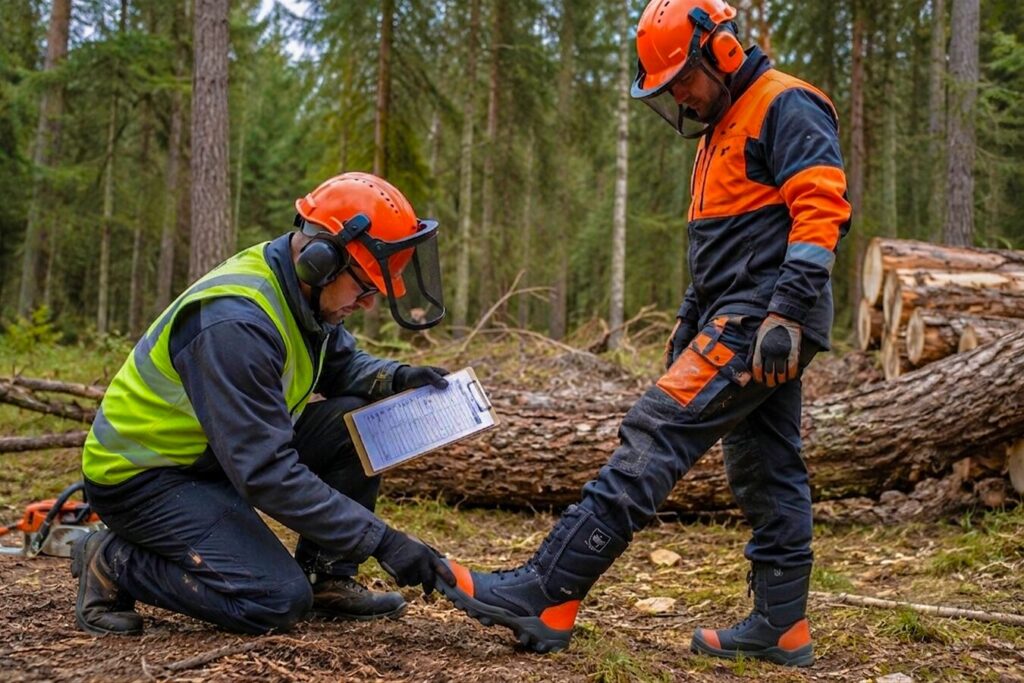
Assessing the specific needs of the role and work environment
Before purchasing, map out the scenario: type of terrain (waterlogged, rocky, sloped), shift duration, average temperature, and frequency of chainsaw use.
Operators in urban pruning have different demands than clear-cutting teams in the field. This diagnosis guides the choice of the correct footwear for the activity.
Verification of the Certificado de Aprovação (CA) and the cut protection class
Every chainsaw safety boot sold in Brazil must have a valid CA issued by the Secretariat of Labor Inspection. Check the number directly on the official government portal and validate the indicated cut protection class (classes 1 to 3, according to the supported chain speed). Without this verification, the PPE does not meet the requirements of NR 6.
The fitting and adjustment process: the importance of the correct size and shape
Perform the fitting at the end of the shift, when the foot is naturally more swollen. Wear the technical socks that will be used in the operation.
The heel should be firm, without slipping, and the toes must maintain mobility. An improper fit compromises stability and accelerates the wear of internal structures.
Care and maintenance to extend the safety boot's lifespan
Clean the upper after each shift with a soft brush and a damp cloth. Avoid direct drying in the sun or near heat sources, as drying out compromises the footwear's durability. Apply leather conditioner biweekly and inspect seams, eyelets, and the outsole weekly.
Signs of wear and the right time to replace the PPE
Immediately replace the footwear when you identify: cuts or punctures in the upper, outsoles with shallow grooves, broken seams, safety toe cap deformation, or exposure of the cut-resistant fibers.
Any direct contact with the moving chain also mandates replacement, even without apparent damage.
The cost-benefit ratio of investing in a superior quality safety boot
A certified and well-maintained PPE has an average lifespan of 12 to 18 months under regular use. The cost per protected shift is significantly lower than the impact of an accident leave, which involves medical expenses, social security lawsuits, and loss of team productivity.
Next step: turning knowledge into real protection
Chainsaw operation remains one of the most severe activities in the work environment. You now understand that the difference between a controlled incident and a disabling injury lies in the technical specification of the footwear, not in the operator's luck.
Three principles to carry forward:
- Certification is not a bureaucratic detail. The valid Certificado de Aprovação and the chain cut resistance standard are the legal and technical foundation of protection. Without them, the rest loses meaning.
- Fit and comfort define compliance. The best chainsaw safety boot is the one the operator wears every day without resistance. Correct sizing, an efficient lacing system, and an appropriate insole sustain long shifts.
- Maintenance preserves the protective barrier. Daily visual inspection, natural drying, and immediate replacement in case of damage to the internal fibers maintain the footwear's original performance.

As a practical application for this week, take an inventory of the current footwear of the chainsaw operators in your operation, check the active CAs in the Ministry of Labor database, and identify which units need immediate replacement. This simple diagnosis reveals gaps that often go unnoticed in audits.
If you understood how technical specifications define the actual level of protection, discover the Safetline chainsaw safety boot developed specifically for chainsaw operation and evaluate its suitability for your operational scenario.
The correct chainsaw safety boot is not a PPE expense; it is a direct investment in the integrity of the person operating the blade.
Frequently Asked Questions
What is a chainsaw safety boot and what is it used for?
It is safety footwear certified for chainsaw operators. Its function is to act as a physical barrier between the moving chain and the worker's lower limb, stopping the advance of the teeth in the event of accidental contact. It features high-tenacity synthetic fibers that lock the chain, reducing the severity of injuries in one of the highest-risk activities in the forestry sector.
What CA should I require in a chainsaw safety boot?
Every chainsaw safety boot must have a Certificado de Aprovação (CA) issued by the Ministry of Labor, with a specific indication of protection against chainsaw cuts. The query can be made on the official government portal, validating the number, manufacturer, validity, and tests performed. Without a valid CA, the equipment does not meet the requirements of NR-6 and cannot be provided to the worker.
What is the difference between an ordinary safety boot and a chainsaw safety boot?
An ordinary safety boot offers basic mechanical protection, such as a reinforced safety toe cap and a slip-resistant outsole. On the other hand, a chainsaw safety boot incorporates internal layers of cut-resistant synthetic fibers designed to stop the chainsaw chain in fractions of a second. This specific protection is laboratory-tested and certified, making it mandatory for the activity.
How do I know the correct size for a chainsaw safety boot?
Measure the foot at the end of the day, when it is slightly more swollen, and consider using technical socks. The footwear should allow toe movement, with no slipping at the heel and no pressure on the sides. Tight sizing compromises circulation and safety; loose sizing generates friction and blisters. Always try them on with the socks that will be used in the operation.
How long does a chainsaw safety boot last?
The lifespan depends on the intensity of use, terrain, and maintenance care. In general, it ranges from 6 to 18 months in continuous operation. After any contact with a moving chain, the footwear must be discarded immediately, even without apparent damage, as the internal fibers may have lost their structural integrity. Periodic inspections are mandatory.
How to maintain and clean a chainsaw safety boot?
After the shift, remove sawdust, mud, and oil residues with a soft brush and a damp cloth. Avoid immersion in water and never use aggressive solvents. Drying should be done in the shade, in a well-ventilated area, away from direct heat sources. Apply leather conditioner periodically when applicable. Store in a dry place to preserve internal fibers and structure.
Can a chainsaw safety boot be used in other activities?
Yes, provided the footwear's characteristics are respected. Chainsaw models usually combine cut protection with an impact safety toe cap, a resistant outsole, and a high shaft, also serving work on irregular terrain, forestry maintenance, and brush cutting. However, use outside the primary purpose accelerates wear, reducing the lifespan of the specific protection against the chain.
Who is responsible for providing the chainsaw safety boot?
According to NR-6, the employer is responsible for providing the appropriate equipment for the risk free of charge, with a valid CA, guiding on correct use, cleaning, and storage, as well as replacing it when damaged or lost. The worker must use the footwear exclusively for the intended purpose, maintain it, and report any alteration that compromises its protective function.