

Personal Protective Equipment (PPE) is any device of personal use intended to protect the worker against risks capable of threatening their safety and health in the work environment. In Brazil, its mandatory nature, free provision, and certification are defined by NR6, which also requires the Certificate of Approval (CA) issued by the competent body. It covers head, hearing, respiratory, eye, hand, torso, fall protection, and lower limbs.
PPE management rarely fails due to a lack of standards. It fails in selection, control, and compliance with use in operations.
This guide organizes types, legal requirements, and purchasing criteria into scannable blocks to guide the technical decision of those responsible for safety in the company.
What is Personal Protective Equipment (PPE)?
Personal Protective Equipment (PPE) is any device of personal use intended to protect the worker against risks capable of threatening their safety and health in the work environment.
The definition is found in NR6, which establishes the rules for provision, use, and responsibility. PPE acts on the person, not on the environment, and therefore occupies a specific position within the safety management system.
Technical definition and role in the work environment
The role of PPE is to create a barrier between the worker's body and the hazard agent. This agent can be physical, chemical, biological, mechanical, or ergonomic.
A helmet absorbs impact. A glove isolates the skin from a corrosive product. Safety footwear protects the foot against falling loads and outsole puncture. Each equipment has a defined purpose and a specific risk it combats.
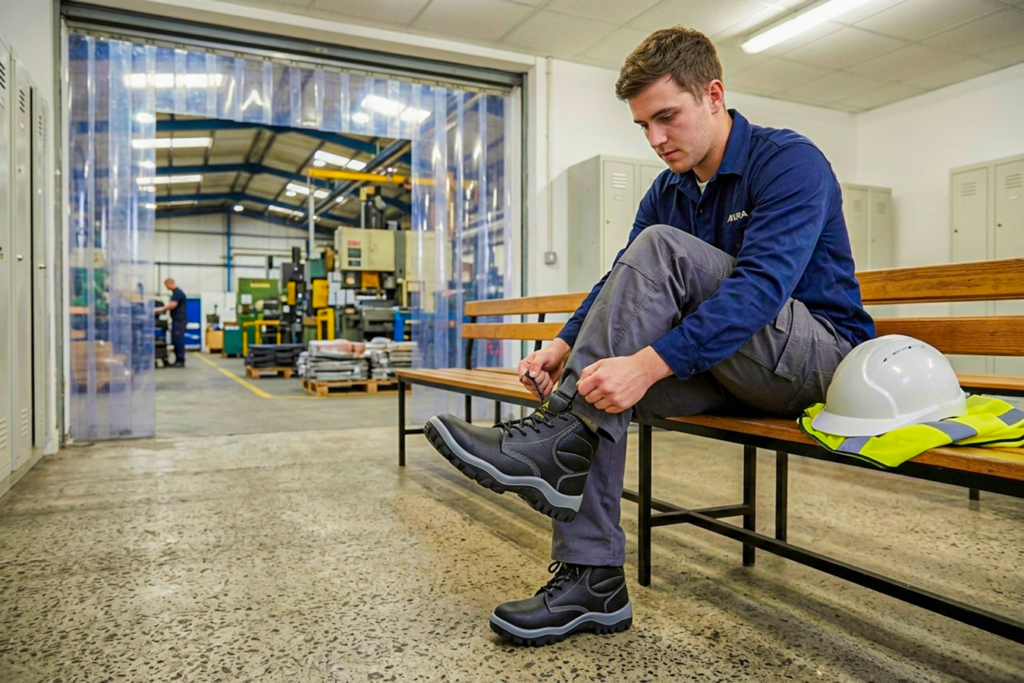
PPE vs. CPE: the difference that changes responsibility
Here is the point that generates the most confusion in purchasing management. PPE protects one worker at a time. CPE, Collective Protective Equipment, protects a group or the entire area.
Guardrails, exhaust fans, floor signage, machine enclosure: all are CPE. They reduce the risk at the source or along the path, before reaching the person.
The legislation prioritizes collective protection. PPE comes into play when CPE does not completely eliminate the risk or while collective measures are being implemented. Understanding this logic avoids the classic mistake of treating PPE as the first and only solution. If you want to go deeper, it is worth knowing the distinction between personal and collective protective equipment.
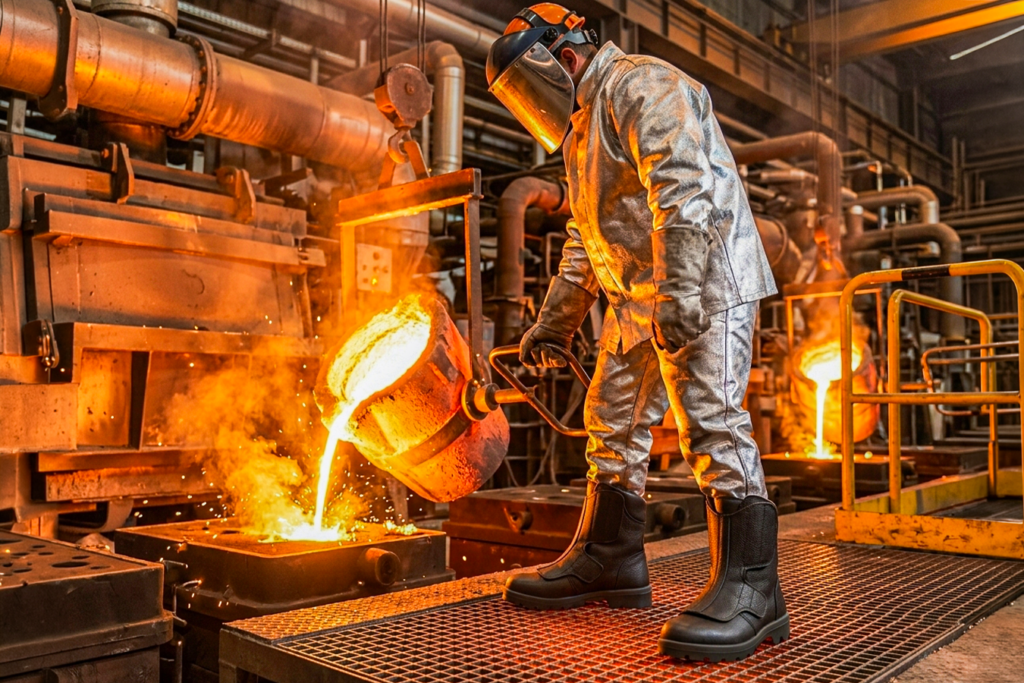
When is PPE the last barrier of protection?
In practice, PPE is usually the final layer. When the user is already in front of the machine, heat, or suspended load, it is the equipment on their body that separates a normal day from a recordable accident.
Therefore, a PPE failure is rarely isolated. It means that the previous barriers also failed or did not exist.
This weight justifies the rigor in selection. Footwear that loses its outsole in three months or a glove without certification are not just wasted expenses: they are active risks within the operation.
Role of PPE within the hierarchy of hazard controls
Modern safety management organizes controls into a hierarchy. The order is clear and goes from most effective to least effective:
- Elimination: removing the hazard from the process.
- Substitution: replacing with something less hazardous.
- Engineering controls: isolating the risk with physical barriers.
- Administrative controls: procedures, rotation, and signage.
- PPE: the last layer, applied directly to the worker.
PPE appears at the end because it depends on human behavior to work. A helmet hanging in the locker protects no one.
It is this dependence on correct and continuous use that makes the choice, compliance, and durability of the equipment central points for the safety manager, topics that this guide develops in the next sections.
Why does PPE matter for occupational safety management?
For those who manage safety, PPE is rarely treated as what it truly is: a strategic decision with financial, legal, and operational weight.
Choosing the right equipment protects the worker, but also protects the company's assets and the continuity of the operation. Treating this as a mere compliance formality is underestimating the risk.
The cost of an accident compared to the cost of the right equipment
A single serious accident triggers expenses that exceed years of investment in quality PPE. Medical leave, hiring a replacement, loss of line pace, fines, and lawsuits add up to values that rarely appear on the purchasing spreadsheet.
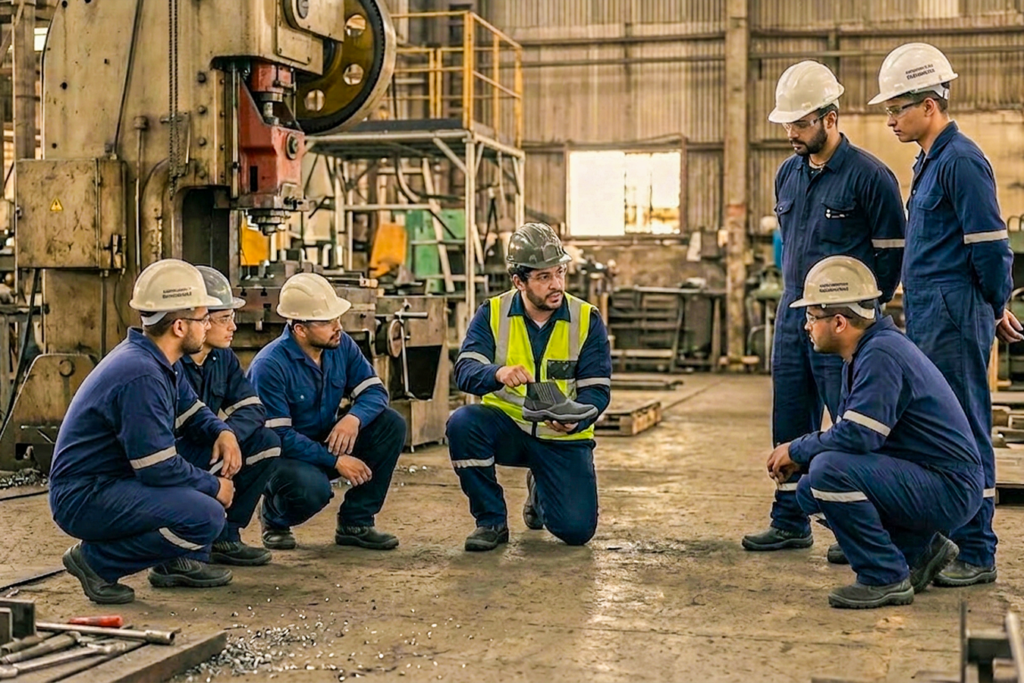
Legal responsibility of the employer and labor liabilities
NR6 assigns the employer the duty to provide the appropriate PPE for the risk, free of charge, and to require its use. Failing in this obligation transfers the responsibility for any damage to the company.
In a labor lawsuit, the lack of delivery records, training, or usage inspection weighs against the organization. Liabilities accumulate in silence, document by uncompleted document.
The safety manager is the front line of this legal protection.
Impact on productivity and absenteeism
An injured worker is an absent worker. Each medical leave reduces productive capacity and overburdens the remaining team.
Equipment that causes discomfort or injuries due to improper use also generates complaints, pauses, and a drop in performance. Footwear that pinches or does not absorb impact shortens the useful workday of those who use it.
Well-managed safety sustains production.

The manager's role in the PPE usage culture
Buying the equipment is only the first step. Then comes the hardest part: ensuring it is used, correctly, every day.
This depends on training, constant inspection, and choosing items that the worker is willing to use. Certified PPE forgotten in the locker does not fulfill the purpose for which it was purchased.
The manager who understands this dynamic transforms standards into culture, and that is when safety stops being an obligation and becomes a collective habit.
NR6 and the legal framework for PPE in Brazil
NR6 is the Regulatory Standard that governs everything involving Personal Protective Equipment in Brazil.
Published by the Ministry of Labor, it defines what characterizes PPE, when it must be used, and who is responsible for each stage of the process.
For the manager, understanding it is not an option. It is what separates a compliant operation from one exposed to labor liabilities.
What NR6 determines in practice
The standard establishes three pillars. First, every PPE marketed or provided must have a valid Certificate of Approval (CA), issued by the competent body. Second, the equipment is only required when collective protection measures do not completely eliminate the risk. Third, provision is always the company's obligation.
In practice, PPE comes into play when environmental engineering cannot handle it alone. It is the last barrier between the worker and the residual risk.
Obligations of the employer and the worker
NR6 clearly divides responsibilities. It is up to the employer to acquire the appropriate equipment for the risk, require its use, provide guidance on maintenance, and replace it whenever damaged or lost.
It is up to the worker to use the PPE only for its intended purpose, store it correctly, and report any alteration that makes it unfit for use. The responsibility, therefore, is shared, but the greatest weight falls on those who manage.
Free provision and usage training
This is the most decisive point of the standard: PPE is provided free of charge to the worker. Charging for it, directly or indirectly, constitutes an irregularity.
Just delivering it is not enough. The company must train the employee on correct use, storage, and limitations of the equipment. Delivery without guidance is incomplete provision in the eyes of inspection.
Inspection and consequences of non-compliance
Labor inspectors verify compliance with NR6 during inspections. The absence of a CA, the lack of proof of delivery, or proven non-use generates citations and fines graded by severity.
In the event of an accident, documentation becomes evidence. A well-filled PPE record protects the company. Its absence transfers the burden to the employer in any legal dispute.
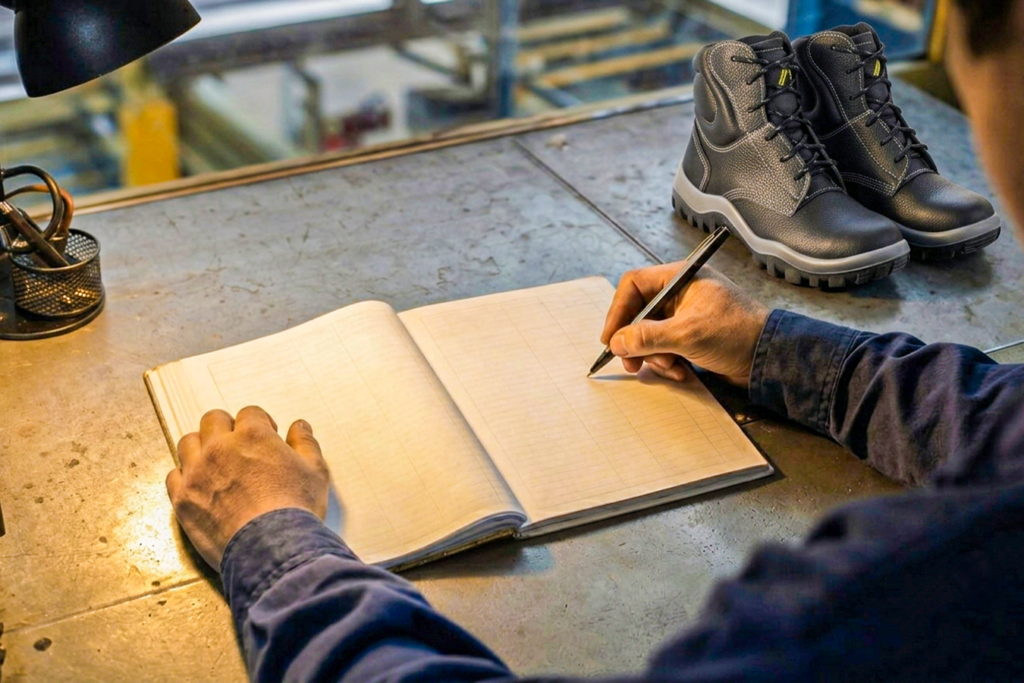
Main types of PPE by body part
The most practical way to organize the PPE family is to follow the map of the body itself. Each region exposed to a risk has a corresponding equipment, with a specific technical standard and CA.
This overview helps the manager build the protection matrix without leaving gaps. See how the main groups are divided.
Head, eye, and face protection
The safety helmet protects against impacts, falling objects, and, in specific models, electrical shock. It is a mandatory item on construction sites and in a large part of the industry.
For eyes and face, safety glasses, visors, and face shields come into play. They shield against flying particles, chemical splashes, radiation, and heat.
The choice depends on the agent: welding requires a specific filter, a chemical laboratory requires side sealing.
Hearing and respiratory protection
The hearing protector, earplug or earmuff type, attenuates noise capable of causing permanent hearing loss. Selection starts from measuring the sound pressure level at the workstation.
Respiratory protection covers everything from disposable masks against fine dust to respirators with filters for gases and vapors.
In environments with oxygen deficiency, the equipment changes category and requires dedicated technical analysis.
Hand and arm protection
Hands account for a large portion of recorded accidents in Brazil. Gloves vary according to the risk: cut, abrasion, chemical agent, heat, cold, or electrical shock.
The wrong glove for the task is as dangerous as its absence.
Foot and leg protection
Here is the most constantly used and, at the same time, the most underestimated PPE. Safety footwear protects the feet against impact, outsole puncture, crushing, and contact with different agents present in the operation.
The embedded technology makes a real difference: composite or steel safety toe cap, dual-density outsole, anti-torsion bar, and antistatic properties. Each feature responds to a distinct risk, from slippery floors to torsion on irregular terrain.
With decades of manufacturing safety footwear, Safetline details this topic in the next section.
Torso and fall protection
Aprons, jackets, and vests protect the torso against heat, splashes, and chemical agents. For work at heights, the full-body safety harness and lanyard form the system that prevents free fall, a critical item under NR 35.
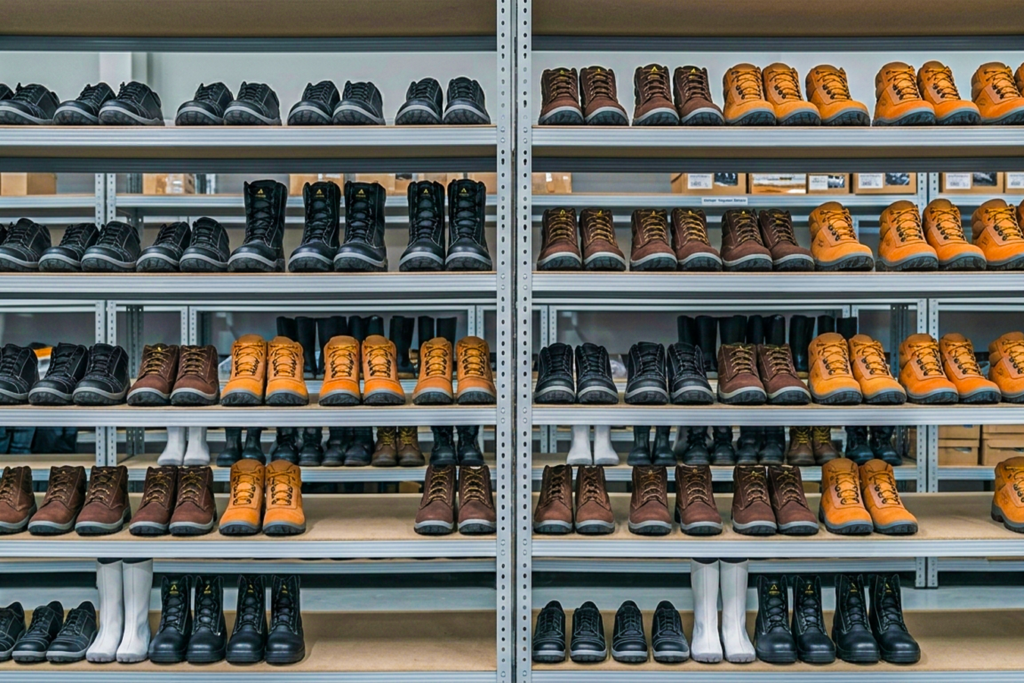
How to choose the right PPE by occupational risk type
The correct choice of PPE does not start in the supplier's catalog. It starts in the operation, in the analysis of what actually threatens the worker at that specific workstation.
Those who reverse this order buy based on the prettiest technical datasheet and find out too late that the equipment does not protect against the actual risk of the operation.
Mapping the risk before buying
Before any quote, the manager must answer three questions per workstation: which agent threatens, with what intensity, and for how long the worker is exposed.
The same sector can have different risks from one cell to another. Someone who welds does not face the same hazard as someone who transports loads. The risk matrix exists precisely to separate this and prevent everyone from receiving the same generic PPE.
Mechanical, electrical, chemical, and thermal risks
Each nature of risk requires a protection class. It is worth mapping the four major groups:
- Mechanical: cuts, punctures, impact, and crushing require a resistant safety toe cap and puncture-resistant insole.
- Electrical: contact with energy requires dielectric footwear without metallic components.
- Chemical: splashes and immersion demand materials with proven resistance to the agent.
- Thermal: radiant heat, flame, and molten metal splash require fabrics and outsoles tested for high temperatures.
Assuming that a single model covers all these scenarios is a classic mistake, and the operation pays for it sooner or later.
Wet, oily, and slippery floor environments
Cold storage facilities, industrial kitchens, and washing areas combine water, grease, and smooth surfaces in a constant fall scenario.
In these environments, it is important to opt for footwear with the maximum slip-resistance level, contributing to greater safety and stability when moving on different types of floors.
The role of the PGR and the technical report in the choice
None of this should be decided by intuition. The Risk Management Program (PGR) and the technical report are the documents that translate actual exposure into PPE specifications.
It is the report that indicates the required protection level, and it is the CA that confirms if the product delivers it. Buying without this cross-referencing is gambling with the safety of those who work.
PPE by activity sector
Risks are not generic. Each segment has its own combination of threats, and it is this combination that defines the appropriate PPE set.
What protects well in a cold storage facility may be inadequate on an open-air construction site. Recognizing the profile of your own operation is the step that transforms standards into practice.
Civil construction and heavy works
Here, falls from heights, object impacts, mineral dust, and unstable ground coexist. The set usually includes a helmet with a chinstrap, a full-body harness, safety glasses against particles, and footwear with a resistant safety toe cap and slip-resistant outsole for loose gravel and rugged terrain.
Industry and metallurgy
Radiant heat, molten metal splashes, and sharp metal shavings change the game. Leggings, aluminized aprons, heat-resistant gloves, and hearing protectors against continuous noise are on the list.
The footwear must withstand welding splashes and oily floors without losing grip.
Logistics, transport, and warehouses
The predominant risk is repetitive strain combined with cargo handling. Bags of 25 to 50 kg, operating forklifts, and pallets require footwear with an anti-torsion bar and a safety toe cap capable of resisting crushing.
High-visibility vests become mandatory where there is internal vehicle traffic.
Agroindustry and cold storage facilities
Wet, cold, and slippery floor environments require footwear resistant to water contact, slip-resistant, and resistant to chemical cleaning agents.
In the sugar-energy sector, add sun exposure and the risk of cuts, requiring leggings and metatarsal protection in the footwear.
The below-zero cold of cold storage chambers demands thermal insulation and material that does not stiffen.
Energy and electricity services
Electrical risk is the most unforgiving, because it does not tolerate specification errors. Here, PPE must be dielectric from head to toe: class B helmet, insulating gloves with a valid dielectric strength test, and insulating footwear, depending on the activity. It is worth checking our content on electrician safety boot NR10 for tasks with electrical risk.
The standard governing this universe is NR10, and the choice of equipment follows the risk analysis per energized task.
None of these lists are exhaustive. They serve as a starting point for the manager to cross-reference the risk inventory of their own environment with the correct technical catalog.
Fit, comfort, and compliance with use
The most advanced PPE on the market has zero effectiveness when it stays in the drawer. Protection only happens if the equipment is on the worker's body during the entire exposure to the risk.
Therefore, compliance with use is a technical indicator, not a human resources detail.
Comfort, in this context, stops being a luxury. It becomes a condition for the standard to be met in practice.
Why uncomfortable PPE is not used
No worker rejects protection out of rebellion. They reject what hurts, pinches, gets too hot, or hinders movement.
Footwear that causes blisters at the end of the shift ends up with loosened laces. A hearing protector that bothers comes out of the ear at the first oversight.
The manager who investigates medical leaves usually finds the same origin: the equipment existed, had a valid CA, but was not being used as it should have been.
Sizing, ergonomics, and field tests
Fit starts with the correct sizing. Footwear that is too small compresses the toes and forces the gait; a larger size generates friction and instability on slippery floors.
Before closing a large purchase, it is worth distributing samples for actual use for a few days. The field test reveals what the technical datasheet does not show: how the outsole responds to the floor of your operation, how the insole behaves during long shifts, and if the anti-torsion bar compromises the natural flexibility of the step.
Well-resolved ergonomics reduces fatigue. Less fatigue means fewer operational errors.
PPE for different biotypes and shifts
A team is not uniform. There are workers with wide feet, others with a history of joint pain, twelve-hour shifts standing on concrete. Offering a single model for everyone ignores this diversity and undermines compliance.
Footwear with a dual-density outsole and cushioning insole makes a noticeable difference for those who spend their shift on the move. A wide range of sizing in the supplier's catalog also avoids improvisations that negate protection.
Comfort as a safety tool
When the equipment fits the body, the worker forgets they are wearing it. It is exactly this forgetfulness that ensures continuous use, without constant inspection.
Treating comfort as a technical purchasing criterion, alongside certification and resistance, is what transforms purchased PPE into effectively used PPE, instead of equipment that is left aside and fulfills no function.
Maintenance, sanitization, and useful life of PPE
Choosing the right product is only part of the solution. The rest is decided day-to-day, in the way each equipment is cleaned, stored, and monitored until the end of its useful life.
Poorly maintained PPE loses its protective capacity prematurely and forces replacements that were not in the budget. Taking care of maintenance is, in practice, extending the return on investment without giving up compliance.
Cleaning routines by equipment type
Each material requires its own care. Earmuff-type hearing protectors need sanitization of the cushions, while disposable earplugs require frequent replacement.
Chemical protection gloves must be rinsed before storing, so as not to retain residues of the agent.
On the other hand, safety footwear requires regular cleaning of the upper and drying in the shade, away from direct heat sources that dry out the leather and compromise the outsole bonding.
Correct storage and what prevents degradation
A large part of premature degradation comes from storage, not use. Humidity, heat, and sun exposure accelerate the aging of plastics, elastomers, and leathers.
The ideal is a ventilated place, protected from direct light and chemicals. Helmets stored crushed lose their impact absorption geometry. Footwear stacked wet promotes fungi and bad odors.
Signs that PPE should be discarded
No equipment lasts forever, and insisting on use beyond the limit is taking risks without real protection. Some signs are non-negotiable:
- Cracks, deformations, or loss of firmness in the structure.
- Worn outsole that compromises grip on slippery floors.
- Broken seams, exposed safety toe cap, or unstitched parts in the footwear.
Record keeping and replacement control
Maintenance without records becomes guesswork. Documenting the delivery date, expected useful life, and replacement of each item gives the manager purchasing predictability and legal defense in case of inspection.
This control transforms replacement into a planned process, not an emergency rush when wear has already exposed the worker.
It is the link that connects good choice, correct use, and continuity of protection.
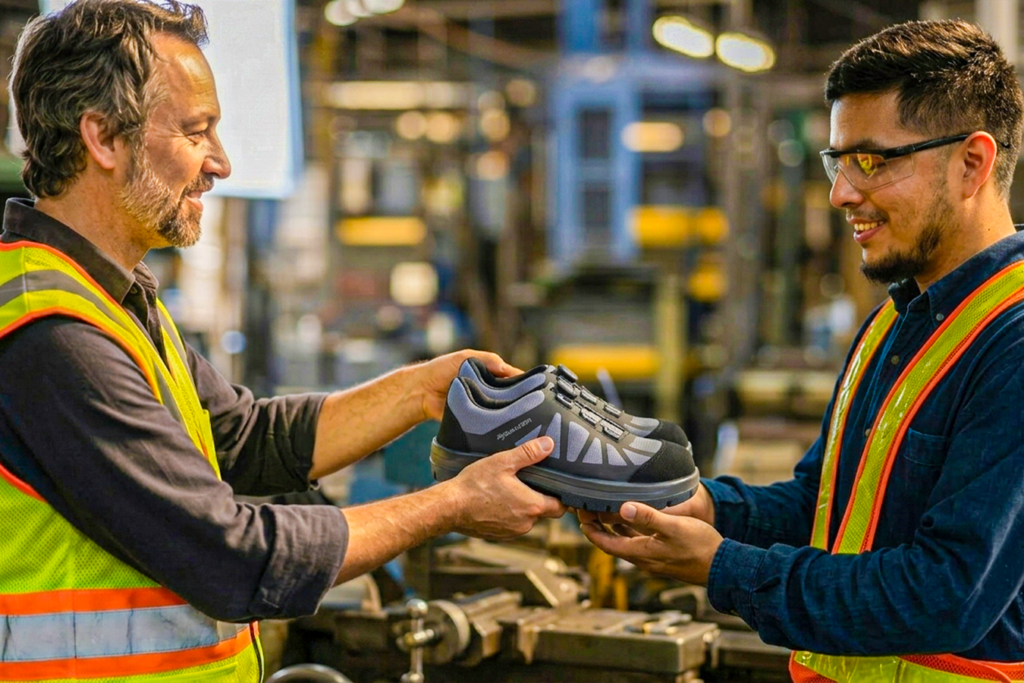
PPE Management: distribution, record sheet, and control
Buying the right equipment is only the starting point. What sustains safety over time is a structured program, with records, tracking, and documented responsibility.
In the process, the best PPE becomes a loose item on the shelf, without control over who received it, when they replaced it, and why.
The PPE record sheet and its evidentiary value
The PPE record sheet is the document that proves the delivery of the equipment to the worker. It records the model, the CA number, the delivery date, and the signature of the recipient.
In a labor lawsuit or inspection, this document is a game-changer. It demonstrates that the company fulfilled its legal obligation to provide the appropriate PPE and provide guidance on its use.
Without a signed record sheet, the employer's word holds little weight before a labor inspector. Keeping the record updated, physically or digitally, is the cheapest legal defense there is.
Inventory control and planned replacement
Urgent replacement is expensive and opens windows of risk exposure. When stock runs out and the worker goes without appropriate footwear for days, the operation is left unprotected.
Control starts by mapping the useful life of each item. Knowing the average monthly consumption, the manager schedules the purchase before the shortage, not after.
This predictability also improves negotiation with suppliers and reduces the unit cost per planned volume.
Team training and awareness
Delivering the PPE is not enough. NR6 assigns the employer the duty to train the worker on the use, storage, and limitations of each equipment.
Training must be practical and recurring, not a single lecture upon hiring. Those who understand why the dual-density outsole protects against slippery floors use the footwear with more care.
Indicators to monitor the PPE program
A program without metrics cannot be managed. Some indicators make performance visible:
- Usage compliance rate by sector, measured in routine inspections
- Replacement cost per worker per year
- Number of accidents related to PPE failure or absence
- Percentage of updated record sheets and signatures up to date
These numbers transform PPE management into evidence-based decisions, not intuition. And they give the manager the concrete argument to justify investment in certified quality equipment.
Putting PPE knowledge into practice
Getting this far means having in hand what most operations treat in a fragmented way: the standard, the types, the selection criteria, and the management logic gathered into a single line of reasoning.
The challenge now stops being understanding and becomes applying. Knowledge sitting in a training PDF does not reduce medical leaves. What changes the indicator is the decision made on the day of the quote and the discipline maintained on the factory floor.
The 3 principles to never make a mistake in your choice
If the entire length of this guide could fit into three sentences, they would be these.
- Risk first, product second. The technical datasheet only makes sense after the workstation's risk matrix is mapped. Buying before analyzing is gambling.
- Valid CA is non-negotiable. Without a current Certificate of Approval, the item is not PPE. It is a labor liability waiting for inspection.
- Real cost is measured by useful life. The invoice price is the beginning of the calculation, never the end. Frequent replacement always costs more than certified quality.
The next step to review your PPE program
Before opening a new order, an honest diagnosis of what already exists is worthwhile.
Review the PPE record sheets from the last twelve months and observe the replacement pattern. Items that return to stock every quarter signal a choice based on price, not protection.
Cross-reference this data with medical leave records by workstation. This cross-referencing reveals where the budget is leaking without anyone noticing.
Next, confirm usage compliance where exposure is most critical. If the equipment stays in the drawer, fit and comfort must be included in the next purchasing specification.
How Safetline supports safety managers
Manufacturing safety footwear for five decades teaches one thing that a generic catalog does not convey: lower limb protection is engineering, not a commodity.
Composite safety toe cap, dual-density outsole, and anti-torsion bar exist to respond to specific risks, with a corresponding CA for each model.
For the manager who needs to transform standards into practice, the starting point is understanding the certification of each item. The material on how to identify safety footwear gathers the technical criteria that separate a durable product from an expected replacement.
A good PPE program protects the worker, the budget, and the operation at the same time. The right choice starts long before the purchase: it starts with the criteria.
From diagnosis to decision: what to do with this guide
Throughout this reading, PPE stops being just a generic concept and gains practical shape: each medical leave, each premature replacement, and each citation for non-compliance with NR6 usually stems from a purchasing decision made without technical criteria.
This entire bill, moreover, is rarely paid at the time of purchase. It accumulates months later, in accident statistics and blown replacement budgets.
If there are three ideas to take from this guide, they are these:
- Without CA, it is not PPE. It is an object with no legal protective value and does not cover the employer's liability.
- The risk defines the equipment, not the catalog. The choice starts at the workstation, not on the prettiest technical datasheet.
- Low price is a hidden cost. What weighs on the annual budget is the replacement frequency, not the invoice value.
The next step is concrete: take your operation's risk matrix and cross-reference it with the current PPE record sheet. Wherever there is an item without a valid CA, without usage compliance, or with replacement every three months, you have already found where safety and budget are leaking.
Start with the item that accompanies the worker the entire shift, the footwear.
To scale your supply with dual-density, composite safety toe cap, and certification, talk to a consultant about our industrial safety boots and transform technical criteria into protection that lasts.
Cutting back on PPE does not generate savings: it only transfers the cost to accidents, medical leaves, and fines that arrive later.
Frequently asked questions
What is PPE and what is it for?
PPE stands for Personal Protective Equipment, any device of personal use intended to protect the worker against risks that threaten their safety and health in the work environment. It acts on the person, not on the environment. Helmet, glove, hearing protector, safety glasses, and safety footwear are examples. The definition and rules of use are found in NR6.
What is the difference between PPE and CPE?
PPE individually protects the worker, applied directly to the body, such as gloves or footwear. CPE (Collective Protective Equipment) acts on the environment and protects everyone around at the same time, such as guardrails, ventilation systems, and floor signage. The legal hierarchy prioritizes CPE. PPE comes into play when the risk cannot be eliminated at the source.
What is the PPE's CA and how to verify it?
The CA (Certificate of Approval) is the number issued by the Ministry of Labor certifying that the model has undergone laboratory testing and complies with technical protection requirements. Without a valid CA, the product is not considered PPE by law. Verification is done on the official website of the body, by entering the number printed on the equipment itself.
Whose responsibility is PPE, the employer's or the worker's?
NR6 divides responsibilities. The employer must provide the appropriate PPE for the risk, free of charge, with a valid CA, as well as train and inspect correct use. The worker is required to use the provided equipment, maintain it, and report any damage. Non-compliance generates legal consequences for both, but the main burden falls on the company.
How to choose the right PPE for each role?
The choice starts with the analysis of the workstation risks, not in the catalog. It is necessary to identify the actual threats of that role (impact, cut, chemical product, slippery floor, noise) and select the equipment with the corresponding technical standard. Sector, environment, and intensity of exposure define the model. A pretty technical datasheet does not replace suitability for the specific risk.
Is safety footwear mandatory?
Yes, whenever the role exposes the feet to risks such as falling objects, puncture, chemical agents, or slippery floors. The model must have a valid CA and features compatible with the risk, such as a composite or steel safety toe cap, dual-density outsole, and anti-torsion bar. The mandatory nature stems from the workstation's risk matrix, defined by the company's management program.
Is it worth buying cheaper PPE to reduce costs?
The invoice price is only part of the calculation. Footwear that lasts three months forces multiple replacements a year, raising the total cost and administrative time with exchanges. Certified and durable PPE reduces the replacement cycle, sustains protection longer, and decreases medical leaves. The correct criterion is cost per period of use, not unit value.
Why don't workers use PPE correctly?
Low compliance is almost always linked to discomfort, poor fit, or excessive weight of the equipment. PPE that is uncomfortable tends to be stored away, negating its protection. Therefore, comfort and ergonomics are technical criteria, not a luxury. Clear training, usage inspection, and choosing models suitable for the worker's body increase compliance and ensure standard fulfillment.