
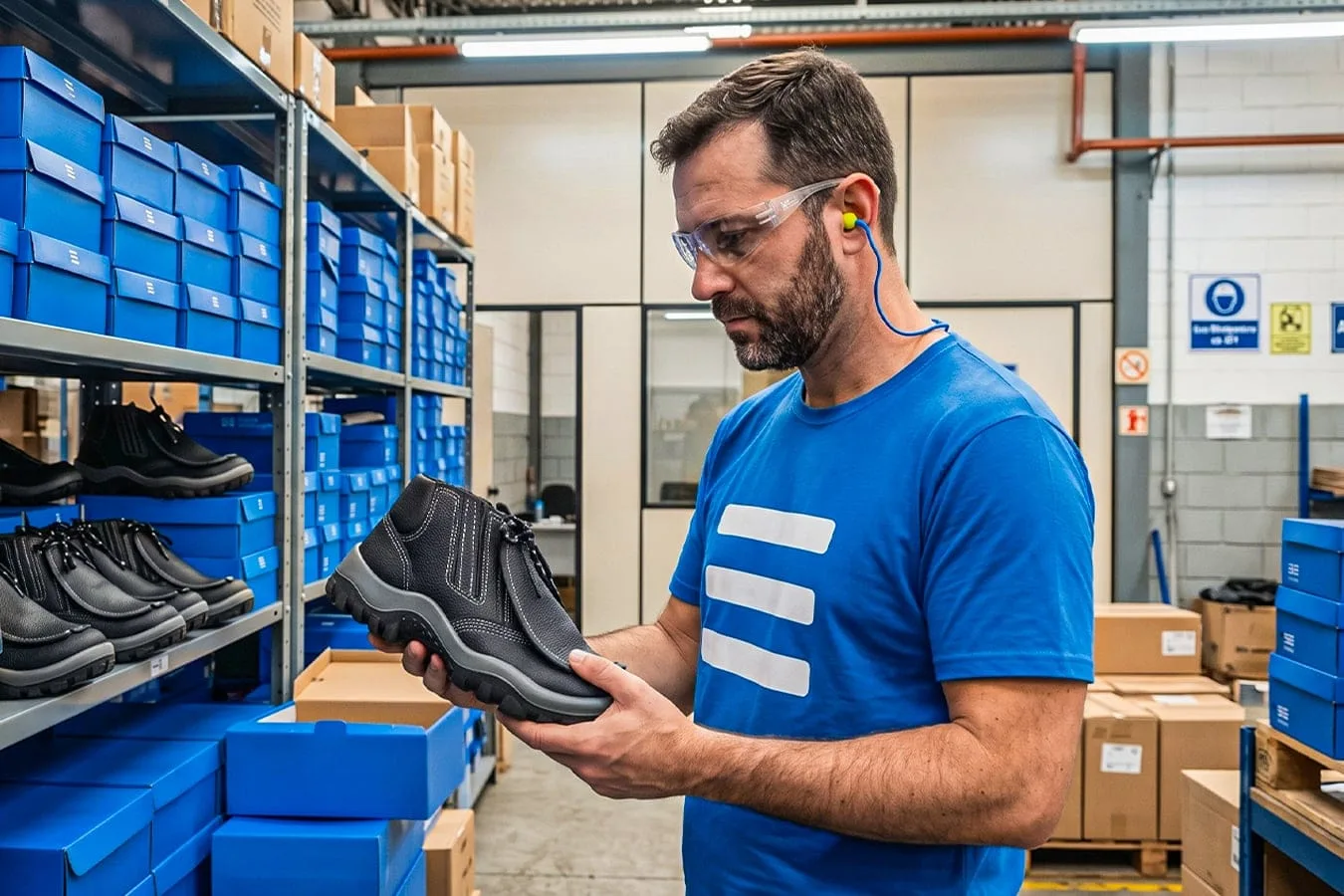
NR-6 is the Regulatory Standard that defines what personal protective equipment is, establishes the mandatory nature of the Certificate of Approval (CA), and allocates responsibilities between employer and worker. It dictates free provision, risk suitability, user training, sanitization, immediate replacement when damaged, and delivery records for all PPE.
A CA that is incompatible with the risk is equivalent, in the eyes of a labor inspector, to an unprotected worker. Fines are applied per non-compliant item and per exposed employee. A significant portion of these citations originates from the highest-turnover item in the warehouse: safety footwear.
In the following sections, you will find the standard translated into management routines.
What is NR-6 and what does the standard require regarding PPE?
NR-6 defines what personal protective equipment is, when its use is mandatory, and who is accountable for each stage of management. All PPE sold in Brazil requires a valid Certificate of Approval. The standard applies to any company with employees governed by the CLT and guarantees adequate protection whenever collective measures do not eliminate the risk.
Employer and worker responsibilities
The employer is responsible for providing PPE free of charge and appropriate to the risk, enforcing its use, training the worker, keeping the equipment sanitized and replaced when damaged or lost, and logging every delivery. The worker is responsible for using the equipment solely for its intended purpose, caring for its storage and preservation, and reporting any alteration that renders it unfit for use.
The role of the Certificate of Approval (CA)
The CA is the document issued by the federal government certifying that the equipment has been tested and approved to protect against the stated risk. The CA has its own expiration term, which does not coincide with the service life of safety footwear in use. Equipment without a CA fails to comply with the standard, even if it is brand new.
How does NR-6 classify PPE and where does safety footwear fit?
Annex I of NR-6 organizes equipment by the region of the body protected. This logic guides the PPE matrix: each risk identified in the inventory corresponds to an annex category, and each category requires a specific CA.
Lower limb protection
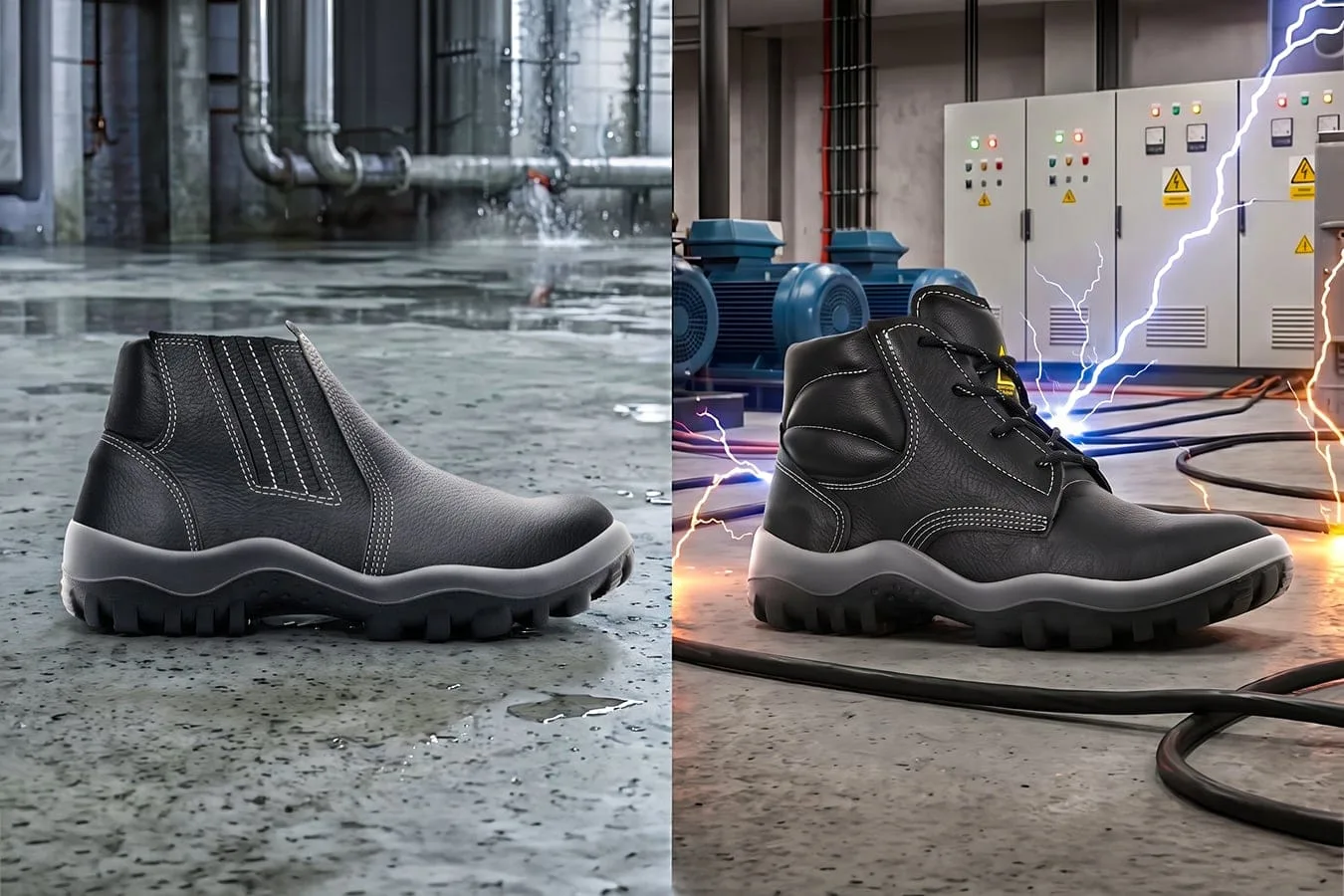
The lower limbs category encompasses footwear offering protection against impact, puncture, chemical agents, moisture, and electric shock. It is the group with the highest turnover and replenishment rate in companies. Certified safety footwear combines a safety toe cap, a puncture-resistant and slip-resistant outsole.
Proper specification stems from assessing the environment: in meatpacking plants, footwear must be slip-resistant and water penetration-resistant; in civil construction, a safety toe cap and puncture-resistant insole are indispensable; in electrical activities, the model must have no metal components.
Standardizing a single model across the entire plant is a common mistake: the standard demands equipment suited to the specific risk of each job function.
How to ensure compliance with NR-6 in practice
Compliance relies on a routine that safety managers can audit internally before any inspection:
- Risk assessment prior to purchase: the risk inventory defines the footwear specifications for each job role.
- CA verification: every certificate must be verified in the official Ministry of Labor system before purchasing and reviewed periodically. An expired CA prohibits purchasing.
- Provision, record-keeping, and training: free supply, documented on the PPE distribution log, and accompanied by usage guidance. Without a signed record, the company cannot legally prove supply.
- Maintenance and replacement: footwear with a worn outsole or torn upper must be removed from service that same day, with the replacement logged.
Inspectors review delivery logs, certificate validities, and compatibility between the risk and the issued equipment. Specifying items from the Safetline product catalog with valid CAs and organized documentation significantly minimizes the risk of citations.
Frequent mistakes in applying NR-6 within PPE programs
A large share of citations arises from purchasing and control habits that seem compliant until the first inspection occurs.
1. Purchasing by generic specification. An order described merely as "safety boot with safety toe cap" can result in footwear with a valid CA that is nevertheless mismatched to the mapped risk, which breaches the standard despite active certification.
2. Ignoring the alignment between footwear and function. Logistics operations require impact absorption, construction sites demand puncture resistance, and wet areas depend on proven slip resistance. Established lines, such as the Miura Line, exist in dedicated variations precisely to address distinct job functions.
3. Replacing based on cosmetic wear instead of technical criteria. Replacing too early drives up costs; replacing too late keeps equipment in service after it has lost its certified protective effectiveness. Outsole tread depth below limits, an exposed safety toe cap, or split stitching are objective replacement criteria, not superficial appearance.
How does Safetline support safety managers with NR-6 compliance?
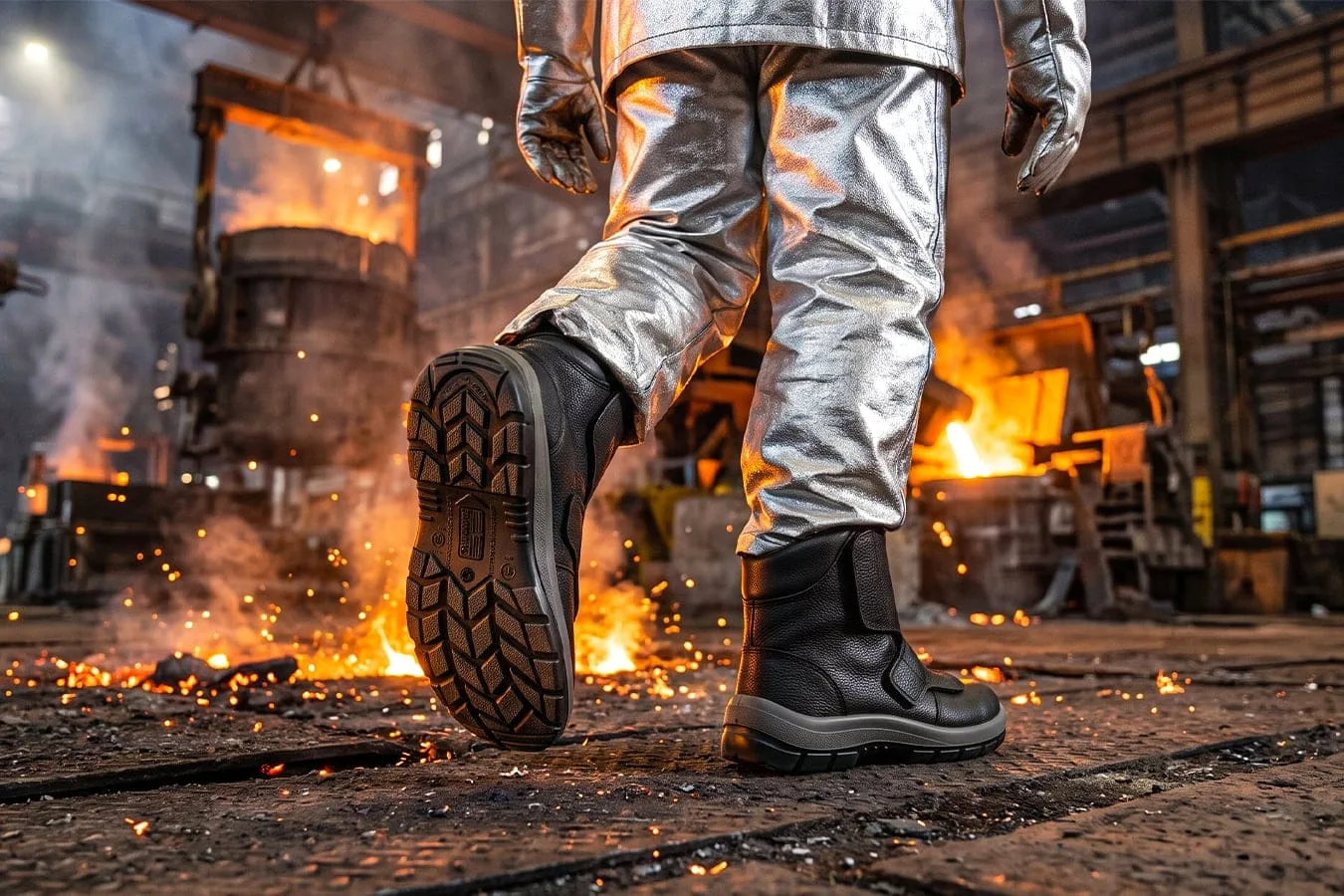
Compliance with NR-6 begins with technical specification. Safetline has manufactured safety footwear for over 50 years, all featuring valid CAs and audit-ready documentation, simplifying certification verification prior to purchase.
The portfolio covers the most common operational demands: puncture-resistant insoles for construction sites, water penetration-resistant and slip-resistant footwear for the wet floors of meatpacking and food processing plants, and models with safety toe caps designed for logistics.
Durability is an essential factor: footwear built to withstand the intended duty cycle reduces emergency replacements and brings predictability to delivery logs, CA validity management, and audit responses.
Where should you begin reviewing your PPE program?
What labor inspectors find in most infraction notices is generic specification, a CA incompatible with the operational risk, and incomplete distribution sheets. Three core principles eliminate these vulnerabilities:
- The risk dictates the equipment. The risk inventory precedes the purchase order, and the specification details the outsole, safety toe cap, and protective performance.
- A valid CA is only the baseline requirement: verify validity BEFORE purchasing and record the expiration date for proactive review.
- The delivery log is the legal proof. Without a signed record showing the date and CA number for every item, the company cannot demonstrate compliance with NR-6.
A simple check to run tomorrow: pull three random PPE delivery logs from your highest-risk department, verify whether the CA number is registered, and check if that certificate is currently valid.
This spot-check will uncover the true state of your program before an audit does it for you. Once technical specifications are established in your risk assessment, explore the Safetline safety footwear catalog and contact an authorized distributor to identify the right model with a valid CA for your operation.
Frequently Asked Questions
What is NR-6 and what is its purpose?
It is the Regulatory Standard issued by the Ministry of Labor defining what constitutes PPE, when its use is mandatory, and the responsibilities of employers and workers. It also mandates a valid Certificate of Approval (CA) for all PPE sold in Brazil.
What is the Certificate of Approval (CA) for PPE?
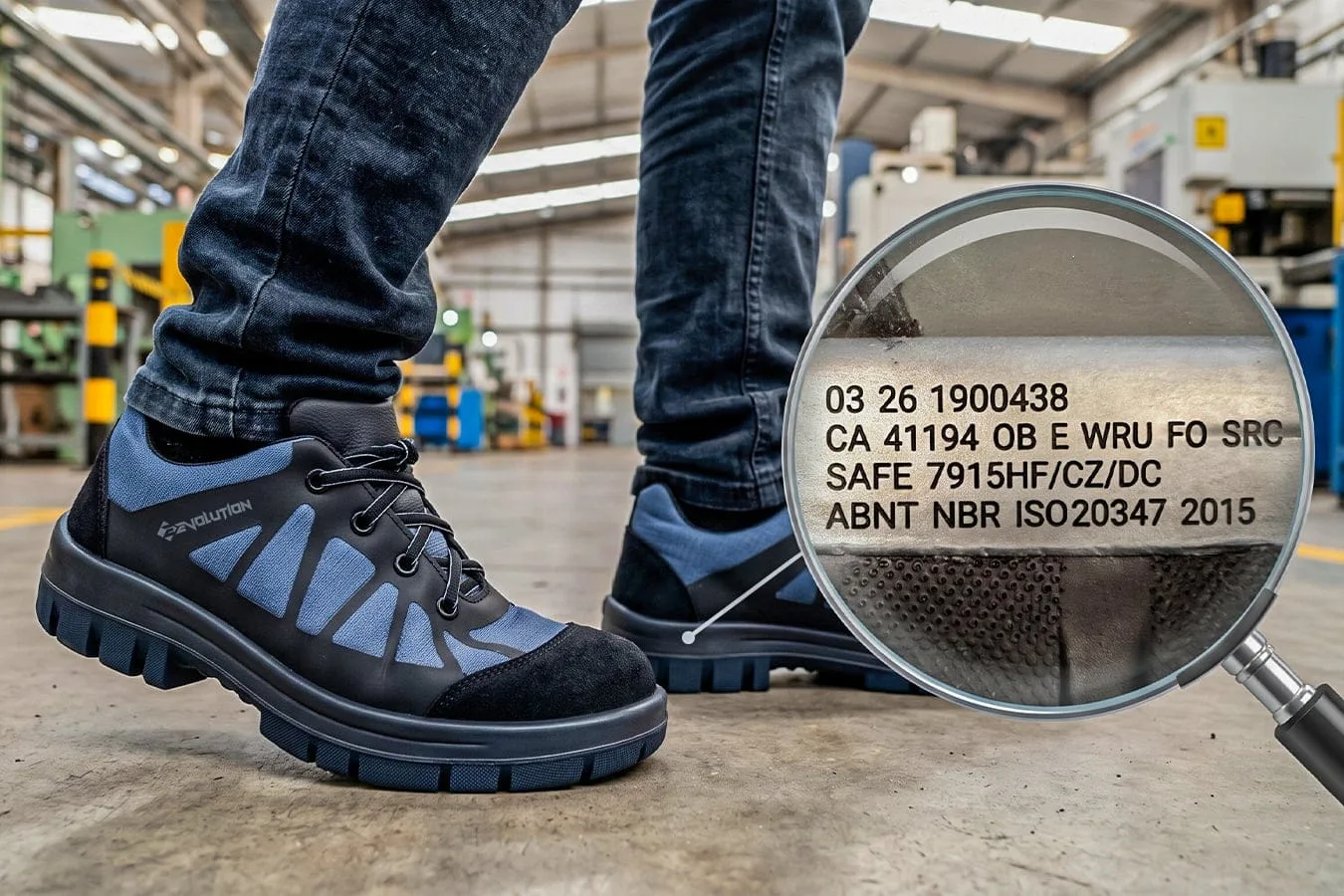
It is the official federal document certifying that the equipment was tested and approved for its stated protection. The registration number is stamped directly on the equipment and can be verified free of charge via the CAEPI system.
What should be done with footwear that has an expired Certificate of Approval (CA)?
Footwear with an expired CA that was purchased while the certificate was still valid may remain in stock or in active use; an expired CA alone does not prohibit its continuation in service. However, it must be kept in good condition, within the manufacturer's recommended shelf life, and inspected periodically by Occupational Health and Safety teams regarding its integrity and suitability for task risks. Purchasing footwear with an already expired CA is strictly prohibited.
Can an employer charge employees for PPE?
No. Providing PPE is free of charge and the sole legal responsibility of the employer, including replacements due to wear and tear or damage. Payroll deductions for PPE constitute a regulatory breach.
When should safety footwear be replaced?
Replacement must be immediate in the event of damage or loss. Practical indicators include worn-out tread grooves, delamination, exposed safety toe caps, and broken stitching. The standard does not set a fixed time limit: regular physical inspection is the most reliable criterion.
Can the PPE delivery log be digital?
Yes, either physical or electronic formats are permitted, provided they identify the worker, the equipment, the CA number, and the issue date. During inspections or labor claims, this document serves as the primary evidence of regulatory compliance.
What happens if a company fails to comply with NR-6?
Non-compliance leads to official citations with fines scaled according to severity and the number of exposed workers. In the event of an accident, it may lead to civil liability and increase the risk of INSS subrogation lawsuits. In cases of grave and imminent risk, inspectors may shut down the operation.
Who enforces compliance with NR-6?
Labor Tax Auditors, who verify the appropriateness of the PPE to the mapped risk, the validity of CAs, delivery and training records, and equipment maintenance conditions. The Labor Public Prosecutor's Office (MPT) may also investigate based on whistleblower complaints.