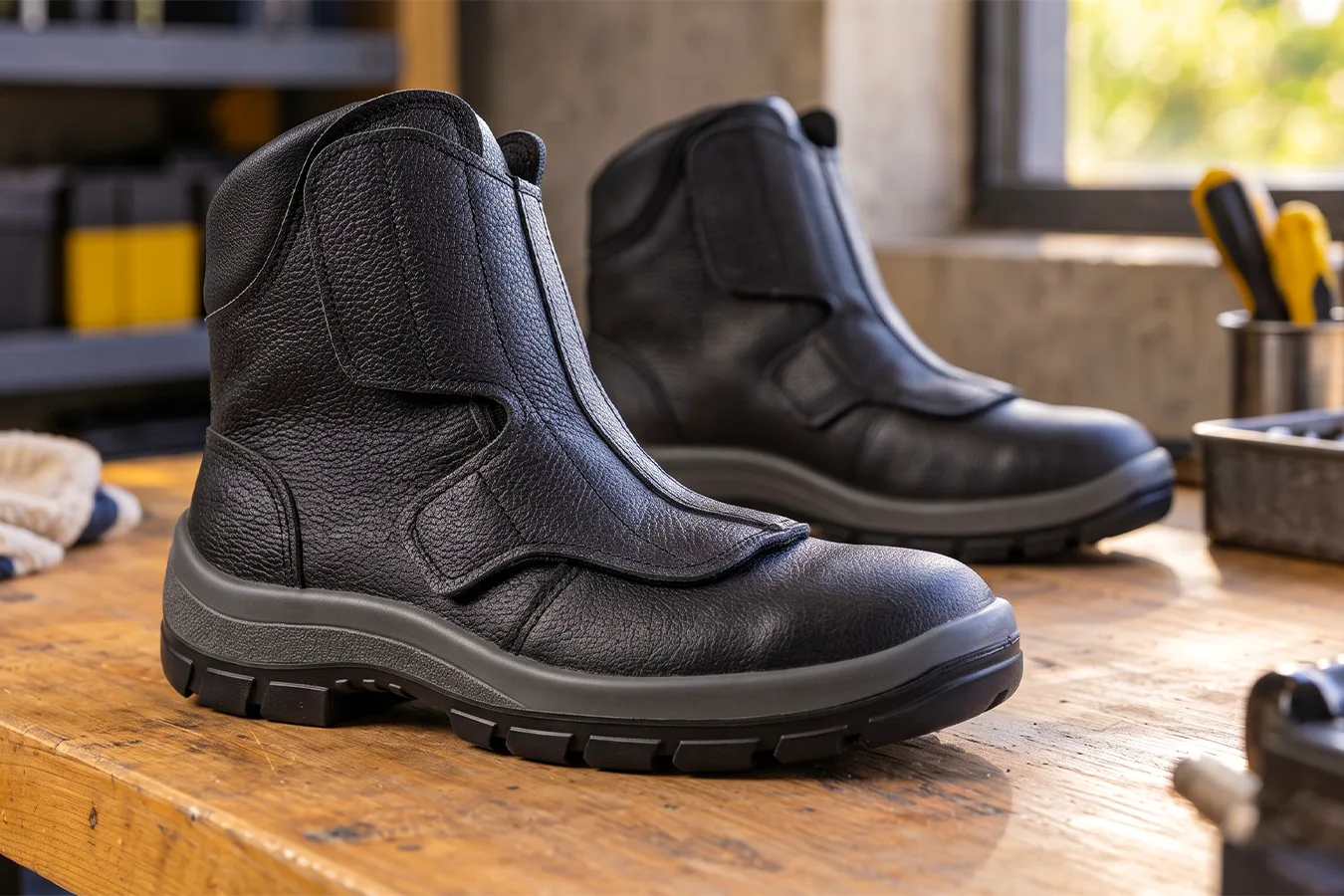

Safety footwear is the PPE designed to protect workers' feet against mechanical, electrical, thermal, chemical, and biological hazards. Its classification is based on two complementary criteria: the Types of Safety Footwear and the occupational hazard, duly registered in the CA (Certificate of Approval) issued by the Ministry of Labor.
Specifying equipment solely by commercial name, without linking the model to the hazards mapped in the PGR, is the leading cause of premature re-purchases.
The same type of footwear (such as a safety boot) recommended for a dry warehouse may not provide the necessary protection against energized floors or welding spatter. Although the CA of different models may seem identical at first glance, the technical approvals and intended uses are distinct.
In the following sections, we present structured details to guide your decision-making, including classified types, associated hazards, the components that differentiate each model, and a practical specification roadmap to apply to your next purchase.
Types of safety footwear by model
The market categorizes safety footwear models according to three objective criteria: shaft height, closure system, and degree of ankle fixation. These three factors determine worker mobility, donning speed in the locker room, and the protected foot area.
Understanding this rationale allows managers to review any catalog with a technical perspective, even before evaluating safety toe caps, insoles, and outsoles.
Safety boot (Type B)
This is the most widely used model in industry. It features a shaft high enough to protect the ankle and is available with various closure types, such as elastic sides, Velcro, zipper, or laces.
The elastic version facilitates quick donning, especially during shifts with frequent changes. Conversely, the lace-up version offers a firmer fit, making it ideal for workers climbing ladders or navigating uneven surfaces, thereby enhancing foot stability and preventing sprains.
High Boot (Type D)
Covering the leg almost to the knee, this model is especially recommended for humid environments, sanitation services, and agricultural operations involving outdoor contact with animal or plant hazards.
Low-cut shoe (Type A)
Low-cut models—featuring elastic, lace, zipper, or safetdisc closure systems—are lighter and more discreet. They serve administrative roles in manufacturing plants, freight reception, and areas within the food and pharmaceutical industries requiring sanitizable white footwear. This type of footwear prioritizes mobility and cushioning for workers on their feet all day, such as in logistics operations and distribution centers. In addition, certain models maintain certified protection with an athletic sneaker appearance.
Mid-calf boot (Type C)
This model features a shaft extending above the ankle, covering the lower part of the leg just below mid-calf. This structure provides greater stability and lateral protection compared to a standard safety boot (Type B), while offering superior mobility compared to a high boot (Type D). The model can feature a pull-on, lace-up, or Velcro closure system and is widely used in meatpacking plants, offshore operations, and the electrical sector.
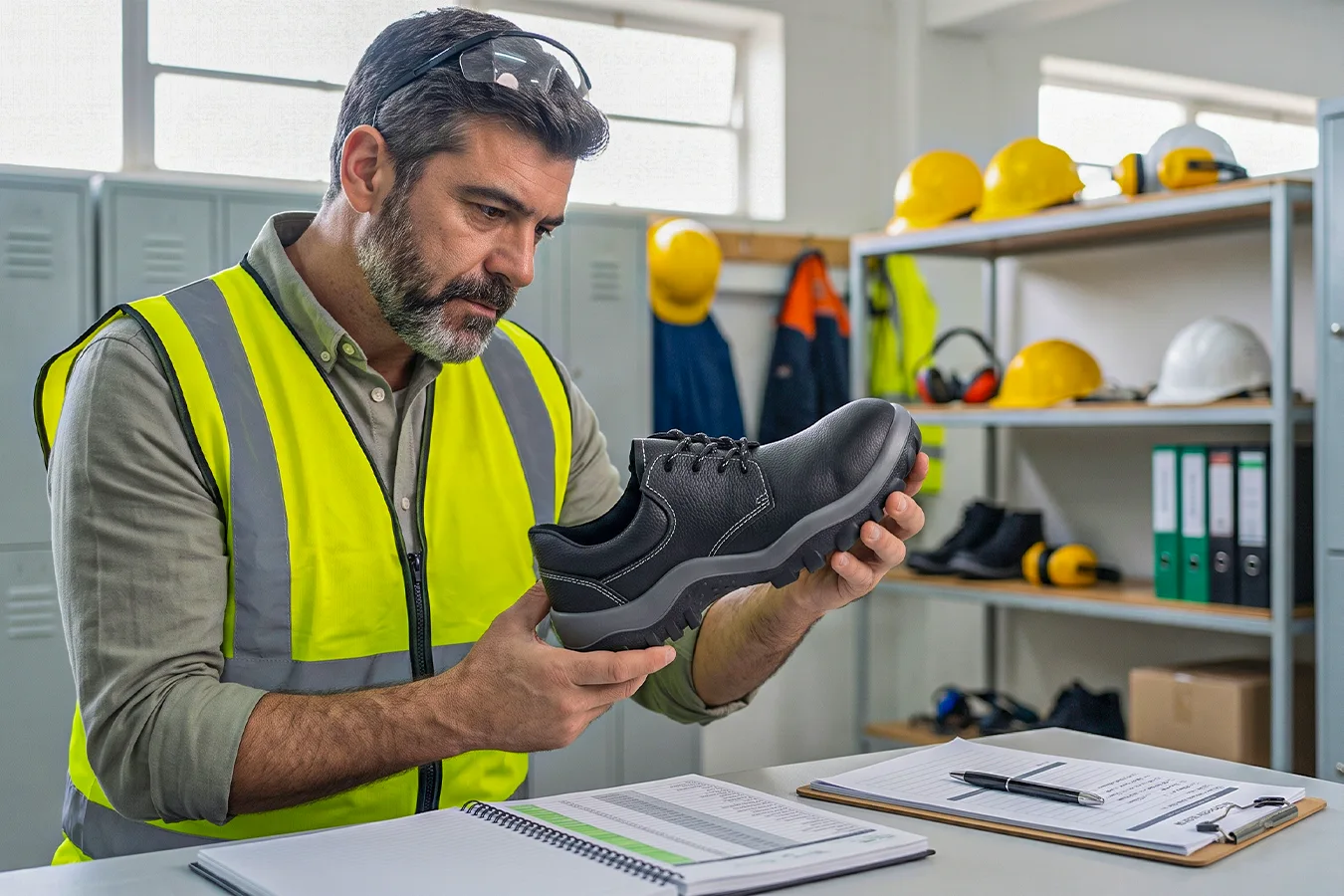
How to select safety footwear by occupational hazard
Specification originates from the hazard assessment report. Each hazard identified in the PGR correlates with a specific footwear component, and the manager's task is to translate this relationship into a purchasing specification.
Mechanical impact and puncture hazards
Falling objects require a safety toe cap, made of steel or composite (SB or SI), both certified for 200J impact. Floors with nails, metal shavings, or scrap metal demand a puncture-resistant insole (P) integrated into the outsole.
Slip and oil contact hazards
Wet or oily floors require a dual-density outsole with maximum slip resistance (SRC) and hydrocarbon resistance (FO). This rating is certified directly in the product's CA.
Electrical hazards
Electricians must wear footwear containing no metallic components: composite (SI) or plastic (OI) safety toe caps, plastic eyelets on lace-up versions, and an electrical hazard insulating outsole.
Moisture, heat, and chemical agents
For wet environments, water-repellent leather uppers are recommended. For high-temperature conditions, it is crucial to consider footwear with contact heat-resistant outsoles (HRO) and heat-insulating footwear construction (HI) to provide thermal comfort to the operator. It is also important to avoid exposed stitching on the vamp.
The same logic applies to any industry. For factory floors, our guide on safety footwear for industry details sector-specific requirements.
Low temperatures
These boots are designed for material handling, cold-chain logistics, and cold storage (CI) environments with continuous exposure to moisture (WRU), maintaining the necessary thermal comfort and flexibility for work activities.
Components that differentiate safety footwear
Two models sharing the same "Footwear Type" can deliver vastly different levels of protection. The difference lies in the ratings certified in the CA.
Steel safety toe cap vs. composite safety toe cap
Both withstand a 200J impact. Steel is more cost-effective and slightly heavier; composite is lighter, non-conductive to temperature or electricity, and passes through metal detectors—a distinct advantage in meatpacking facilities and electrical installations.
Dual-density outsoles and outsole types
A dual-density outsole combines a soft midsole, absorbing impact throughout the workday, with a harder, abrasion-resistant outer layer. The tread design dictates traction: open channels evacuate liquids on wet floors, while specialized compounds withstand high temperatures.
Leather upper vs. alternative materials
Leather delivers superior mechanical strength and durability. Synthetic materials are lighter and tolerate frequent washing with water, an essential requirement in the food processing and healthcare sectors.
Lasting insole and workday comfort
The lasting insole provides structural support to the footwear, while the comfort insole absorbs sweat and cushions the stride. Over 8-hour standing shifts, this combined system minimizes fatigue and prevents early replacements.

From hazard mapping to purchase order
The initial question that starts most specifications—which type to buy—now has a structured answer. The footwear style organizes the catalog; the activity hazard dictates the purchase. Reversing this sequence leads to premature PPE replacements or, worse, incomplete worker protection.
Before placing the order, keep three key points in mind:
The PGR precedes the catalog. Each hazard maps to a specific component: safety toe cap, puncture-resistant insole, insulating outsole, or water resistance.
Style dictates application; components dictate protection. Low-cut shoes, safety boots, mid-calf boots, and high boots fulfill operational requirements; aesthetics remain secondary.
Footwear without a valid CA that aligns with the hazards documented in the technical report must not enter the facility. Regulatory document verification is an integral part of the specification process.
Compile the risk assessment by job role, list the required components for each hazard, and only then select the model. This procedure turns procurement into a documented technical decision, easily defended during internal audits and workplace safety inspections.
Safetline has manufactured safety footwear for over 50 years, featuring hazard-segmented lines ranging from industrial safety boots to white-line footwear for the food industry. Our technical team guides your specifications and connects you with authorized regional distributors: contact the Safetline sales team and complete your specification backed by manufacturer expertise.
The right footwear is whatever the hazard demands, validated by the CA.