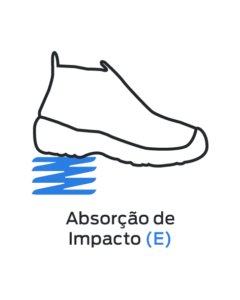
Impact absorption in professional footwear is essential to guarantee comfort, safety, and foot and body health during gait. In daily activities, whether work, leisure, or sports, people's mobility depends mainly on the act of walking or running.
During gait, especially in the stance phase—which begins with heel strike and ends with the toe-off of the hallux (big toe) from the ground—the impact of foot contact with the ground generates a reaction force, from the ground to the foot, which is absorbed by the human body.
Therefore, to ensure the health and good performance of the feet and the body as a whole, it is essential to use comfortable and safe footwear equipped with an efficient energy absorption system in the heel area.
A system that absorbs mechanical and physical impacts and minimizes heel consequences that could cause discomfort, fatigue, pain, and injuries.
Foot Comfort and Safety
Manufacturing truly comfortable and safe professional footwear requires expertise in foot anatomy and physiology, materials, and production engineering. The impact of the heel against the ground generates a reaction force that must be minimized to avoid discomfort, fatigue, pain, and injuries.
Because of this, the lower part of the footwear plays a decisive role, making the use of outsoles with efficient energy absorption systems indispensable.
According to ABNT NBR ISO 20344, the symbol "E" certifies that the footwear has impact absorption in the heel region, with a minimum requirement of 20 joules. Safetline footwear exceeds this requirement, and this performance is the result of choosing absorbent materials, a carefully studied design, and the application of advanced technologies, guaranteeing professional footwear that offers superior comfort and effective protection for the worker.